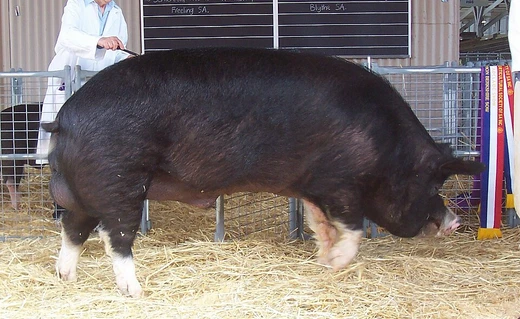
Berkshire pig
British pig breed known for its black coat and white markings.
Last updated
The Berkshire is a British breed of pig, originating in the English county of Berkshire. It is a rare breed in the United Kingdom but has been exported to many countries, including Australia, Japan, New Zealand, and the United States, where it is numerous in some of them.
Background
The Berkshire is a traditional breed of the county of the same name. Until the eighteenth century it was a large tawny-coloured pig with lop ears, often with darker patches. In the late eighteenth and early nineteenth centuries it was substantially modified by cross-breeding with small black pigs imported from Asia. Herds are maintained in England by the Rare Breeds Survival Trust at Aldenham Country Park in Hertfordshire and at the South of England Rare Breeds Centre in Kent.
Frequently Asked Questions
What is a Berkshire pig?
It's a medium-sized British pig breed originally from the English county of Berkshire, raised primarily for pork. While rare in the UK itself, it has been exported to countries like Australia, Japan, New Zealand, and the United States, where it is more numerous.
Where did the Berkshire pig originate?
The breed traces its roots to the English county of Berkshire in the United Kingdom. It was later exported to numerous countries, including Australia, Japan, New Zealand, and the US, where it became more widespread.
Is the Berkshire pig an endangered or vulnerable breed?
Yes, it was listed as vulnerable in 2008, with fewer than 300 breeding sows recorded at that time. It remains a rare breed within the UK despite being more common in its export countries.
Also in the Codexery
More in Animal breeds on the RBST Watchlist
Sources
Compiled from Wikipedia and the sources listed below. Text from Wikipedia is available under CC BY-SA 4.0; this entry is adapted from it.
- Wikipedia: Berkshire pig (CC BY-SA 4.0).
Spotted an error? Know more?
Reader corrections go straight into our review queue. Suggest an edit · How this site is sourced