Jean III de Grailly
Captal de Buch, Knight of the Garter, and hero of Poitiers.
Last updated

Heralder · CC BY-SA 3.0
Jean III de Grailly, also known as John De Grailly, died on 7 September 1376. He held the title Captal de Buch and was a Gascon nobleman who fought as a military leader during the Hundred Years' War. The chronicler Jean Froissart praised him as the ideal of chivalry.
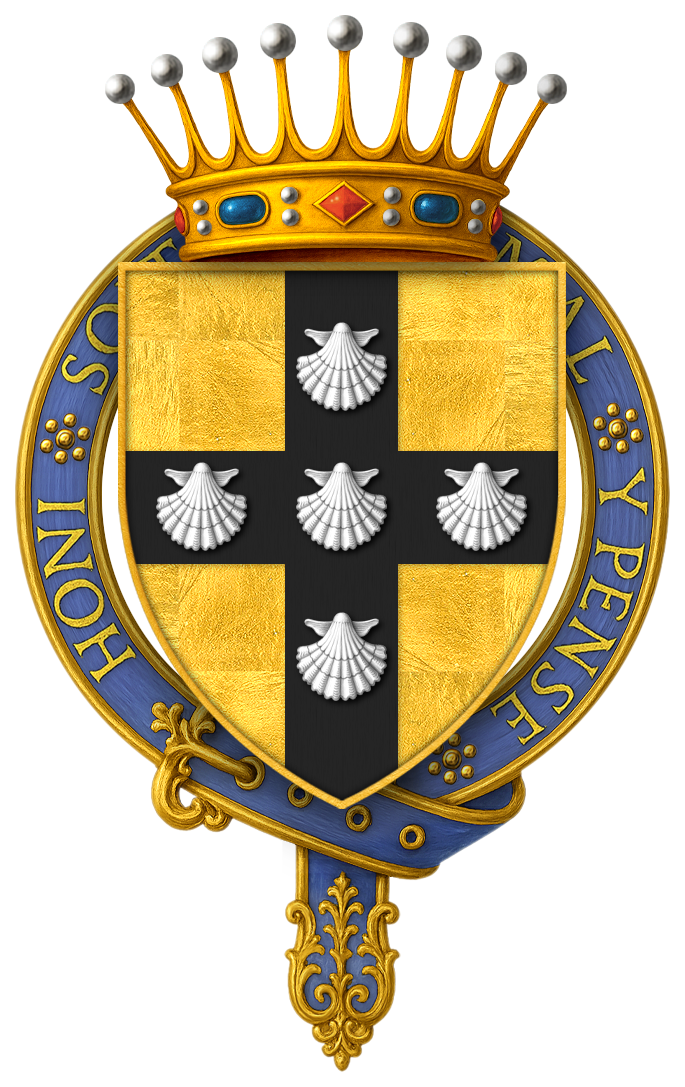
Grailly was the son of Jean II de Grailly, Captal de Buch and Vicomte de Benauges, and Blanch de Foix, who was a cousin of the counts of Foix. He sided with the English in the conflict, and Edward III of England made him Count of Bigorre. He was also a founder and the fourth Knight of the Garter in 1348.
Under Edward, the Black Prince, Grailly played a key role as a cavalry leader at the Battle of Poitiers in 1356. He led a flanking maneuver that helped capture the French king, John II, along with many French nobles. The Black Prince took John to London and held him for ransom.
Froissart also recorded Grailly’s chivalry and courage during the peasant uprising of 1358, known as the Jacquerie. In 1364, Grailly commanded forces for Charles II of Navarre in Normandy, but was defeated and captured by Bertrand du Guesclin at Cocherel. After his release the following year, he switched sides to the French and was made lord of Nemours by Charles V of France.
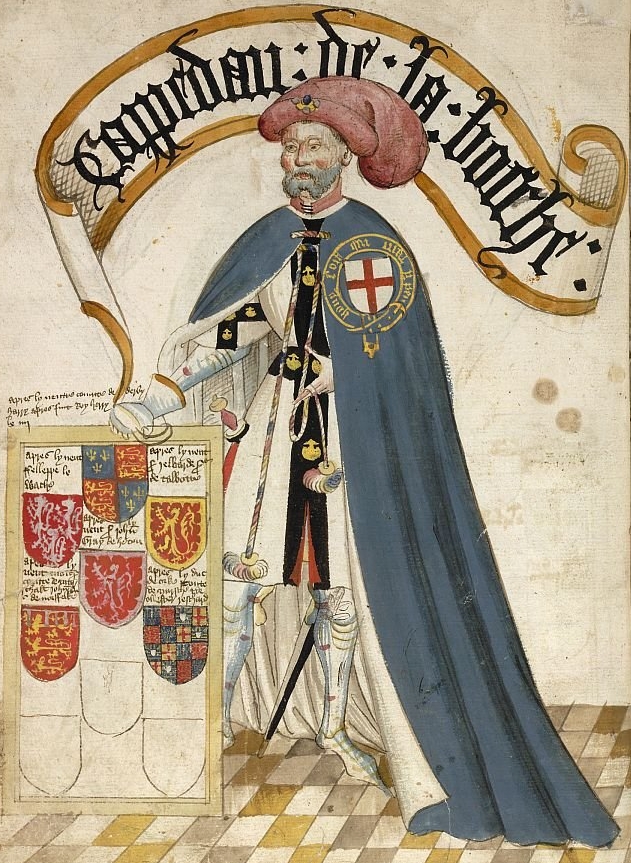
He soon returned his loyalty to the English, and in 1367 he accompanied the Black Prince to Spain, fighting at the Battle of Nájera. There he again faced du Guesclin, but this time du Guesclin was captured, and Grailly was put in charge of the prisoner. For his service, he was made Constable of Aquitaine in 1371.
Still fighting for the English, Grailly led a relief force when the French attacked La Rochelle in 1372. While trying to lift the siege of Soubise, his force was surprised by a French-led group under Owain Lawgoch, a Welsh soldier of fortune. Grailly and Sir Thomas Percy, seneschal of Poitou, were captured.
Grailly spent the rest of his life as a French prisoner at the Temple in Paris. Charles V considered him too dangerous to ransom back to the English. Grailly refused to accept freedom if it meant taking up arms against the king of England, which he had sworn never to do. His loyalty to the Black Prince was so strong that, upon hearing of the prince’s death, he lost all will to live, refused food, and died a few days later in Paris.
He left no heirs from his marriage to Rose d’Albret. His uncle, Archambaud, Count of Foix and of Bigorre, took the title Captal de Buch, which then passed to his descendants, the Counts of Foix.
Last updated 2026-09-28 from the source article.
Did You Know?
- The castle of Benauges was hereditary in the Grailly family after having been granted to Jean I de Grailly in the early 1260s.
- A gold signet ring belonging to Jean III de Grailly is held in the British Museum, dating to the late 14th century.
More in Ancient & Medieval Military Leaders
Sources
Compiled from Wikipedia and the sources listed below. Text from Wikipedia is available under CC BY-SA 4.0; this entry is adapted from it.
- Wikipedia: Jean III de Grailly (CC BY-SA 4.0).
Spotted an error? Know more?
Reader corrections go straight into our review queue. Suggest an edit · How this site is sourced