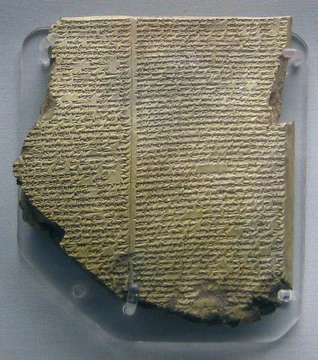
De architectura
Only surviving architectural treatise from antiquity, foundational for classical architecture.

Vitruvius, a Roman architect and military engineer, wrote *De architectura* (known in English as *On Architecture* or *Ten Books on Architecture*) for his patron, Emperor Caesar Augustus, to serve as a guide for building projects. It is the only architectural treatise to have come down from the ancient world, and since the Renaissance it has been considered the first known work on architectural theory, as well as a key source for the classical architectural canon.
The text gathers information on Greek and Roman buildings and offers prescriptions for planning and designing military camps, cities, and structures both large—such as aqueducts, buildings, baths, and harbours—and small, including machines, measuring devices, and instruments. Because Vitruvius wrote early in the Roman architectural revolution, before cross vaulting, domes, concrete, and other hallmarks of Imperial Roman architecture were fully developed, his ten books provide little detail on those distinctive innovations.
Original copies likely contained a few illustrations—perhaps eight or ten—based on references in the text, but only one may have survived in any medieval manuscript. This lack was addressed in 16th-century printed editions, which included many large plates. Manuscript copies were produced during the Carolingian Renaissance, but they saw little use until the 15th century, when the work gained great interest and influence, first in Italy and then across Europe.
Probably composed between 30 and 20 BC, the treatise draws on the knowledge and views of many Greek and Roman writers on architecture, the arts, natural history, and building technology. Vitruvius frequently cites authorities, praising Greek architects for developing temple building and the Doric, Ionic, and Corinthian orders, and provides key accounts of the origins of building in the primitive hut. He advises on the qualifications of an architect in Book I and on types of architectural drawing. Although often quoted for his famous triad of architectural characteristics—*utilitas*, *firmitas*, and *venustas* (utility, strength, and beauty)—the aesthetic principles that later influenced treatise writers are outlined in Book III. Derived partly from Latin rhetoric through Cicero and Varro, Vitruvian terms for order, arrangement, proportion, and fitness for purpose have guided architects for centuries.
The ten books cover a wide range of subjects Vitruvius saw as touching on architecture, including mathematics, astronomy, meteorology, and medicine. In the Roman view, architecture had to account for everything affecting the physical and intellectual life of humans and their surroundings. For example, in Book II, Vitruvius advises architects working with bricks to understand pre-Socratic theories of matter to predict how materials will behave. Book IX relates Plato’s abstract geometry to the surveyor’s daily work. Astrology is cited for insights into organizing human life, and astronomy is needed for understanding sundials. Vitruvius also references Ctesibius of Alexandria and Archimedes for their inventions, Aristoxenus for music, Agatharchus for theatre, and Varro for architecture.
Vitruvius sought to address the ethos of architecture, declaring that quality depends on the social relevance of the artist’s work, not on form or workmanship alone. The most famous declaration from the work—often quoted as “Well building hath three conditions: firmness, commodity, and delight”—comes from Sir Henry Wotton’s 1624 translation of a passage in Book I, chapter iii, section 2. In modern English, it reads: “The ideal building has three elements; it is sturdy, useful, and beautiful.” Vitruvius also studied human proportions in Book III, and this part of his canons was later adapted in Leonardo da Vinci’s famous drawing *Homo Vitruvianus* (“Vitruvian Man”).
On domestic architecture, Vitruvius gives a mixed message. While he offers admiration for householders who built their own homes without an architect—similar to Aristotle—his ambivalence is clearest in the introduction to Book 6, which focuses exclusively on residential architecture. Instead of writing about the virtues of residences or family life, Vitruvius relates an anecdote about the Greek ethical principle of *xenia*: showing kindness to strangers.
The treatise is also important for its descriptions of machines used for engineering structures—such as hoists, cranes, and pulleys—and war machines like catapults, ballistae, and siege engines. Vitruvius describes the construction of sundials and water clocks, as well as the use of an aeolipile, the first steam engine, as an experimental demonstration.
- Author
- Vitruvius
- Field
- Architecture, engineering, military technology
- Nationality
- Roman
- Known for
- First known book on architectural theory; Vitruvian triad (utility, strength, beauty); influence on Renaissance architecture
- Period written
- Probably between 30 and 20 BC
- Structure
- Ten books or scrolls
Lore & Background
Vitruvius wrote De architectura early in the Roman architectural revolution, before the full development of cross vaulting, domes, concrete, and other innovations associated with Imperial Roman architecture. The work combines knowledge from many antique writers, Greek and Roman, on architecture, the arts, natural history, and building technology. Vitruvius cites many authorities, often praising Greek architects for temple building and the orders (Doric, Ionic, Corinthian), and provides key accounts of the origins of building in the primitive hut.
Reader's Guide
De architectura is significant as the only treatise on architecture to survive from antiquity, making it a primary source for understanding classical architectural theory and practice. Its influence revived during the 15th century, initially in Italy and then across Europe, shaping Renaissance architecture. The work's famous 'triad' of characteristics—utilitas, firmitas, and venustas (utility, strength, and beauty)—has guided architects for centuries. Vitruvius's descriptions of Roman technology, including aqueducts, mills, dewatering machines, and war engines, provide crucial knowledge of ancient engineering. The treatise also preserves the story of Archimedes' detection of adulterated gold and describes the aeolipile, an early steam engine experiment. Although original illustrations were largely lost, 16th-century printed editions remedied this with many large plates.
Did You Know?
- De architectura is the only treatise on architecture to survive from antiquity.
- Vitruvius advised against using lead pipes for drinking water, based on observed illnesses in lead foundries.
- The work describes the aeolipile, the first steam engine, used to demonstrate atmospheric air movements.
- Leonardo da Vinci's famous 'Vitruvian Man' drawing was adapted from Vitruvius's studies of human proportions in Book III.
Frequently Asked Questions
Who wrote De architectura and for whom was it dedicated?
Vitruvius, a Roman architect and military engineer, composed the work and presented it to Emperor Caesar Augustus as a practical guide for overseeing construction projects.
What exactly is De architectura?
It is a ten-book treatise covering architecture, engineering, and military technology, and it stands as the earliest surviving text devoted to architectural theory in the Western tradition.
What is the Vitruvian triad and why does it matter?
Vitruvius argued that any well-designed building must satisfy three criteria: utility (it works), strength (it stands firm), and beauty (it pleases the eye). This triad became a foundational principle that architects and theorists have referenced for over two millennia.
Why is De architectura so important to the history of architecture?
Because it is the only architectural treatise to survive from the ancient world, it served as the primary theoretical reference for classical building practices and profoundly shaped how Renaissance architects approached design and proportion.
When was De architectura written?
Scholars generally date its composition to the period between roughly 30 and 20 BC, placing it in the early years of Augustus's rule.
More in Ancient Histories And Epics 1-17
Spotted an error? Know more?
This is a living reference — every entry is fact-audited, and reader corrections feed straight into our audit queue. Suggest an edit · See this site's audit record