Book of Documents
One of the Five Classics, foundational to Chinese political philosophy.

The *Book of Documents* (Chinese: 書經; pinyin: *Shūjīng*), also called the *Classic of History*, ranks among the Five Classics of ancient Chinese literature. This collection of rhetorical prose, linked to legendary and historical figures, underpinned Chinese political philosophy for more than two thousand years.
One of China’s oldest literary debates surrounds the text, centering on competing versions. After Qin Shi Huang’s book burnings, the scholar Fu Sheng preserved a version consisting of 29 chapters (or *piān*). Because they were written in the script used at the start of the Western Han dynasty, these became known as the “Modern Texts” (or “Current Script”; *jīnwén*).
A longer version was reportedly discovered in the late 2nd century BC, hidden in a wall of Confucius’s family estate in Qufu by his descendant Kong Anguo. These texts, written in a script predating the Qin standardization, were called the “Old Texts” (*gǔwén*). They contained 16 more chapters than the Modern Texts. The Old Texts were lost by the end of the Eastern Han dynasty, while the Modern Texts continued to circulate—especially through Ouyang Gao’s study, known as the *Ouyang Shangshu*. This version formed the basis for later Eastern Han scholars Ma Rong and Zheng Xuan.
In 317 AD, Mei Ze presented the Eastern Jin court with a 58-chapter version of the *Book of Documents* (59 if the preface is counted), claiming it was Kong Anguo’s text. Despite doubts from a few scholars, this version was accepted and later canonized as part of Kong Yingda’s project. Only in the 17th century did Qing dynasty scholar Yan Ruoqu argue that the “Old Texts” were fabrications, “reconstructed” in the 3rd or 4th centuries AD.
The transmitted edition organizes its chapters into four sections, each representing a different era: the legendary reign of Yu the Great, and the Xia, Shang, and Zhou dynasties. The Zhou section makes up more than half the text. Some of its modern-script chapters are among the earliest examples of Chinese prose, recording speeches from the early Zhou dynasty in the late 11th century BC. Although the other three sections claim to record earlier material, most scholars believe that even the New Script chapters in those sections were composed later than those in the Zhou section. Chapters dealing with the earliest periods may date from as recently as the 4th or 3rd centuries BC.
**Textual history**
The history of the various versions of the *Documents* is complex and has sparked a long-running literary and philosophical controversy.
**Early references**
Later tradition holds that Confucius (551–479 BC) compiled the *Book of Documents* by selecting from a much larger collection of documents, with some of the remainder included in the *Yi Zhou Shu*. However, the early history of both texts is unclear. Beginning with Confucius, writers increasingly drew on the *Documents* to illustrate general principles, though several different versions seem to have been in use.
Six citations to unnamed chapters of the *Documents* appear in the *Analects*. While Confucius invoked the pre-dynastic emperors Yao and Shun, as well as figures from the Xia and Shang dynasties, he complained about the lack of documentation prior to the Zhou. The *Documents* were cited more frequently in works through the 4th century BC, including the *Mencius*, *Mozi*, and *Zuo Zhuan*. These authors favored documents about Yao, Shun, and the Xia dynasty—chapters now believed to have been written in the Warring States period. The chapters currently considered the oldest—mostly about the early Zhou—were rarely used by Warring States authors, perhaps because of the archaic language or a less familiar worldview. Fewer than half the passages quoted by these authors appear in the received text. Authors such as Mencius and Xunzi, while quoting the *Documents*, refused to accept it as entirely genuine. This attitude contrasts with the reverence shown to the text during the Han dynasty, when its compilation was attributed to Confucius.
**Han dynasty: Modern and Old Scripts**
Many copies of the work were destroyed during the Qin dynasty’s Burning of Books. Fu Sheng reconstructed part of the work from hidden copies in the late 3rd to early 2nd century BC, at the start of the Han dynasty. The texts he transmitted were known as the “Modern Script” (*jīn wén*) because they were written in the clerical script. It originally consisted of 29 chapters, but the chapter “Great Speech” (*Tài shì*) was lost shortly afterward and replaced by a new version. The remaining 28 chapters were later expanded into 30 when Ouyang Gao divided the “Pangeng” chapter into three sections.
During the reign of Emperor Wu, renovations of Confucius’s home reportedly uncovered several manuscripts hidden within a wall, including a longer version of the *Documents*. These texts were called “Old Script” because they were written in the pre-Qin seal script. They were transcribed into clerical script and interpreted by Confucius’s descendant Kong Anguo. Han dynasty sources give contradictory accounts of this find. According to the commonly repeated account in the *Book of Han*, the “Old Script” texts included the chapters preserved by Fu Sheng, another version of the “Great Speech” chapter, and some 16 additional ones. What happened to these manuscripts is unclear. The *Book of Han* states that Liu Xiang collated the Old Script version against the three main “Modern Script” traditions, creating a version of the *Documents* that included both groups. This was championed by his son Liu Xin, who requested in a letter to Emperor Ai that a *boshi* position be established for its study. This did not happen. Most likely...
- type
- Classic of Chinese literature
- field
- Political philosophy, history, literature
- language
- Classical Chinese
- known_for
- Foundation of Chinese political philosophy; subject of a long-running literary controversy over different versions
- sections
- Four sections: legendary reign of Yu the Great, Xia, Shang, and Zhou dynasties
- earliest_chapters
- Late 11th century BC (Zhou dynasty speeches)
Quick Facts
- Author
- Various; compiled by Confucius
- Title Orig
- lzh · 書
- Country
- China
- Language
- Old Chinese
- Subject
- Compilation of rhetorical prose
Facts from the source article.
Lore & Background
The Book of Documents was the subject of one of China's oldest literary controversies, between proponents of different versions of the text. A version was preserved from Qin Shi Huang's burning of books and burying of scholars by scholar Fu Sheng, in 29 chapters. This group of texts were referred to as 'Modern Texts' because they were written with the script in use at the beginning of the Western Han dynasty. A longer version of the Documents was said to be discovered in the wall of Confucius's family estate in Qufu by his descendant Kong Anguo in the late 2nd century BC. These texts were referred to as 'Old Texts' because they were written in the script that predated the standardization of Chinese script during the Qin. Compared to the Modern Texts, the Old Texts material had 16 more chapters. The Old Texts had been lost at the end of the Eastern Han dynasty, while the Modern Texts text enjoyed circulation, in particular in Ouyang Gao's study, called the Ouyang Shangshu.
Reader's Guide
The Book of Documents holds immense significance as one of the Five Classics, shaping Chinese political philosophy for over two millennia. Its textual history is complex and controversial. The Modern Texts version, preserved by Fu Sheng after the Qin book burning, consists of 29 chapters (later expanded to 30). The Old Texts version, allegedly discovered in Confucius's wall, added 16 more chapters but was lost by the end of the Eastern Han. However, Qing dynasty scholar Yan Ruoqu proposed in the 17th century that these Old Texts were fabrications from the 3rd or 4th centuries AD. The transmitted edition groups texts into four sections: legendary Yu the Great, Xia, Shang, and Zhou dynasties, with the Zhou section accounting for over half. Most scholars believe the earlier sections were composed later than the Zhou chapters, with some as recent as the 4th or 3rd centuries BC. Modern discoveries of bamboo slips from Chu tombs (c. 300 BC) have shed new light on the work, including previously unknown passages.
Did You Know?
- The Book of Documents was the subject of one of China's oldest literary controversies, between proponents of different versions of the text.
- A version was preserved from Qin Shi Huang's burning of books by scholar Fu Sheng, in 29 chapters.
- Modern discoveries of bamboo slips from Chu tombs (c. 300 BC) include previously unknown passages of the work.
The Dawn of Written Literature
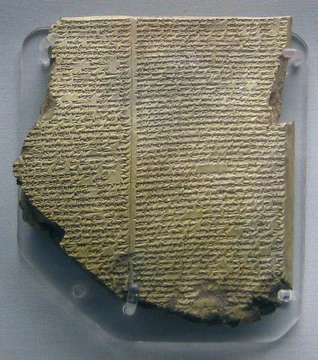
Before writing became widespread, human stories, prayers, and practical knowledge traveled by voice alone, and much of that oral tradition simply vanished into silence. The earliest surviving written literature emerges around 2600 BC, rooted in classical Sumerian culture. From the site of Abu Salabikh, we recover the Instructions of Shuruppak and a hymn dedicated to the Kesh temple, while in Egypt, the Life of Metjen was inscribed at Saqqara in roughly the same era. These pioneering works were not confined to a single medium; ancient record-keepers committed their words to stone, pressed them into clay tablets, brushed them across papyri, carved them into palm leaves, and even cast them in metal. This diversity of materials reflects how deeply embedded writing was in both the practical and spiritual life of early civilizations. Even so, a number of written works, the exact count unknown, have been lost to the passage of centuries, meaning the true depth of what was composed in those first centuries of literacy remains forever beyond our reach.
A Mosaic of Civilizations and Genres
The surviving corpus of ancient literature reveals a remarkable plurality of voices. Sumerian scribes composed hymns to deities such as Enlil and Enheduanna, staged a debate between sheep and grain, and codified laws under rulers like Urukagina and Ur-Nammu. Egyptian writers produced everything from the Pyramid Texts and the Book of the Dead to mathematical treatises such as the Rhind and Moscow Papyri, satirical pieces like the Satire of the Trades, and personal narratives including the Autobiography of Weni. Akkadian literature gave us the Code of Hammurabi, the earliest complete version of the Epic of Gilgamesh, and the Atra-Hasis flood narrative. Hittite, Ugaritic, Sanskrit, and Chinese traditions each contributed their own distinct strands—military oaths, the Baal Cycle, the Rig Veda, and the Classic of Poetry, among others. By the 7th century BC, Greek poets like Hesiod and Archilochus were shaping lyric and didactic verse, while Vedic scholars compiled geometric sutras and etymological treatises. Together these works span religious ritual, scientific inquiry, royal proclamation, legal codification, poetry, plays, and philosophical dialogue, demonstrating that the impulse to write was a universal human drive.
Texts That Outlived Centuries
A few ancient compositions achieved a kind of literary immortality by being revised, copied, and reimagined across many generations. The Epic of Gilgamesh is the most striking example: its earliest Sumerian stories date to roughly 2250–2000 BC, an earliest complete version appeared in Akkadian around 1800 BC, and yet further Akkadian versions and younger stories continued to be composed as late as 1200–900 BC. That is a span of more than a thousand years of continuous literary engagement with a single narrative. The Egyptian Book of the Dead follows a similar pattern; the Papyrus of Ani, preserved around 1240 BC, is one well-known witness, but other versions of the text likely reach back to the 18th century BC. Certain works resist easy dating altogether, making it difficult to pin down when a particular formulation first took shape. What these long-lived texts share is a deep cultural resonance that compelled successive generations of scribes to preserve, adapt, and transmit them, ensuring that a story or prayer composed in one age could still be read, recited, and revered in the next.
The Fragility of the Written Record
For all the grandeur of the ancient literary corpus that has reached us, it represents only a fragment of what was once composed. The very list of surviving texts is acknowledged as incomplete, and a number of written works, the exact count unknown, have been lost to the passage of centuries. Even in the era before writing became widespread, oral traditions carried stories and knowledge, though they did not always endure; only a scattering of texts and fragments has made it to the present. Once a work was committed to a physical medium, its survival was far from guaranteed. Stone inscriptions, clay tablets, papyri, palm-leaf manuscripts, and metal objects each carry different vulnerabilities to erosion, fire, humidity, and deliberate destruction. The fact that we can read the Sumerian King List, the Egyptian Diary of Merer, or the Hittite Anitta text today is partly a matter of fortunate preservation. Behind every extant document lies a silent graveyard of lost compositions whose titles, authors, and contents will never be recovered, reminding us that the history of literature is as much a story of disappearance as one of creation.
Frequently Asked Questions
What is the Book of Documents?
The Book of Documents, also called the Classic of History, is an anthology of formal speeches and proclamations credited to rulers and officials of early China. It is one of the Five Classics of Chinese literature and was composed in Classical Chinese.
What are the four sections of the Book of Documents?
The text is organized into four major parts tracing the legendary reign of Yu the Great, the Xia dynasty, the Shang dynasty, and the Zhou dynasty. Together they chart the evolution of political and moral thought across successive Chinese ruling houses.
Why is the Book of Documents important?
It shaped the discourse on governance, virtue, and statecraft in Chinese civilization for well over two thousand years. As a pillar of the Five Classics, it became a foundational text in Confucian education and political theory.
What controversy surrounds the Book of Documents?
The work has been at the center of a centuries-long scholarly dispute over which chapters and recensions are genuinely ancient versus later forgeries. This ongoing debate over textual authenticity makes it one of the most contested works in the classical Chinese canon.
How old are the earliest chapters in the Book of Documents?
The oldest surviving passages date to the late 11th century BC and take the form of Zhou dynasty court speeches. This makes the collection one of the oldest continuous literary traditions in Chinese literature.
More in Ancient Histories And Epics 1-17
Spotted an error? Know more?
This is a living reference — every entry is fact-audited, and reader corrections feed straight into our audit queue. Suggest an edit · See this site's audit record