Paleo-Indians
First peoples to enter and inhabit the Americas.

NPS · Public domain
Paleo-Indians—sometimes spelled Paleoindians—were the earliest people to enter and live in the Americas, arriving near the end of the Late Pleistocene. The name combines *paleo-*, from an Ancient Greek word meaning "old" or "ancient," with "Indian," a historical term for the Indigenous peoples of the Americas. This term refers specifically to a stone-tool period in the Western Hemisphere and should not be confused with "Paleolithic."
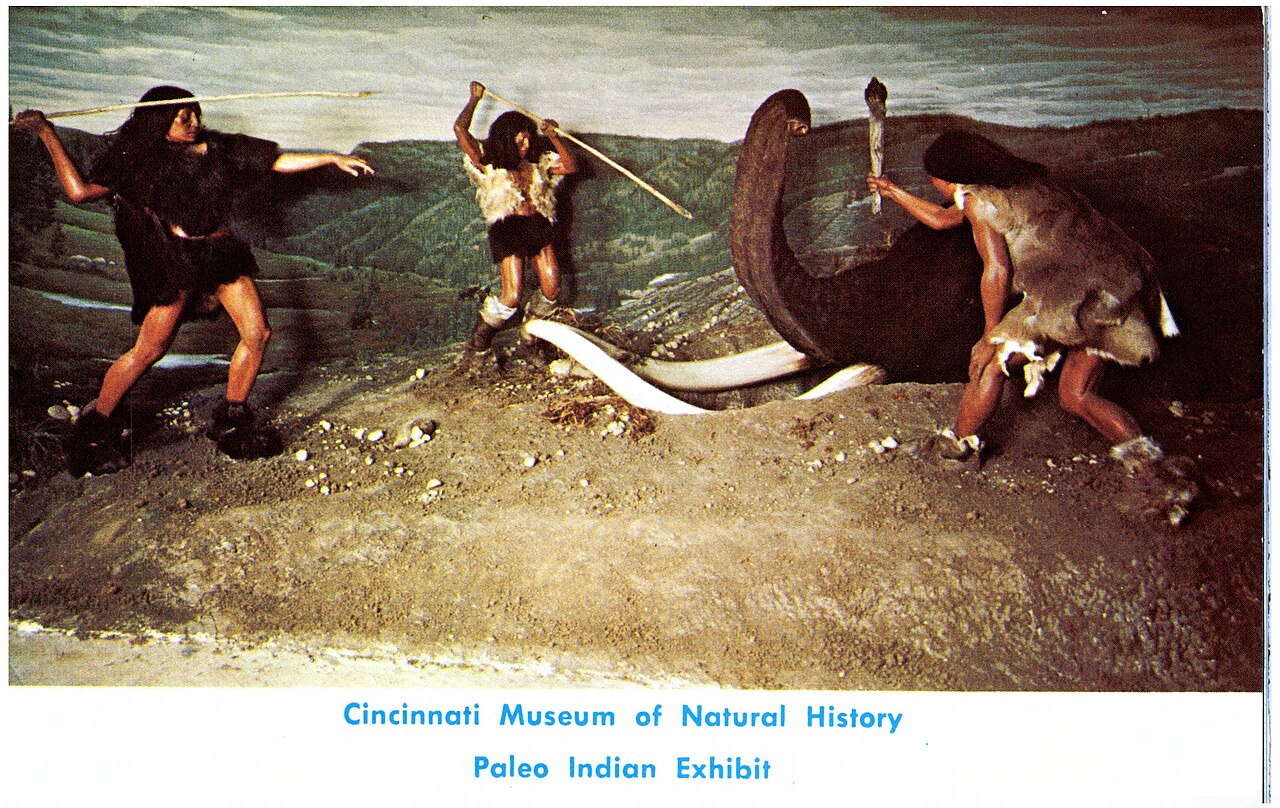
Traditional thinking holds that these early people were big-animal hunters who crossed a land bridge called Beringia, which connected North Asia to Alaska and existed from about 45,000 to 12,000 BCE (47,000–14,000 BP). Small, isolated groups of hunter-gatherers followed herds of large plant-eaters deep into Alaska. Around 16,500 to 13,500 BCE (18,500–15,500 BP), ice-free paths opened along the Pacific coast and through North American valleys, letting land animals—and then humans—move south into the continent's interior. These migrants traveled on foot or by boat along the coastline. The exact dates, routes, and number of migration waves (likely three from the Bering Sea region) are still debated.
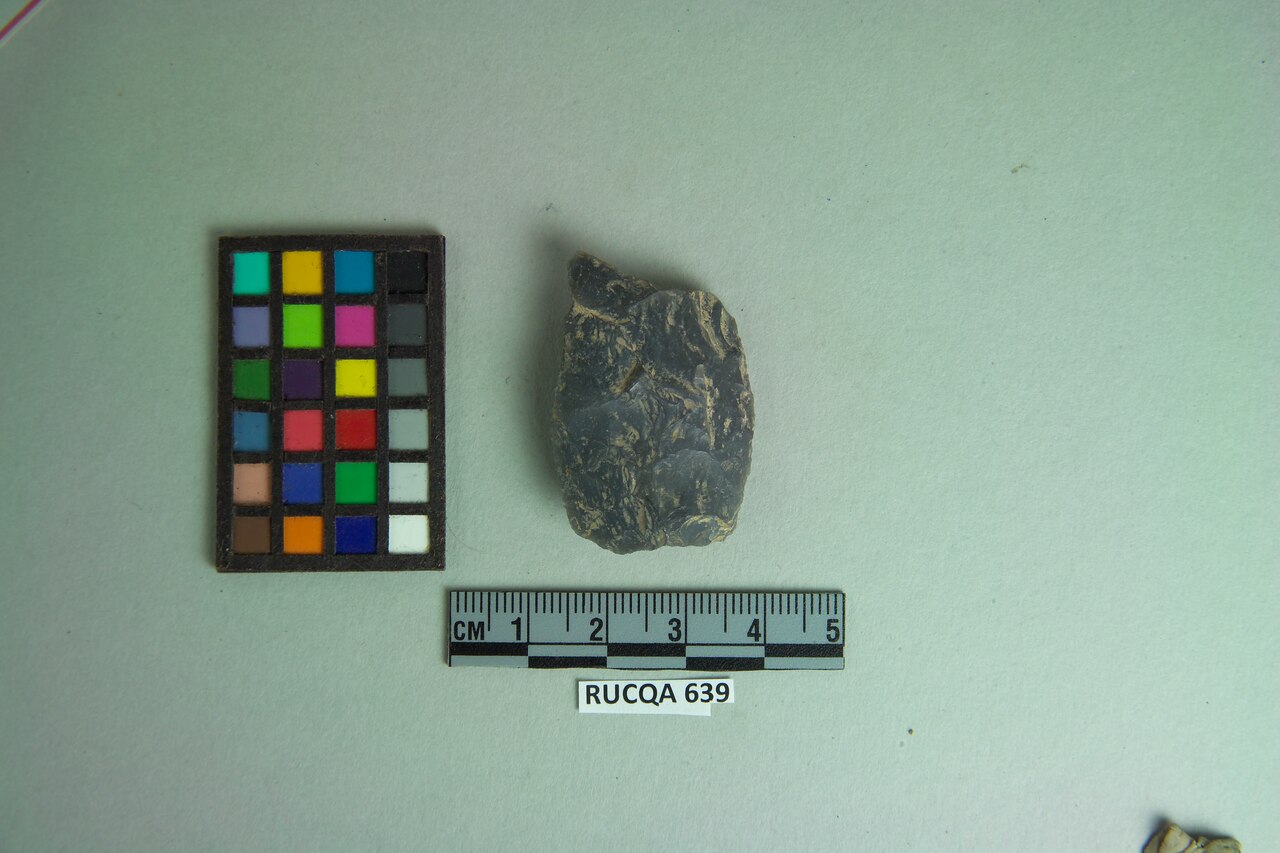
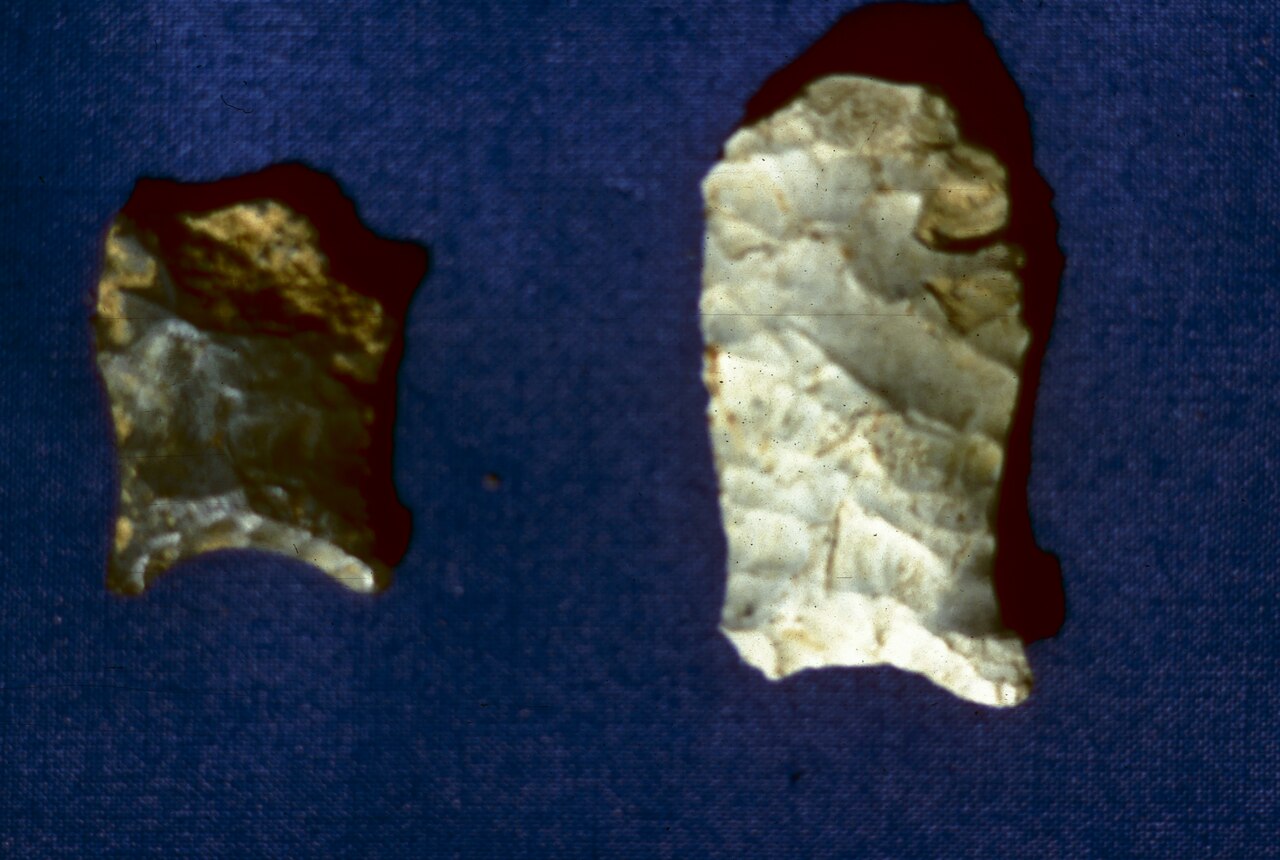
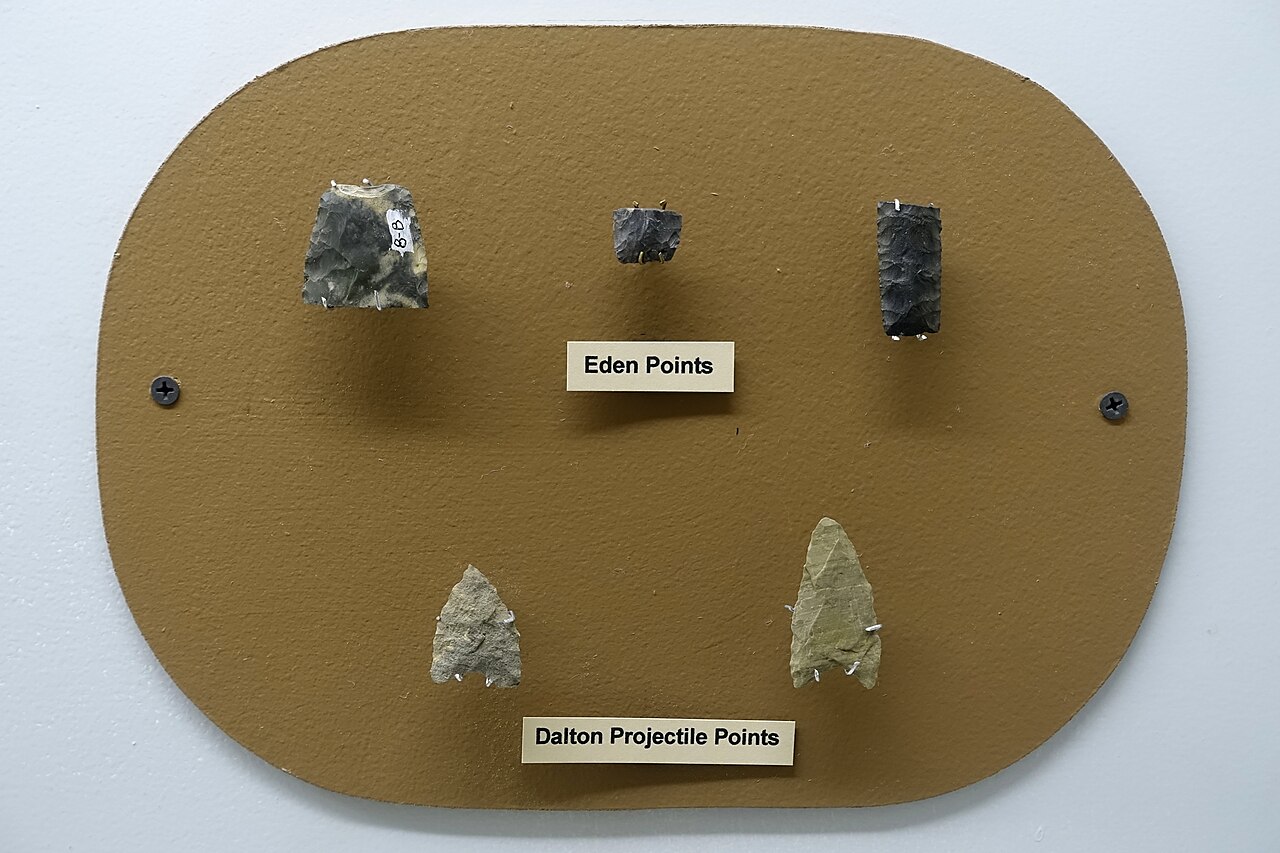
The main evidence for early human activity in the Americas comes from stone tools, especially projectile points and scrapers. Archaeologists and anthropologists use these crafted, flaked lithic tools to classify cultural periods. Paleo-Indians lived alongside and hunted many now-extinct megafauna (large animals). Most of these large animals died out near the end of the Paleo-Indian period as part of the Late Pleistocene megafauna extinctions, and whether human hunting played a role is hotly contested. Between 8000 and 7000 BCE (10,000–9,000 BP), the climate stabilized, populations grew, stone-tool technology improved, and people began living more settled lives during the following Archaic Period.
The term "Paleoindian" was first used by Frank H. H. Roberts in 1940 to describe artifacts, not people—specifically, archaeological assemblages he thought were old and "adapted to conditions unlike those in modern times." Early users like James Bennett Griffin (1946) included assemblages now considered part of the Archaic period, contrasting them with "Neo-Indian" groups whose technology resembled the Old World Neolithic. John Witthoft (1952) saw Paleo-Indian as a technological stage lacking "pecked and ground" stone tools. Hannah Marie Wormington (1957) was the first to apply the term specifically to the Americas' first inhabitants: people living there before 6,000 years ago, alongside extinct animals, who made fluted stone points. According to a 2016 study, modern North American archaeology uses "Paleoindian" to mean "(1) the earliest well-documented culture in North America, (2) the characteristics of sites and artifact assemblages, and (3) a particular economic livelihood."
Researchers still debate the specifics of Paleo-Indian migration—the dates and routes. The classic theory says these early migrants entered Beringia between eastern Siberia and present-day Alaska about 17,000 years ago, when glaciers lowered sea levels. They likely followed now-extinct Pleistocene megafauna along ice-free corridors between the Laurentide and Cordilleran ice sheets. Another idea is migration down the Pacific coast on foot or by boat to South America, though evidence for this would now be underwater due to sea-level rise of over a hundred meters after the last glacial period. The timing of the peopling of the Americas is hotly debated: conventional estimates place humans in North America between 15,000 and 20,000 years ago, but some groups may have reached South America as early as 25,000 years ago. Most agree on a Siberian origin and widespread habitation after the Last Glacial Maximum, roughly 16,000 to 13,000 years ago.
The Paleo-Indian period is generally considered to end around 9000 to 8000 BP (Before Present, with 1950 CE as year zero). The term "Paleoamerican" is sometimes used for the pre-Clovis Paleo-Indian period, especially in South America, and carries controversial implications about an earlier migration wave before the ancestors of modern Indigenous peoples. Some authors suggest that sites in the Americas older than 13,500–13,000 BP should be called Upper Paleolithic, with the Paleo-Indian period following. Early evidence of Paleo-Indians comes from sites in Alaska (eastern Beringia), then northern British Columbia, western Alberta, and the Old Crow Flats region of Yukon. These peoples eventually spread across all of the Americas.
- field
- Archaeology, Anthropology
- nationality
- First peoples of the Americas (originating from Siberia)
- known_for
- First inhabitants of the Americas; hunters of now-extinct megafauna; creators of fluted stone projectile points
Lore & Background
Paleo-Indians were the first peoples to enter and inhabit the Americas, arriving towards the end of the Late Pleistocene period. Small isolated groups of hunter-gatherers migrated alongside herds of large herbivores into Alaska. The earliest widely accepted dates for human presence in the Americas extend back to at least 15,000 BP and possibly earlier (e.g., 16,000–20,000 BP). People traveled on foot or used boats along the coastline, though the number of migration waves from the Bering Sea to the American continent is debated and not a settled fact.
Reader's Guide
Paleo-Indians are significant as the first documented human inhabitants of the Americas, marking the beginning of human presence in the Western Hemisphere. Their stone tools, particularly projectile points and scrapers, provide the primary evidence of earliest human activity and are used by archaeologists to classify cultural periods. They lived alongside and hunted now-extinct megafauna, such as woolly mammoths and mastodons, and their potential role in the Late Pleistocene megafauna extinctions remains controversial. The term 'Paleoindian' was first coined by Frank H. H.
Did You Know?
- Stone tools, particularly projectile points and scrapers, are the primary evidence of earliest human activity in the Americas.
Gallery
Frequently Asked Questions
Who are the Paleo-Indians?
The Paleo-Indians were the very first human groups to enter and settle in the Americas, originating from Siberia and arriving during the Late Pleistocene. They are distinct from the broader Paleolithic term and specifically refer to the earliest lithic-era peoples of the Western Hemisphere.
What are Paleo-Indians known for?
They are recognized as the first inhabitants of the Americas, skilled hunters of now-extinct megafauna, and the creators of distinctive fluted stone projectile points. Their small, mobile bands followed large herbivore herds across vast stretches of land, including deep into Alaska.
When did Paleo-Indians first arrive in the Americas?
The earliest widely accepted dates place human presence in the Americas at roughly 15,000 years before present, though some evidence pushes that window back to 16,000–20,000 BP. The exact timing, routes, and number of migration waves remain topics of active debate in archaeology and anthropology.
How did Paleo-Indians live and survive?
They existed as small, isolated hunter-gatherer groups that tracked herds of large herbivores across the landscape. Their toolkits centered on flaked and fluted stone points used for hunting, making them highly specialized predators of megafauna that no longer exist.
Why are Paleo-Indians important to the study of ancient civilizations?
They represent the foundational human chapter in the Americas, establishing the earliest cultural and technological layer of the Western Hemisphere. Understanding their migrations, subsistence strategies, and toolmaking provides the baseline against which all later Indigenous cultures of the continent are measured.
More in Ancient Civilizations 1-15
Spotted an error? Know more?
This is a living reference — every entry is fact-audited, and reader corrections feed straight into our audit queue. Suggest an edit · See this site's audit record