Football Manager (1982 video game)
The first game in the Football Manager series.
Football Manager is a hybrid sports business simulation video game released by Addictive Games in 1982. Designed by Kevin Toms, it is the first game in the Football Manager series.
Quick Facts
- Developer
- Addictive Games
- Designer
- Kevin Toms
- Released
- January 1982
- Genre
- Sports, business simulation
- Modes
- Single-player
Facts from the source article.
Gameplay
Built entirely in BASIC, this game relied on text and keyboard input, though some versions included animated match highlights. Players pick a real team and aim to climb from the fourth division to the first, while also winning the FA Cup, and can continue for as many seasons as they like. The team and player names are genuine, but their attributes are not accurate: every chosen team starts in the fourth division with a randomly generated squad. Each player has a skill rating between 1 and 5, and an energy rating from 1 to 20. In earlier editions, the game randomly offered a new player for purchase. To avoid injury, players must be rested to restore their energy. At the end of each season, skill ratings change randomly—Kevin Toms explained this was done to maintain the game's challenge and prevent boredom. The team itself has ratings for defence, midfield, and attack, calculated from the total skills of the selected players in those positions, plus an average energy rating and a morale rating that rises with wins and falls with losses.
During a match, the screen updates only when a goal is scored. In versions with animated graphics, shot attempts appear in isometric 3D at either end of the pitch, alongside a scoreboard. The player has no control over the match while it runs. Financial management is also required: weekly income and expenses are calculated, and bank loans can be taken, with credit limits tied to the division—250,000 pounds in division four, 500,000 in division three, 750,000 in division two, and 1,000,000 in division one. A basic transfer system exists: random players become available for bidding, but if the squad reaches the maximum of 16, no new players can be bought. Players can also list their own squad members for sale and accept or reject incoming bids. Game progress can be saved at any time. A customiser utility was included, allowing users to rename teams and players.
Development and release
The first Football Manager game was entirely text-based and created by Kevin Toms on a Video Genie, a machine similar to Tandy's TRS-80. Its origins trace back to a board game Toms designed when he was eleven, which was itself influenced by the 1968 board game Soccerama. Early versions of that board game used cardboard from cereal packets and blank card decks. After buying a ZX81, Toms saw it as a far better platform for running the game, particularly for automating league table calculations and fixtures. A major challenge during development was the ZX81's limited memory, which forced team and player names to be no longer than eight characters. This meant clubs like Southampton were excluded because Toms could not shorten the name suitably. He worked on the game part-time for about a year while employed as a programmer at the Open University.
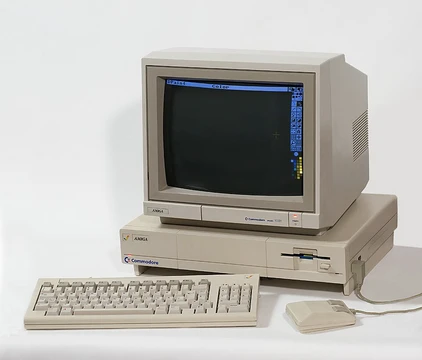
The game was later adapted for Sinclair's ZX80 and ZX81. To release it in January 1982, Toms founded the software label Addictive Games and left his job at the Open University. A port to the ZX Spectrum introduced animated graphics for match highlights. The game proved hugely successful and was ported to many systems between 1984 and 1987. Versions for the Amiga, Amstrad CPC, Atari ST, BBC Micro, Commodore 64, MSX, and DOS retained or enhanced features like the match highlight graphics. In contrast, ports for the Acorn Electron, Atari 8-bit computers, Commodore 16, and Plus/4 remained text-only, like the original. The Commodore 64 version saw a North American release in 1984.
Reception
Football Manager shifted half a million copies within its first six years on the market, making it a clear commercial success. The gaming press generally liked it, though Sinclair User pointed out that the team and player ratings weren't very realistic. What players really enjoyed was the thrill of watching matches unfold. Electron User called it one of the top strategy games for home computers, with reviewer Dave Carlos saying he doubted it would ever be surpassed. Later, critics Andrew Rollings and Iain Macintosh credited it with launching the football management genre. At the 1983 Golden Joystick Awards, it was up for best strategy game but lost to The Hobbit from Melbourne House. In 1985, Tony Hetherington of Computer Gamer picked it for a list of 15 essential Spectrum games. By 1991, Amiga Power gave the budget re-release a low 19% score, noting it had been outclassed by newer games, but still called it massively addictive, a classic, and a legend of computer gaming. In 2004, a special Your Sinclair issue ranked the ZX Spectrum version the 26th best game ever. Steve Mann of Personal Computer World recommended it, saying he could vouch for the satisfaction it offered. Bob Wade of Personal Computer Games agreed, calling it one of the most addictive games he had ever played.
Modern ports
In 2015, Kevin Toms proposed a mobile version of his 1982 game Football Manager to his audience, using skills from his business app work. The result, Football Star Manager (also called Kevin Toms Football Star Manager), came out in 2016 to strong approval, especially from fans of the original series. It launched on iOS and Android, later reaching macOS, Windows 10, and Amazon Fire, aiming to stay as faithful as possible to the 1982 classic. For the game’s 40th anniversary, Toms started a Kickstarter in January 2022 for a new version called Football New Manager. Curveball Games plans to release Kevin Toms Football Star Manager on Steam on August 14, 2025.
More in Amiga Game Library
Spotted an error? Know more?
Reader corrections go straight into our review queue. Suggest an edit · How this site is sourced