Floor 13 (video game)
Manage a secret police force to keep the government popular.
In this 1991 strategy game from PSI Software and Virgin Games, you run a secret UK agency from its hidden base on a bank building’s thirteenth floor in London Docklands. You oversee covert domestic operations. A sequel, Floor 13: Deep State, came out in November 2020.
Quick Facts
- Developer
- PSI Software
- Publisher
- Virgin Games
- Producer
- Andrew Wright
- Designer
- David Eastman
- Programmer
- Shahid Ahmad
- Artist
- Carl Cropley
- Released
- 1992
- Genre
- Strategy
Facts from the source article.
Plot
The player is the Director General of a fake executive agency called the Department of Agriculture and Fisheries, which hides a secret police force that keeps the government popular by any means necessary. Answering only to the Prime Minister, the Director General can use wiretapping, surveillance, smear tactics, disinformation, burglary, kidnapping, torture, and assassination. A subplot involves the Director General's membership in a secret society called the Secret Masters of Thoth, whose missions include protecting a fellow member from a Mafia assassination, foiling pod people subversion, protecting the Church of the SubGenius from scandal, and restraining the Illuminati. The game references real-world groups and events such as the Irish Troubles, Shining Path, the BCCI scandal, and the apparent suicides of Roberto Calvi and Jonathan Moyle.
Gameplay
The game is menu-driven, presenting scenarios through daily reports in the Director General's office. Each scenario is a potential scandal that may hurt the government's popularity if mishandled. The player issues orders to eight departments (e.g., surveillance, assassination, interrogation, disinformation) to act against individuals, locations, or groups involved. After reading reports and issuing orders, the player advances to the next day to see results and scenario progress. Each scenario is scripted and proceeds the same way without intervention, though names and pictures of individuals change; some results of orders are randomised, such as assassination attempts failing or interrogation revealing information. Individuals and groups are rated by prominence, power, and orientation toward the government, affecting action success and public opinion. Some scenarios have multiple resolutions and can generate positive press if handled well. The player can lose in two ways: the Prime Minister fires the player if the approval rating is under 50% every 21 days, or the player is killed by an assassin named Mr. Garcia if too severe or clumsy. If the government leads in polls, the player receives more money and employees. The player may temporarily keep their job by spying on and discrediting suspects without using severe methods like removal, interrogation, or heavy assault.
Reception
Computer Gaming World's Charles Ardai called Floor 13 'the most unpleasant espionage game ever made', comparing it unfavourably to a James Bond fan's reaction to Casino Royale. He disliked the loathsome secret police activity and wrote that the gameplay presented 'banal evil' as bloodless bureaucratic functions, a type of gameplay obsolete in 1978. Cara Ellison noted the game appears modern, simulating the detached bureaucracy a totalitarian government would need to control things, and suggested this might explain why governments recruit such boring rich people.
Frequently Asked Questions
When was Floor 13 (video game) released?
Floor 13 was released in 1992.
What platforms is Floor 13 (video game) available on?
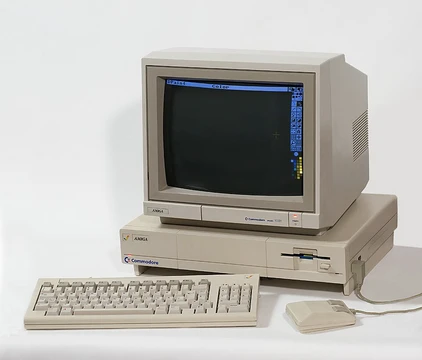
Floor 13 was released for Amiga and MS-DOS.
Who designed Floor 13 (video game)?
Floor 13 was designed by David Eastman.
More in Amiga Game Library
Spotted an error? Know more?
Reader corrections go straight into our review queue. Suggest an edit · How this site is sourced