Photon (TV series)
A lasertag game becomes a galactic battle against darkness.

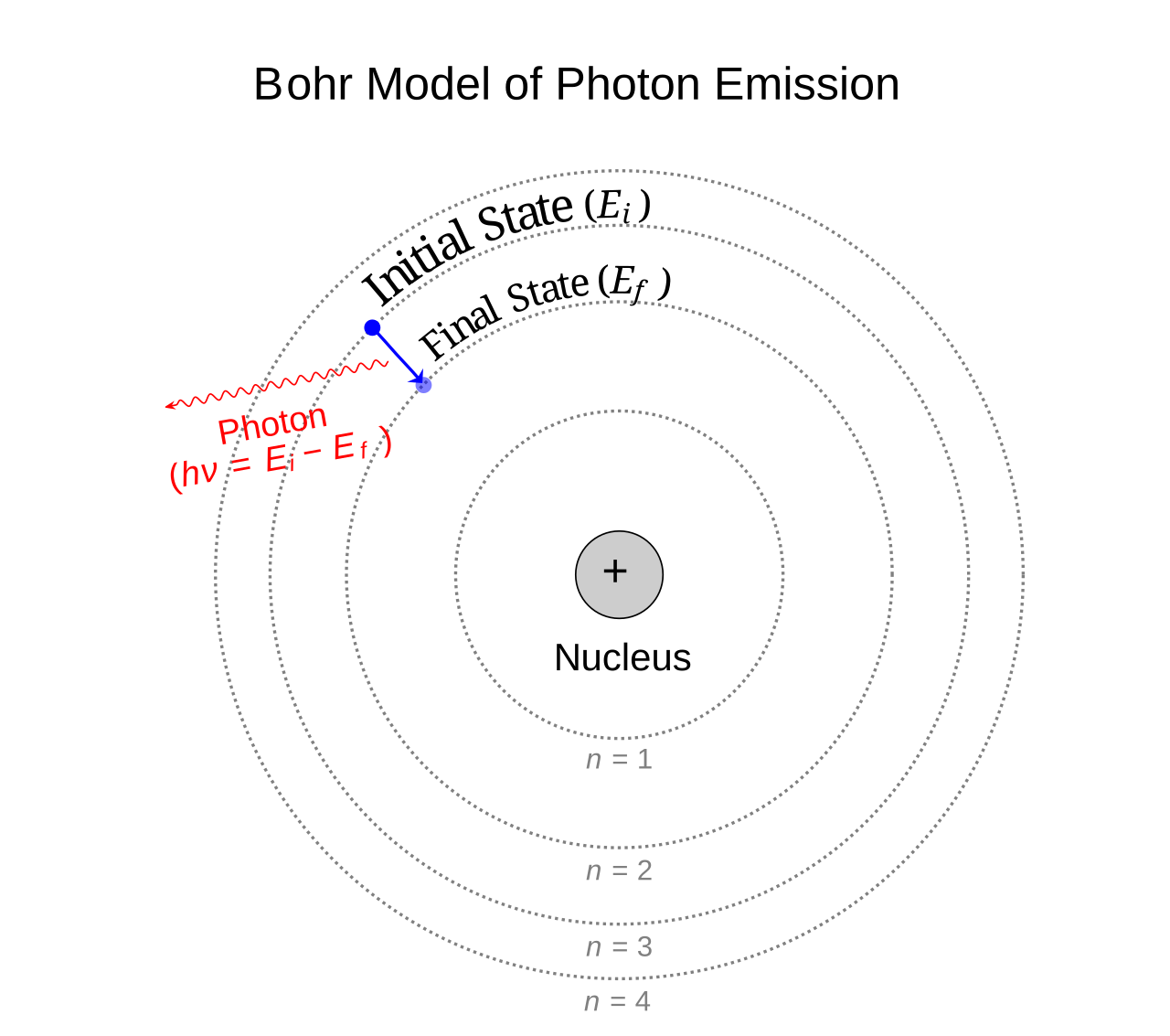
ManuelSchottdorf · CC BY 4.0
Photon was a live-action children's television series from the mid-1980s, connected to the Photon lasertag arenas and home game. DIC Enterprises produced it as a first-run syndicated show, and it aired across many syndicated markets during that decade. The story centers on a high school student who learns that the lasertag game is actually a way to identify the galaxy's strongest fighters, who are then recruited to battle the forces of darkness.
Quick Facts
- Genre
- Science fiction / Action
- Runtime
- 60 min.
- Executive Producer
- Jean Chalopin / Andy Heyward / Tetsuo Katayama
- Company
- DIC Enterprises
- Country
- United States
- Channel
- Syndication
- First Aired
- 1986-09-20
- Last Aired
- 1987-03-14
- Num Episodes
- 26
Facts from the source article.
Lore & Background
The series centers on Christopher Jarvis, a high school student who uses the alias 'Bhodi Li.' After shooting his laser gun and saying 'The light shines!', he is transported to a space station to join the Photon Warriors. His alien allies include a boy genius named Percival, a small, furry, monkey-like creature named Pike, a large, humanoid lion-like being named Leon, a cyborg named Lord Baethan, and Tivia, a humanoid alien princess from the planet Valden. Their mentor is a sentient computer named MOM (Multiple Operation Matrix). The villains' motto is 'Let the darkness grow!' Each faction seeks to find the Photon crystal on each planet as it nears the end of its hundred-year charge; if the Photon warriors shoot it first, the planet becomes full of life, but if the villains do, it becomes a barren wasteland.
Reader's Guide
Photon was filmed in both the U.S. and Japan, with many costumes designed and worn by people who worked on Super Sentai and other tokusatsu programs. Production values were low, and most sets were chroma-keyed in. The show lasted only one season but had a proper series finale. It was later rebroadcast as part of the 'Club Mario' segments of The Super Mario Bros. Super Show! under the title 'Spaced Out Theater.' The series spawned book tie-ins, including six books by Peter David under the pseudonym David Peters for a younger audience, and one young adult novel by Michael P. Kube-McDowell under the house name Michael Hudson. The show's significance lies in its cross-media integration with the Photon lasertag game and its use of Japanese tokusatsu talent, though it remains a niche entry in 1980s syndicated children's programming.
Premise & World-Building
The Gifted constructs its narrative within an alternate timeline branching from the X-Men film franchise, one in which the iconic mutant team has simply vanished from the world. Into this vacuum steps the Strucker family, a seemingly ordinary suburban household whose lives shatter the moment their children's mutant powers surface. Rather than seeking refuge with a superhero team, the parents must flee from government forces and find sanctuary within a hidden underground community of mutants struggling for survival. The show's central tension is deeply personal—parents protecting their kids from a system designed to hunt them—while also exploring broader questions of civil rights and societal fear. By the close of the first season, the underground fractures as several members defect to a new faction called the Inner Circle. The second season then widens the scope, pitting multiple groups against one another, each driven by their own extreme ideological vision for the future of mutantkind.
The Strucker Family & Core Ensemble
At the heart of the series sits the Strucker household, anchored by Stephen Moyer as Reed, a district attorney who must juggle his legal career with the desperate need to shield his children. A later revelation recontextualizes him as a mutant capable of generating and manipulating energy and even disintegrating matter, adding moral complexity to his choices. Amy Acker portrays Caitlin, a nurse and mother whose arc, as showrunner Matt Nix described it, traces the transformation of a suburban woman into an underground warrior. Their children bring distinct powers: Sean Teale's Eclipse absorbs and manipulates photons, Natalie Alyn Lind's Lauren generates force fields by compressing air or water molecules, and Percy Hynes White's Andy wields a molecular-level telekinesis. Surrounding them, the ensemble includes Jamie Chung as the teleporting Blink, Blair Redford as the Apache-led Thunderbird, and Emma Dumont as the magnetically gifted Polaris, whose connection to Magneto's legacy hangs over her character throughout the run.
Development & Production Journey
The Gifted's path to the screen was anything but straightforward. In the summer of 2016, Fox had been developing an X-Men television series centered on the Hellfire Club, but that project stalled and never moved forward at the network. Rather than abandon the Marvel property entirely, the studio issued a put pilot commitment for a fresh take on the X-Men universe. The writer and eventual showrunner was Matt Nix, a self-described X-Men fan, who pitched an action-adventure story about everyday parents discovering their kids' mutant abilities. Fox Entertainment President David Madden publicly praised Nix for steering the network into what he called a thrilling new corner of the Marvel world. Production was a joint effort between 20th Century Fox Television, which handled the physical shoot, and Marvel Television. After the pilot was well received, Fox ordered the full series in May 2017, clearing the way for a first season that would premiere in the fall.
Reception & Cancellation
The Gifted premiered on October 2, 2017, and ran its thirteen-episode first season through January 15, 2018. Critics responded with largely favorable reviews, and the show drew what Fox described as solid ratings for its demographic. The second season, expanded to sixteen episodes, launched on September 25, 2018, introducing new characters such as Skyler Samuels as the telepathic Frost triplets and Grace Byers as Reeva Payge, the sonic-powered leader of the Inner Circle. Despite the creative momentum and the introduction of fresh storylines, the series did not survive its second run. On April 17, 2019, Fox announced the cancellation of The Gifted, ending the show after just two seasons. The abrupt conclusion left several narrative threads unresolved, particularly the escalating conflict between the mutant underground, the Inner Circle, and other ideological factions, and it became a notable example of a well-reviewed superhero series being dropped before it could fully realize its multi-season potential.
Gallery
Frequently Asked Questions
What is Photon (TV series)?
Photon is a live-action children's science fiction show that aired in the mid-1980s through first-run syndication across numerous local markets. It was produced by DIC Enterprises and was directly tied to the Photon lasertag arena chain and a matching home game.
What is the basic premise of Photon (TV series)?
A high schooler discovers that the Photon lasertag game is secretly a galactic trial designed to pinpoint the universe's most capable fighters. Those who prove themselves are recruited to defend the galaxy against an encroaching force of darkness.
How many seasons did Photon (TV series) run?
The series lasted only one season during the mid-1980s. Because it was distributed as a first-run syndicated program, it reached viewers through individual station deals rather than a single national network.
Who were the key creative minds behind Photon (TV series)?
Yasuhiro Horiuchi and Koichi Nakajima directed the show, while the writing credit went to a team including Ray Dryden, Tsunehisa Itô, Satoshi Namiki, and Sukehiro Tomita. DIC Enterprises handled overall production.
What makes Photon (TV series) stand out among 1980s kids' sci-fi shows?
Its central hook was that a real, physical lasertag arena served as the narrative's recruitment device, blurring the line between a consumer product and the story's plot. That made it a rare example of a children's series where the audience's own play activity was woven directly into the canon.
More in American children's science fiction television series 1-20
Spotted an error? Know more?
Reader corrections go straight into our review queue. Suggest an edit · How this site is sourced