
Maximiliano Hernández Martínez
Salvadoran military officer and longest-serving president.

via Wikipedia: Maximiliano Hernández Martínez · see source
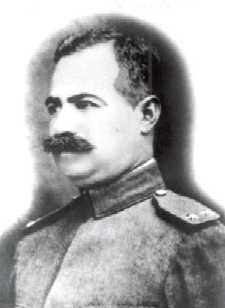
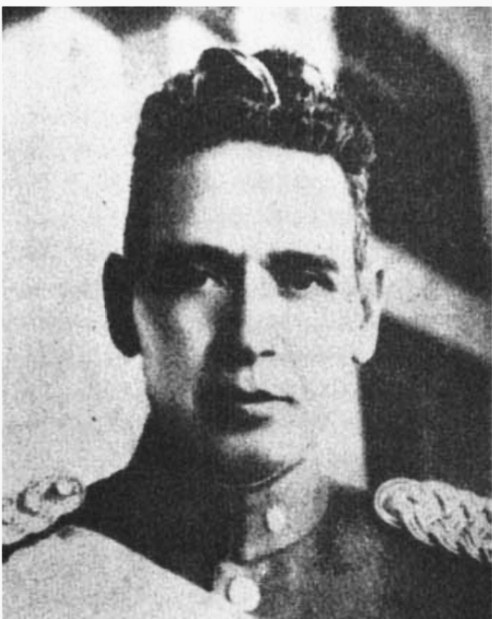
Maximiliano Hernández Martínez was a Salvadoran military officer and politician who became the country’s 27th president. He first held the office provisionally from 4 December 1931 to 28 August 1934, then officially from 1 March 1935 until he resigned on 9 May 1944. He governed El Salvador for most of World War II. His time in power is often called the Martinato, and he remains the longest-serving president in Salvadoran history.
Martínez started his military career in the Salvadoran Army, studied at the Polytechnic School of Guatemala, and reached the rank of brigadier general by 1919. He ran for president in the 1931 election but dropped out, instead backing Labor Party candidate Arturo Araujo. Araujo then chose Martínez as his vice president and later as minister of war. When the military overthrew Araujo in December 1931, the coup leaders—a group called the Civic Directory—appointed Martínez as provisional president. The United States and other Central American countries did not recognize his presidency until January 1934. The 1931 coup and Martínez’s rise to power started a series of military dictatorships that controlled El Salvador until 1979.
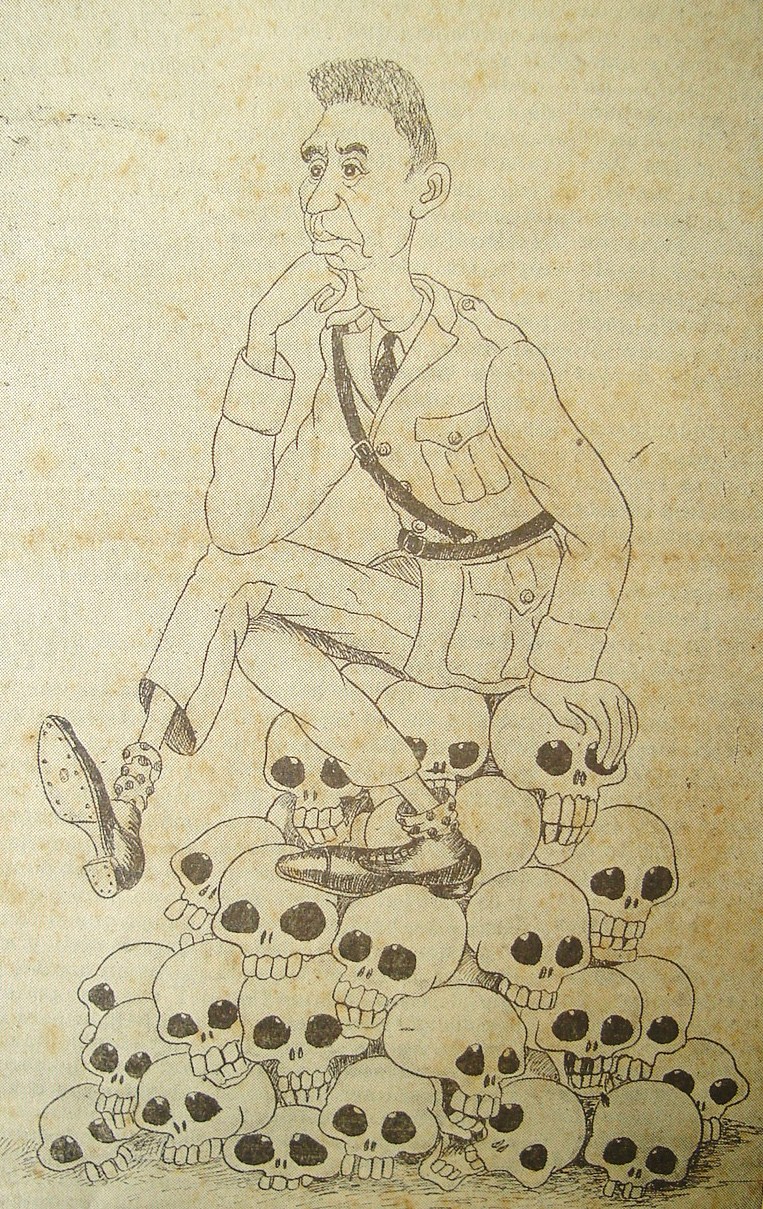
In January 1932, just after taking office, Martínez crushed a rebellion by communists and indigenous people. The military police’s mass killings after the uprising, known as La Matanza (“The Massacre”), left between 10,000 and 40,000 peasants dead. Martínez ruled El Salvador as a totalitarian one-party state under the National Pro Patria Party, which he created in 1933 to support his 1935 presidential campaign. The elections in 1935, 1939, and 1944 were uncontested, with Martínez receiving every vote. He set up the Central Reserve Bank and oversaw infrastructure projects like building the Pan-American Highway in El Salvador, the Cuscatlán Bridge, and the Nacional Flor Blanca stadium, which hosted the 1935 Central American and Caribbean Games. During his presidency, El Salvador’s economy relied almost entirely on coffee production and exports, mainly to Germany and the United States. El Salvador joined the Allied powers in World War II and declared war on Germany, Italy, and Japan in December 1941. After a failed coup attempt in April 1944 and widespread unrest following the execution of its leaders, Martínez resigned in May 1944 and fled the country with his family. In 1966, he was killed at his home in Honduras by his taxi driver after a labor dispute.
Martínez remains a controversial figure in El Salvador. He was described as a fascist and admired European fascist movements in Germany and Italy. Before World War II, he and many of his officials sympathized with the Nazis and Axis powers, but those sympathizers were later purged from the government after El Salvador joined the Allies. Martínez was a theosophist who believed in the occult and held personal and religious views that his contemporaries considered unusual. During the Salvadoran Civil War (1979–1992), a death squad named after him claimed responsibility for assassinating several left-wing politicians.
**Early life**
Maximiliano Hernández Martínez was born on 21 October 1882 in San Matías, El Salvador, to Raymundo Hernández and Petronila Martínez. He earned his bachelor’s degree in San Salvador, then entered the Polytechnic School of Guatemala, a military academy where he became a sub-lieutenant. Returning to El Salvador, he studied at the Jurisprudence and Social Sciences Faculty of the University of El Salvador but left to pursue a military career. He was promoted to lieutenant on 17 November 1903, captain on 23 August 1906, and major captain that same year during the Third Totoposte War against Guatemala, where he fought under former president General Tomás Regalado. He became lieutenant colonel on 6 May 1909, colonel on 15 June 1914, and brigadier general on 14 July 1919, with President Jorge Meléndez officially approving the promotion on 17 September. Martínez later taught at the Captain General Gerardo Barrios Military School, held various army posts, and became the school’s director in 1930.
**1931 election and vice presidency**
El Salvador held a presidential election in 1931. Before that, every election had a predetermined winner, but President Pío Romero Bosque decided in spring 1930 to allow a free and fair vote. Many candidates registered, and Romero did not endorse anyone. Martínez was one of them, resigning as second inspector general of the army on 28 May 1930 to run. He tried to gain popular support by taking socialist positions, and his campaign was backed by the minor National Republican Party. After receiving little support, Martínez dropped out and endorsed Arturo Araujo of the Labor Party, expecting Araujo to make him vice president. The National Republican Party withdrew its support after his endorsement. Araujo won the election.
- born
- 21 October 1882
- died
- 15 May 1966
- field
- Military officer, politician
- nationality
- Salvadoran
- known_for
- Longest-serving president of El Salvador; leader during La Matanza; theosophist
Verified Timeline
Lore & Background
Maximiliano Hernández Martínez began his military career in the Salvadoran Army, attended the Polytechnic School of Guatemala, and attained the rank of brigadier general by 1919. He ran for president during the 1931 presidential election but withdrew his candidacy and instead endorsed Labor Party candidate Arturo Araujo, who selected Martínez to serve as his vice president and later minister of war. After the Salvadoran military overthrew Araujo in December 1931, the military junta established by the coup plotters, known as the Civic Directory, named Martínez as the country's provisional president. His presidency was not recognized by the United States or other Central American countries until January 1934. In January 1932, shortly after assuming the presidency, Martínez crushed a communist and indigenous rebellion. The mass killings committed by the Salvadoran military police following the rebellion's suppression have since been referred to as La Matanza and resulted in the deaths of between 10,000 and 40,000 peasants. Martínez ruled El Salvador as a totalitarian one-party state led by the National Pro Patria Party, a political party he established in 1933 to support his 1935 presidential election campaign. The 1935, 1939 and 1944 presidential elections were uncontested, and Martínez received every vote cast. Martínez established the Central Reserve Bank and engaged in infrastructure projects such as building the Pan-American Highway in El Salvador, building the Cuscatlán Bridge in central El Salvador, and inaugurating the Nacional Flor Blanca stadium, which held the 1935 Central American and Caribbean Games. The Salvadoran economy almost exclusively relied on coffee production and exports during Martínez's presidency, particularly to Germany and the United States. El Salvador joined the Allied powers of World War II and declared war on Germany, Italy, and Japan in December 1941. Following an attempted coup in April 1944 and massive civil unrest following the execution of the coup's leaders, Martínez resigned as president in May 1944, and he and his family fled the country. In 1966, Martínez was killed in exile at his home in Honduras by his taxi driver following a labor dispute.
Reader's Guide
Maximiliano Hernández Martínez remains a controversial figure in El Salvador. Martínez was described as a fascist and admired the European fascist movements such as those in Germany and Italy. During the lead-up to World War II, he and many of his government officials held sympathies for the Nazis and Axis powers; however, sympathizers were later purged from the government after El Salvador joined the war on the side of the Allies. Martínez was a theosophist, believed in the occult, and had a number of religious and personal beliefs his contemporaries considered unorthodox. During the Salvadoran Civil War (1979–1992), a death squad named after him claimed responsibility for the assassinations of several left-wing politicians. The 1931 coup and Martínez's succession to the presidency allowed for the rise of a series of military dictatorships that held onto power in El Salvador until 1979.
Did You Know?
- Martínez was a theosophist who believed in the occult and held religious and personal beliefs his contemporaries considered unorthodox.
- He was killed in exile in Honduras in 1966 by his own taxi driver following a labor dispute.
- The 1935, 1939, and 1944 presidential elections were uncontested, and Martínez received every vote cast.
- During the Salvadoran Civil War (1979–1992), a death squad named after him claimed responsibility for assassinations of left-wing politicians.
- Martínez attended the Polytechnic School of Guatemala, a military academy where he earned the rank of sub-lieutenant.
Military Career and the Road to Power
Martínez's path to the presidency was forged in the Salvadoran Army. After a bachelor's degree in San Salvador and training at Guatemala's Polytechnic School, he briefly studied law at the University of El Salvador before committing fully to a military life. His ranks climbed steadily—lieutenant in 1903, captain in 1906, major captain during the Third Totoposte War against Guatemala, lieutenant colonel in 1909, colonel in 1914, and brigadier general by 1919. By 1930 he directed the Captain General Gerardo Barrios Military School. When President Pío Romero Bosque broke from decades of pre-arranged elections and opened the 1931 race to open competition, Martínez entered with socialist-leaning rhetoric under the banner of the minor National Republican Party. Finding little traction, he withdrew and endorsed Labor Party candidate Arturo Araujo, who captured 46.7 percent of the vote. Araujo named Martínez vice president and later minister of war. In December 1931 the military overthrew Araujo, and the resulting junta, the Civic Directory, installed Martínez as provisional president—a status the United States and other Central American nations did not recognize until January 1934.
La Matanza and the Architecture of Authoritarianism
Within weeks of assuming the presidency in late 1931, Martínez faced a communist and indigenous uprising in January 1932. The military police response was catastrophic in its scale: between ten thousand and forty thousand peasants were killed in what Salvadoran history has since named La Matanza, or "The Massacre." The event set the tone for a regime that would endure for over twelve years, making Martínez the longest-serving president in the nation's history. His rule, often called the Martinato, was structured as a totalitarian one-party state. In 1933 he founded the National Pro Patria Party specifically to underpin his 1935 presidential bid. The elections of 1935, 1939, and 1944 were entirely uncontested; Martínez collected every single ballot cast. The 1931 military coup that placed him in power effectively inaugurated a chain of military dictatorships that would grip El Salvador until 1979, a legacy of authoritarianism stretching across four decades. The massacre itself remains one of the most traumatic episodes in Central American memory, a defining wound that shaped the country's political consciousness for generations.
Infrastructure, Coffee, and the War Years
Beyond the machinery of repression, Martínez's presidency left visible marks on Salvadoran infrastructure and institutions. He established the Central Reserve Bank, oversaw construction of the Pan-American Highway through El Salvador, and commissioned the Cuscatlán Bridge in the country's central region. The Nacional Flor Blanca stadium, which he inaugurated, hosted the 1935 Central American and Caribbean Games. Economically, the nation remained almost entirely dependent on coffee cultivation and export, with Germany and the United States serving as the principal buyers. This commercial entanglement with Berlin complicated Martínez's foreign-policy posture during the 1930s and early 1940s. He and numerous cabinet members openly admired the fascist regimes of Germany and Italy, and sympathies for the Axis powers were widespread within his government. When El Salvador ultimately declared war on Germany, Italy, and Japan in December 1941, joining the Allied side, those Axis-leaning officials were subsequently purged from their posts. The shift marked a decisive realignment, pulling the small Central American republic into the global conflict and severing ties that had once been commercially and ideologically close to the European dictatorships.
Downfall, Exile, and a Contested Legacy
Martínez's grip on power finally broke in the spring of 1944. An attempted coup in April triggered massive civil unrest, and the subsequent execution of the plotters' leaders only deepened the crisis. In May 1944 he resigned and, with his family, fled El Salvador. He spent his remaining years in exile in Honduras, where in 1966 his life ended in a grim domestic dispute: his taxi driver killed him at his home over a labor disagreement. His legacy in El Salvador remains deeply contested. Contemporaries and later historians have labeled him a fascist who openly admired the European movements in Germany and Italy. He was also a theosophist with a fascination for the occult, holding religious and personal convictions that his peers found unorthodox. Perhaps most chillingly, during the Salvadoran Civil War of 1979 to 1992, a death squad bearing his name claimed responsibility for the assassinations of several left-wing politicians, a posthumous appropriation that cast his memory in an even darker light. The man who presided over La Matanza and a twelve-year one-party state thus continues to haunt Salvadoran political discourse long after his death.
Gallery
Frequently Asked Questions
Who is Maximiliano Hernández Martínez?
He was a Salvadoran military officer and politician who served as the 27th president of El Salvador from 1931 until his resignation in 1944. He is recognized as the longest-serving president in the country's history.
What is the Martinato?
The Martinato is the informal name given to the era of Hernández Martínez's rule over El Salvador, spanning from his initial provisional presidency in 1931 through his departure in 1944. It covers both his provisional and official terms in office.
Why is Maximiliano Hernández Martínez important in Salvadoran history?
He holds the record as the longest-serving president in El Salvador's history, with his combined terms lasting over a decade. His presidency also coincided with the period known as La Matanza and most of World War II.
What was Maximiliano Hernández Martínez's background before entering politics?
He was a career military officer and a theosophist by personal belief. Born on 21 October 1882, he died on 15 May 1966, and his path to the presidency came through his long association with the Salvadoran armed forces.
How did Maximiliano Hernández Martínez's time in power end?
He resigned from the presidency on 9 May 1944 after serving in both a provisional capacity (1931–1934) and an official capacity (1935–1944). He had led El Salvador through the majority of World War II before stepping down.
More in American And Caribbean Leaders 1-21
Spotted an error? Know more?
This is a living reference — every entry is fact-audited, and reader corrections feed straight into our audit queue. Suggest an edit · See this site's audit record