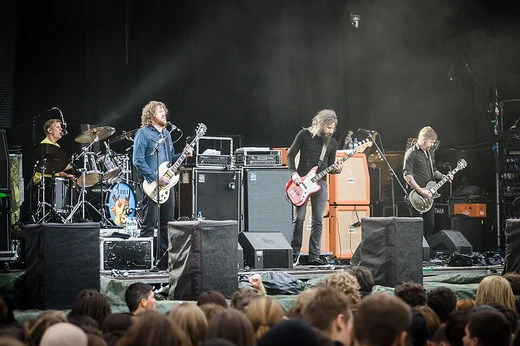
40 Below Summer
American nu metal band from New Jersey, reformed in 2011.

40 Below Summer is a nu metal band that originated in New Jersey. The group formed in 1998 and initially disbanded in 2005. Brief reunions took place in 2006 and 2010, followed by a permanent reformation in 2011. Their most recent album, *Fire at Zero Gravity*, came out in 2013.
The band’s origins trace back to drummer Carlos Aguilar, a Peruvian native, meeting vocalist Max Illidge in a band called Alien. Guitarist Joey D’Amico joined the pair in late 1997, and Pete Savad soon came on board, first on bass before switching to guitar when Jordan Plingos took over bass. Their first release, *Side Show Freaks* (1999), was self-recorded at their rehearsal space in New Jersey. Savad left as a record deal neared; Plingos moved to guitar, and Steve Ferreira briefly played bass before Puerto Rican-born Hector Graziani took over. The band then self-released the EP *Rain* in 2000.
In late 2000, *Side Show Freaks* reached No Name Management, known for handling Slipknot and Mudvayne. After showcases on both coasts, about fifteen labels showed interest. The band signed with Warner Music Group’s London-Sire, nearly joining Madonna’s Maverick Records (another Warner label). In March 2001, they recorded their major-label debut *Invitation to the Dance* in Los Angeles with producer GGGarth (Rage Against the Machine, Mudvayne, Kittie). A poorly attended tour with Chimaira, Ill Niño, and headliners Factory 81 preceded the album’s release on October 16, 2001 (some sources cite September 11, 2001). Two months later, London-Sire folded due to a corporate merger. The band briefly landed on parent label Warner Bros. Records in 2002, which reissued the album, but they left in December 2002. Illidge explained that after London-Sire collapsed, funding stopped, and Warner Bros. owned their contract but didn’t know who they were, leading to a year of phone tag before the band asked to be released. After playing the Jägermeister Music Tour with Drowning Pool, Coal Chamber, and Ill Niño, they began writing for a second album, discarding about fifteen songs before narrowing 21 down to ten (plus a bonus track, “The Day I Died”).
Unsigned, Razor & Tie Records saw the band in February 2003 at a New York City show with E.Town Concrete. A deal was signed in June as they entered the studio, and Roadrunner Records licensed the album for the UK.
Quick Facts
- Alias
- 6 Degrees of Degradation (1998), Mid-Green Pimp Machine (1998), Urethra Franklin (1998)
- Origin
- New Jersey/New York, U.S.
- Genre
- Nu metal / alternative metal / hard rock
- Years Active
- 1998–2005 · 2006 · 2010 · 2011–present
- Label
- Crash · Razor & Tie · London-Sire · Warner Bros./Reprise · Super Massive
- Current Members
- Max Illidge / Joey D'Amico / Anthony Devizio / Robi Kirsic / Anthony Bordonaro
- Past Members
- Peter Savad / Carlos Aguilar / Steve Ferreira / Jordan Plingos / Hector Graziani / Ty Fury / Ryan Jurhs / Ali Nassar / Derrick Klybish / Tom McNamara / David Mondragon
Facts from the source article.
Lore & Background
40 Below Summer came together after drummer Carlos Aguilar met singer Max Illidge in a band named Alien. Joey D'Amico joined in late 1997, followed by Pete Savad on bass, then guitar, with Jordan Plingos on bass. The band self-released Side Show Freaks in 1999. After lineup changes, they self-released Rain in 2000. In late 2000, Side Show Freaks reached No Name Management, leading to a signing with Warner Music Group's London-Sire. Their major-label debut Invitation to the Dance was released on October 16, 2001 (some sources state September 11, 2001). London-Sire folded two months later, and the band left Warner Bros. in December 2002.
After signing with Razor & Tie Records, they released The Mourning After on October 28, 2003. The band negotiated a release from their contract in 2004. Despite breaking up, they released The Last Dance on October 31, 2006, via Crash Music Inc. Pete Savad's departure timeline is unclear; some accounts suggest he switched instruments and remained in the band for a time, rather than leaving as a record deal neared.
Reader's Guide
40 Below Summer emerged during the late-1990s nu metal wave and secured a major-label deal through the attention their self-released Side Show Freaks garnered. Their debut Invitation to the Dance was caught in the collapse of London-Sire, forcing the band to navigate label instability. Despite this, they maintained a dedicated fanbase and continued releasing music independently and through smaller labels. Their 2011 reformation and subsequent album Fire at Zero Gravity demonstrated their persistence. The band's history illustrates the challenges of the post-grunge and nu metal era, where corporate mergers and label inexperience often derailed promising acts. Their legacy lies in their resilience and the loyalty of their audience, with their latest album Untethered (2025) marking a continued presence decades after their formation.
Did You Know?
- The band's self-released CD Side Show Freaks found its way to No Name Management, known for managing Slipknot and Mudvayne.
- The Last Dance sold 1,095 copies in its first week of release according to Nielsen SoundScan.
- Fire at Zero Gravity was originally scheduled for a December 1, 2012 release show at Starland Ballroom, canceled due to Hurricane Sandy damage.
Origins and the Search for a Sound
40 Below Summer took shape in the late 1990s when Peruvian-born drummer Carlos Aguilar and vocalist Max Illidge, who had previously shared a stage in a group called Alien, began building something new. Guitarist Joey D'Amico, who had crossed paths with Illidge in late 1997, rounded out the early trio. Bassist Pete Savad arrived shortly after, initially handling low-end duties before shifting to guitar once Jordan Plingos stepped in on bass. This revolving lineup recorded the self-released Side Show Freaks in 1999 at a rehearsal space in the Music Building in New York City. As the band edged closer to landing its first professional deal, Savad departed, prompting another shuffle: Plingos moved to guitar, Steve Ferreira took over bass, and he was quickly succeeded by Puerto Rican-born Hector Graziani. The group followed up with the self-released EP Rain in 2000, a record that would eventually catch the ear of industry figures and set the stage for their major-label ambitions.
The Major-Label Gamble and Its Collapse
The independent CD Side Show Freaks slipped into the hands of No Name Management, the firm behind high-profile acts like Slipknot and Mudvayne. That connection opened doors: showcases on both coasts drew interest from as many as fifteen major labels. The band ultimately landed with Warner Music Group's London-Sire imprint, though at one point they were reportedly close to inking with Madonna's Maverick Records, also under the Warner umbrella. In March 2001 the group flew to Los Angeles to record their debut, Invitation to the Dance, with producer GGGarth, known for his work with Rage Against the Machine and Mudvayne. A poorly attended supporting tour with Chimaira and Ill Niño, headlined by Factory 81, preceded the album's delayed October 2001 release. Then came the blow: just two months later, London-Sire was shuttered in a corporate merger. The band found itself briefly under Warner Bros. Records, but after a frustrating year of being passed around among executives who, in Illidge's words, barely knew who they were, the group finally secured their release in December 2002.
The Mourning After and the Road to Breakup
Unsigned and searching, 40 Below Summer caught the eye of Razor & Tie Records after a February 2003 New York show alongside E.Town Concrete. A deal was inked by June, and the band entered the studio almost immediately. Their second album, The Mourning After, arrived on October 28, 2003, with a UK licensing arrangement through Roadrunner Records. The single "Self-Medicate" earned notable rotation on MTV2's Headbangers Ball, and "Taxi Cab Confession" followed as a second single. Yet the partnership soured quickly. Illidge later explained that Razor & Tie, a label more associated with youth-oriented pop, simply lacked the experience to properly promote a rock record. By 2004 the band had negotiated their way out of the contract and reclaimed the rights to the album, walking away with a modest sum. Personnel continued to churn: bassist Jordan was temporarily replaced by Ty Fury, then officially by Ryan Juhrs of Flaw, and drummer Carlos Aguilar departed shortly after. The band dissolved in 2005.
The Last Dance, Hiatus, and Rebirth
Even after calling it quits, the band pressed ahead with The Last Dance, released on October 31, 2006, through Crash Music. The record packaged nine demo tracks that had been earmarked for an unfinished third album, plus a bonus DVD capturing their final live set at New Jersey's Starland Ballroom in September 2005. It moved 1,095 copies in its debut week per Nielsen SoundScan. Rumors of a full reunion swirled that autumn, but guitarist Joey D'Amico clarified they were simply playing a handful of promotional shows, while leaving the door ajar for future recording. The group also reissued their 2000 EP Rain in 2007 with seven additional demos and fresh artwork, and Side Show Freaks saw a 2008 re-release on Brian "Head" Welch's Driven Music Group. Illidge channeled his energy into a new project, Black Market Hero, while the 40 Below Summer name surfaced briefly in 2006 and again in 2010. Those small reunions eventually gave way to a permanent reformation in 2011, a run that has carried the band all the way to their 2025 album Untethered.
Frequently Asked Questions
Who is 40 Below Summer?
40 Below Summer is a nu metal band out of New Jersey that first came together in 1998. They built a dedicated following in the late '90s and early 2000s before eventually reuniting in 2011.
What happened to 40 Below Summer after their initial breakup?
The group split in 2005 but came back together for brief reunion runs in 2006 and 2010. They locked in a permanent reformation in 2011 and have been active since.
What is 40 Below Summer's most recent album?
Their latest studio record is *Fire at Zero Gravity*, released in 2013 after the band's full-time reformation.
How did 40 Below Summer form?
The band's story begins with Peruvian-born drummer Carlos Aguilar meeting vocalist Max Illidge through an earlier group called Alien. Guitarist Joey D'Amico joined the pair in late 1997, and Pete Savad rounded out the early roster before moving from bass to guitar when Jordan Plingos stepped in on low end.
What genre does 40 Below Summer play?
They are a nu metal act rooted in the American alternative metal scene, blending heavy guitar riffs with the rhythmic aggression typical of the late-'90s metal movement.
More in American alternative metal musical groups 1-24
Spotted an error? Know more?
Reader corrections go straight into our review queue. Suggest an edit · How this site is sourced