Grand Rapids Griffins
Two-time Calder Cup champions and Red Wings affiliate.

Michael Barera · CC BY-SA 4.0
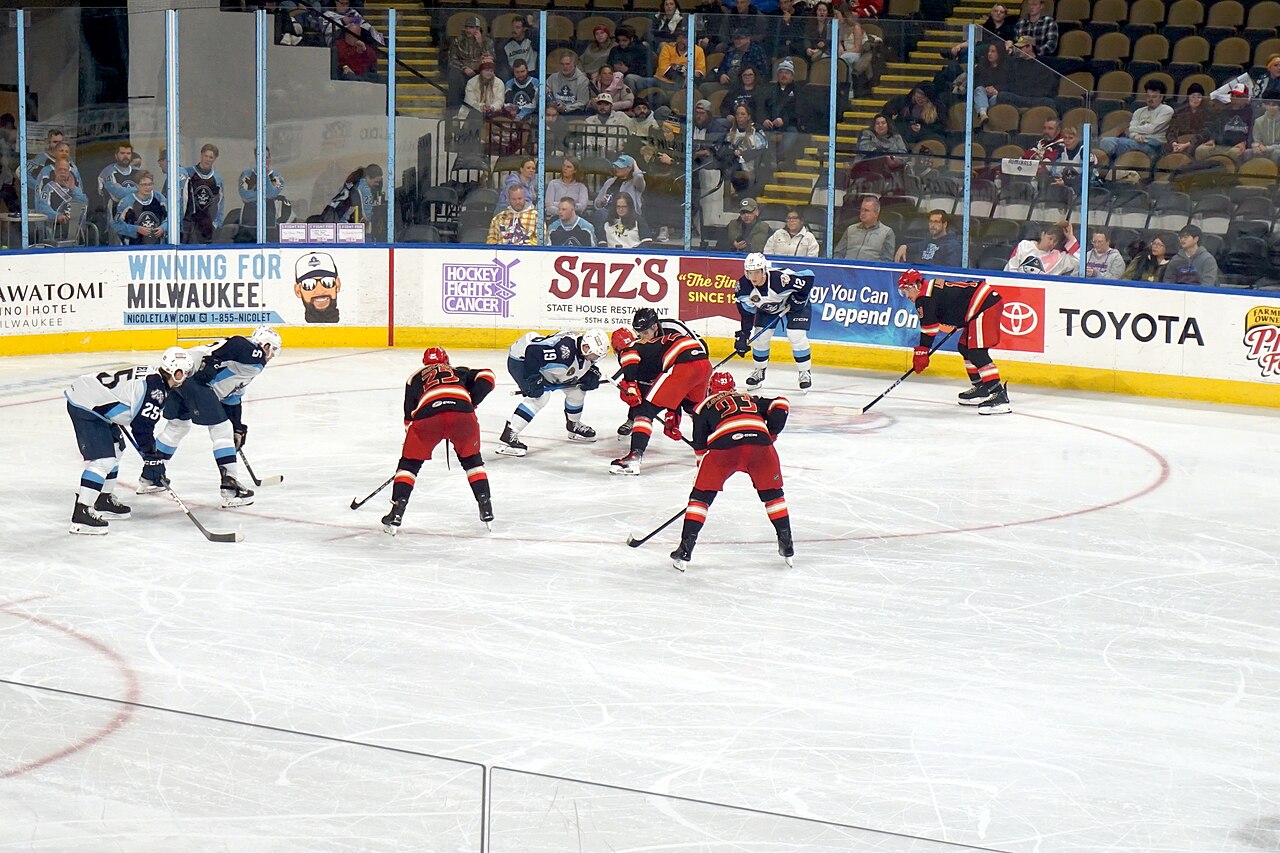
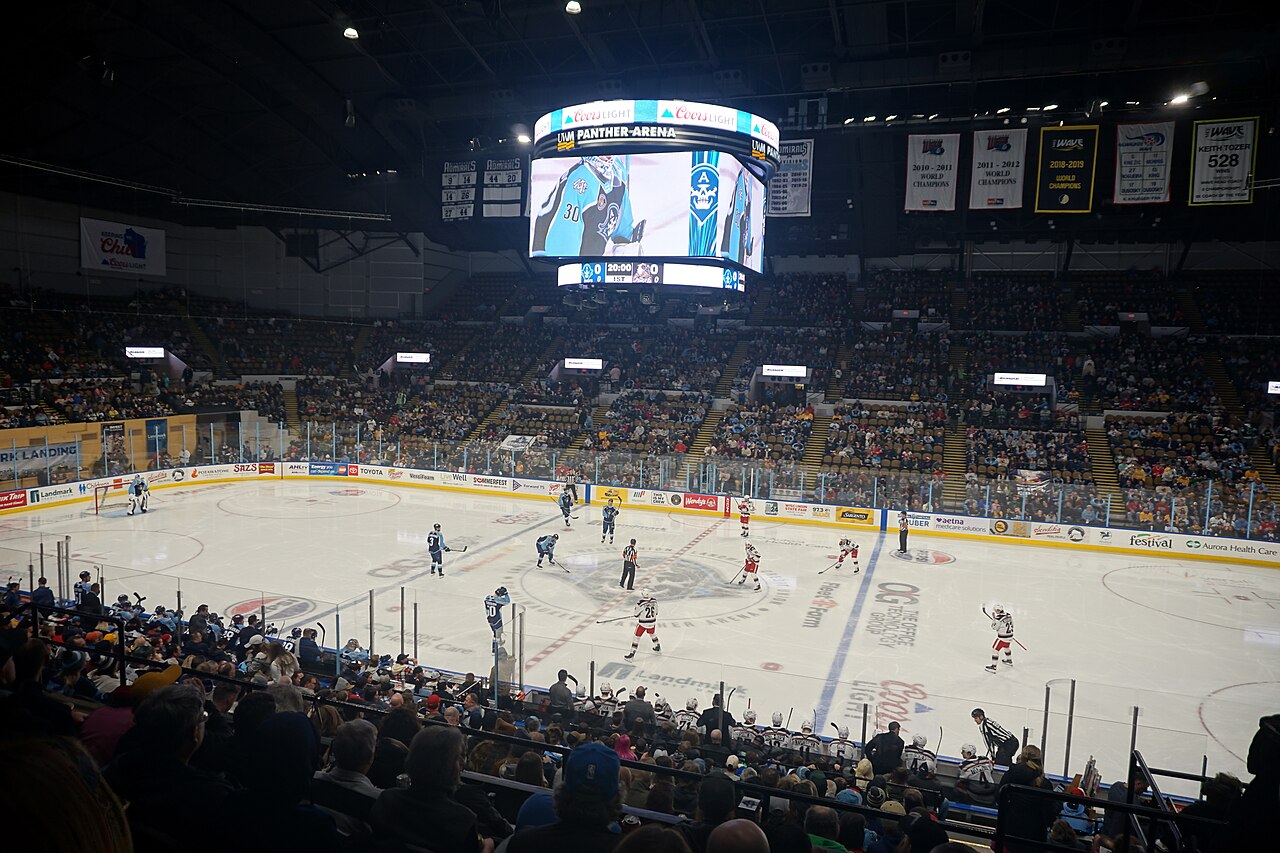
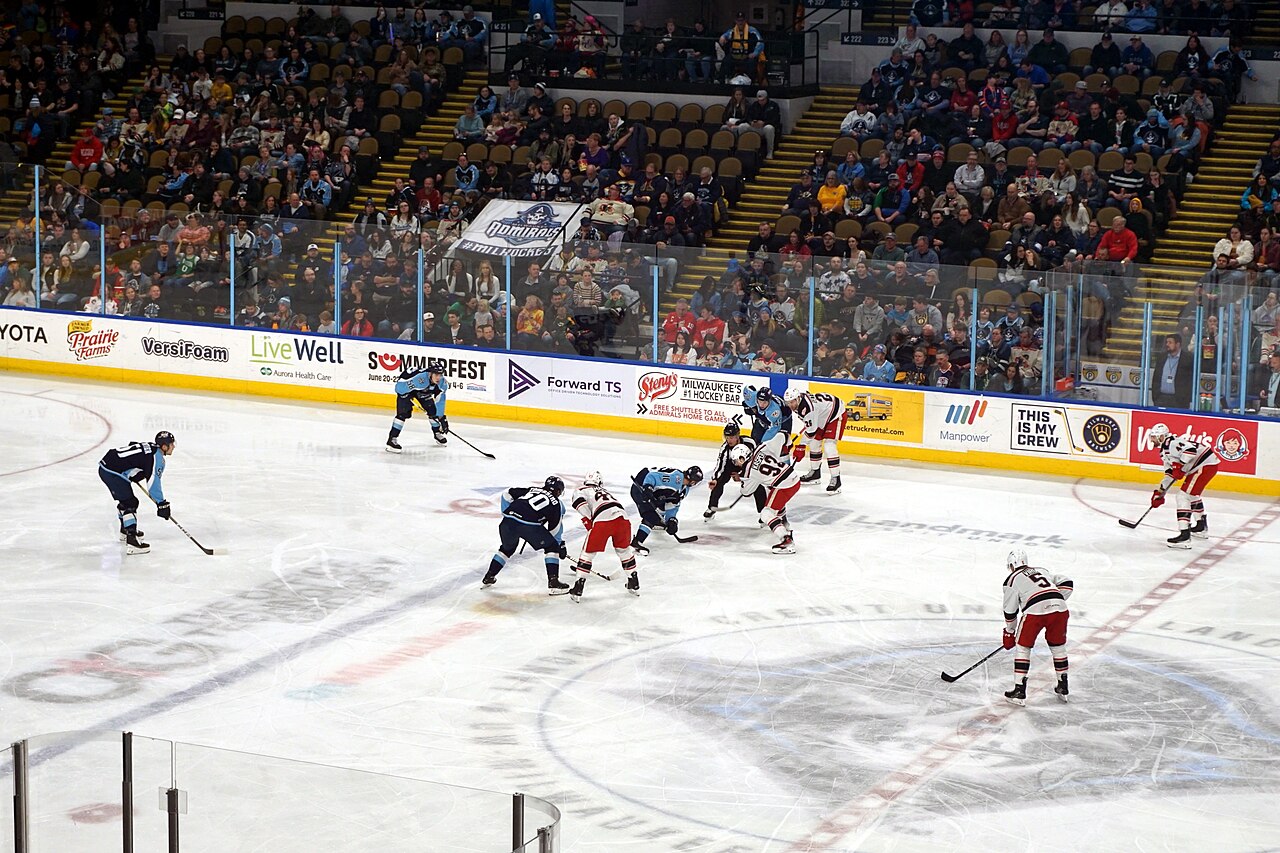
The Grand Rapids Griffins are a professional ice hockey team based in Grand Rapids, Michigan, competing in the American Hockey League (AHL). They are notable as the top farm team for the Detroit Red Wings of the National Hockey League and as two-time Calder Cup champions, winning the title in 2013 and 2017.
Quick Facts
- Text Color
- #231f20
- Team
- Grand Rapids Griffins
- City
- Grand Rapids, Michigan
- League
- American Hockey League
- Conference
- Western
- Division
- Central
- Founded
- 1996 (IHL)
- Arena
- Van Andel Arena
- Owner
- Dan DeVos
- Gm
- Shawn Horcoff
- Coach
- Dan Watson
- Captain
- Dominik Shine
Facts from the source article.
Lore & Background
The franchise began in the now-defunct International Hockey League (IHL) in 1996 and merged into the AHL in 2001. The team's existence was tied to the construction of Van Andel Arena; Amway executives Dave Van Andel and Dan DeVos formed West Michigan Hockey, Inc. in January 1995 to secure a minor league franchise. The IHL granted a franchise for US$7 million after being swayed by over 8,000 season ticket requests and the new arena. The team name 'Grand Rapids Griffins' was chosen via a contest, and the logo—depicting an animal more similar to an opinicus than a griffin—was designed by Sean Michael Edwards Design, Inc. The primary colors are navy blue and gold, with hunter green, red, and silver accents. In their inaugural 1996–97 season, the Griffins finished last in the IHL's Northeast Division but set an IHL record with season ticket sales capped at 7,000. The franchise's early years saw affiliations with the Muskegon Fury and Mississippi Sea Wolves, and key players included Michel Picard, Jeff Nelson, and Pavol Demitra. Demitra was acquired in a trade with the Las Vegas Thunder in late November and played for the Griffins. After independent years from 1996 to 1999, the team entered a two-year affiliation agreement with the Ottawa Senators late in the 1998–99 season, which was finalized by Senators general manager Marshall Johnston.
Reader's Guide
The Grand Rapids Griffins are significant as a successful AHL franchise with two Calder Cup championships (2013 and 2017), marking them as a top development team for the Detroit Red Wings. The article notes that three players have had their numbers retired, though it does not specify which players. The team's history reflects the revival of professional hockey in Grand Rapids after earlier IHL franchises, the Grand Rapids Rockets and Grand Rapids Owls. The franchise's early success in the IHL included sellout crowds and a record for season ticket sales, demonstrating strong community support. The Griffins' transition from the IHL to the AHL in 2001 placed them in a more prominent minor league, and their affiliation with the Ottawa Senators from 1999 to 2002 helped stabilize the organization. The team's logo and colors were chosen to avoid trendiness, aligning with a traditional image sought by ownership. The article emphasizes the role of key figures such as general manager Bob McNamara and head coaches Dave Allison and Guy Charron in shaping the team's early years.
Did You Know?
- The franchise was granted for US$7 million after the IHL waived an expansion criterion requiring a metropolitan area of at least one million people.
- Pavol Demitra, who played for the Griffins in their inaugural season, went on to score over 300 goals in sixteen NHL seasons.
A City's Third Shot at Professional Hockey
The Griffins didn't arrive in Grand Rapids by accident. They were the third professional hockey franchise to call the city home, following the 1950s Rockets and the late-1970s Owls, and their existence was inseparable from the construction of a brand-new downtown arena that would become Van Andel Arena. In January 1995, Amway executives Dave Van Andel and Dan DeVos incorporated West Michigan Hockey, Inc., and immediately opened conversations with the IHL, AHL, and ECHL to test the market. A visit from Peoria Rivermen owner Bruce Saurs added urgency. By April, the IHL board waived its one-million-metropolitan-area requirement and granted the franchise for seven million dollars, a decision swayed by more than 8,000 season ticket requests and the fully financed arena. The team's infrastructure was built quickly: Bob McNamara was named general manager, Dave Allison hired as head coach, and broadcasting deals were locked in with WOOD-AM, WZZM, and WWMT. A DeVos-owned company even took over the old Belknap Ice Arena, renovating it as a practice facility.
Forging an Identity That Refused to Be Trendy
When the ownership group announced a name-the-team contest in June 1995, Dan DeVos gave a clear creative brief: they wanted something with a face, with a personality, that could be translated into a mascot. The winning entry, Grand Rapids Griffins, was unveiled in November alongside a logo that, despite the name, depicts an animal closer to an opinicus than a traditional griffin. The design came from Sean Michael Edwards Design, a New York firm whose portfolio already included the Florida Panthers and Seattle Mariners marks. For colors, the club settled on navy blue and gold as primaries, with hunter green, red, and silver as accents. DeVos was explicit about the philosophy behind those choices, insisting the group did not want to be trendy in any way. The result was a visual identity rooted in tradition rather than fashion, one that would anchor the franchise through its IHL years, its 2001 merger into the AHL, and its evolution into the Detroit Red Wings' top farm club.
The Inaugural Season That Proved the Market
The 1996–97 campaign was a proving ground. General Manager Bob McNamara stocked the roster with IHL and AHL veterans like Michel Picard, Jeff Nelson, and Don McSween alongside a scattering of prospects. The Griffins won their first game on the road against Indianapolis but dropped the home opener to Orlando six days later. An early 9-10-2 slide reversed after acquiring Pavol Demitra from Las Vegas and signing Danton Cole. The Picard-Nelson-Demitra line became the league's talk, with all three averaging over a point per game. Demitra departed in March for St. Louis and went on to score more than 300 goals across sixteen NHL seasons; rookie Kevyn Adams filled his spot and eventually logged ten NHL campaigns. Despite finishing last in the Northeast Division at 40-30-12 and losing the opening playoff round to Orlando, the season was a commercial triumph. The IHL held its All-Star Game at Van Andel Arena before a capacity crowd, 39 of 41 home games sold out, and season ticket sales set an IHL record at the 7,000 cap.
From Minor-League Roster to Calder Cup Standard-Bearer
What began as a third-generation IHL franchise in a Midwestern city has grown into one of the AHL's most decorated programs. The Griffins merged into the American Hockey League in 2001, shedding their independent identity to become the top farm club for the Detroit Red Wings. In that role, they have captured the Calder Cup twice, in 2013 and 2017, cementing their status as a championship-caliber organization within the league's top-tier minor hockey. Three players have had their numbers retired, a distinction that speaks to the depth of talent the franchise has developed and retained over nearly three decades. The journey from a 1996 expansion team that finished last in its division to a two-time Calder Cup champion reflects both the stability of the Grand Rapids market and the strategic vision of an ownership group that built the franchise around a permanent home in Van Andel Arena from day one.
Gallery
More in AHL Teams 1-24
Spotted an error? Know more?
Reader corrections go straight into our review queue. Suggest an edit · How this site is sourced