Cleveland Monsters
AHL affiliate of the Columbus Blue Jackets, Calder Cup champions in 2016.

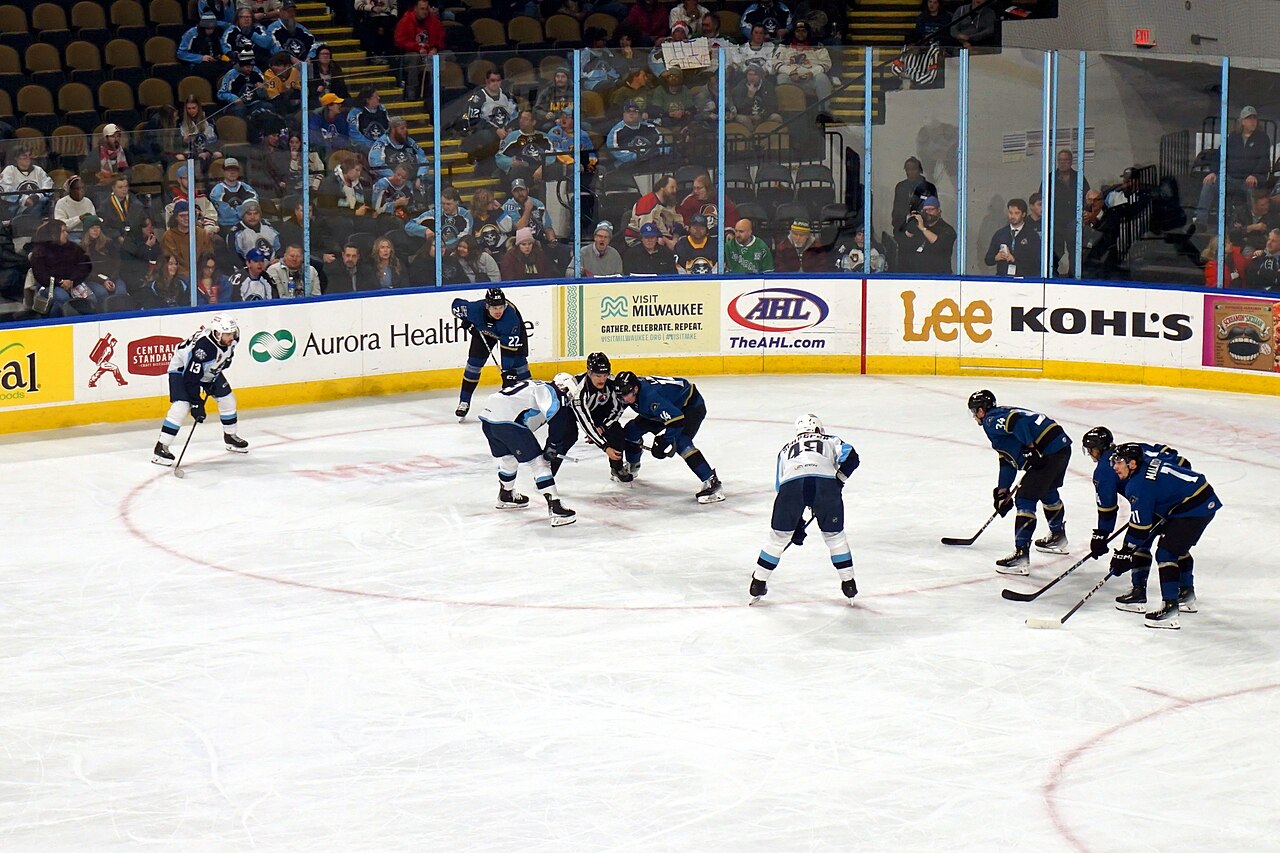
Michael Barera · CC BY-SA 4.0
The Cleveland Monsters are a professional ice hockey team based in Cleveland, Ohio. They serve as the top minor-league affiliate of the NHL’s Columbus Blue Jackets and play their home games at Rocket Arena in downtown Cleveland. The franchise has captured one Calder Cup championship, winning its first title in 2016. Since then, the Monsters have consistently ranked among the AHL’s top teams in attendance, leading the league during the pandemic-shortened 2019–20 season and every season from 2022–23 onward.
The team’s origins date to 2006, when a Cleveland ownership group led by Dan Gilbert—owner of the Cleveland Cavaliers and Quicken Loans—purchased the dormant Utah Grizzlies AHL franchise. A new AHL team was awarded to Cleveland after the existing Cleveland Barons moved to Worcester, Massachusetts, following the 2005–06 season. With Quicken Loans Arena set as the home venue, the Colorado Avalanche was announced as the first NHL parent club in December 2006 under a five-year deal. The franchise was officially named the Lake Erie Monsters in January 2007, a nod to the mythical lake creature Bessie, chosen after focus groups across the Cleveland area. The logo emphasized the region’s connection to Lake Erie.
Former NHL player Joe Sacco became the first head coach, and Dave Oliver was named general manager. The Monsters opened their inaugural 2007–08 season with a home loss to the Grand Rapids Griffins on October 6, 2007, finishing the year at 26–41. They qualified for the Calder Cup playoffs for the first time in 2010–11, taking a 3–1 series lead over the Manitoba Moose before losing three straight games and the series 4–3.
In April 2015, the Monsters signed a multi-year agreement to become the AHL affiliate of the Columbus Blue Jackets, effective for the 2015–16 season. That year, the team set a franchise record with 97 points and reached the playoffs for the second time. They swept the Rockford IceHogs in the first round, defeated the Grand Rapids Griffins 4–2 in the semifinals, swept the defending Calder Cup champion Ontario Reign in the conference finals, and swept the Hershey Bears in the finals. Oliver Bjorkstrand scored the Cup-winning goal in overtime on June 11, 2016, before a sellout crowd of 19,665 at Quicken Loans Arena—the second-largest crowd for a professional hockey game in Ohio and the second-largest in Calder Cup playoff history.
Quick Facts
- Text Color
- #231f20
- Team
- Cleveland Monsters
- City
- Cleveland, Ohio
- League
- American Hockey League
- Conference
- Eastern
- Division
- North
- Founded
- 1994 (IHL)
- Operated
- 2007–present
- Arena
- Rocket Arena
- Owner
- Dan Gilbert
- Coach
- Nick Bootland
- Gm
- Chris Clark
Facts from the source article.
Lore & Background
The Monsters began in 2006 when the dormant Utah Grizzlies AHL franchise was purchased on May 16, 2006, by a Cleveland ownership group led by Dan Gilbert. A new AHL team was awarded to Cleveland following the departure of the Cleveland Barons to Worcester, Massachusetts, after the 2005–06 season. The franchise was officially announced on January 25, 2007, as the Lake Erie Monsters, referring to Bessie, a creature of local folklore. The name was chosen from researching focus groups around the Cleveland area and the logo incorporated the geographical connection with Lake Erie. Former NHL player Joe Sacco was named the first head coach, and Dave Oliver was named general manager. The Monsters opened their inaugural 2007–08 campaign with a loss at home against the Grand Rapids Griffins on October 6, 2007, ending the season 26–41. At the end of the 2010–11 season, the Monsters qualified for the Calder Cup playoffs for the first time, but lost in the first round after taking a 3–1 series lead over the Manitoba Moose. On April 17, 2015, the Monsters announced a multi-year agreement to become the AHL affiliate for the Columbus Blue Jackets, effective in the 2015–16 season. The team finished that season with a franchise-record 97 points and won their first Calder Cup in a four-game sweep of the Hershey Bears on June 11, 2016. On August 9, 2016, the Lake Erie Monsters changed their name to the Cleveland Monsters.
Reader's Guide
The Cleveland Monsters represent a significant chapter in Cleveland's long hockey history, which includes nine Calder Cup championships by earlier Cleveland AHL teams. The franchise's 2016 Calder Cup victory marked Cleveland's first AHL title since the Barons won in 1964, and was the 10th overall for a Cleveland-based AHL team. The Monsters won Game 4 before a sellout crowd of 19,665 at Quicken Loans Arena, the second largest crowd for a professional hockey game in Ohio and the second largest in Calder Cup playoff history. The team has consistently drawn high attendance, leading the AHL in the pandemic-shortened 2019–20 season and every season since 2022–23. The Monsters honor past Cleveland hockey teams with commemorative banners at Rocket Arena, including the Cleveland Indians/Falcons/Barons, Crusaders, Barons (NHL), Lumberjacks, and Barons (AHL). The team's mascot is a seagull named Sullivan C. Goal, and the broadcast team includes play-by-play announcer Tony Brown and former Lumberjacks player Jock Callander as analyst.
Did You Know?
- The Monsters were originally named the Lake Erie Monsters, after Bessie, a creature of local folklore.
- The team won its first Calder Cup in 2016 by sweeping the Hershey Bears in four games.
- The Monsters have led the AHL in attendance in the 2019–20 season and every season since 2022–23.
- No Monsters player has had his number retired, but the team has retired numbers of players from past Cleveland franchises.
Birth of a Monster: Franchise Origins
The Cleveland Monsters trace their roots to a pivotal moment in 2006, when the dormant Utah Grizzlies AHL franchise was acquired by a local ownership group spearheaded by Dan Gilbert, who also owned the Cleveland Cavaliers and Quicken Loans. This purchase came in the wake of the Cleveland Barons' departure to Worcester after the 2005-06 season, leaving the city without an AHL presence. A new franchise was formally awarded to Cleveland, and on December 17, 2006, the Colorado Avalanche was named the team's inaugural NHL parent club under a five-year deal. The franchise was publicly unveiled on January 25, 2007, as the Lake Erie Monsters—a name inspired by Bessie, a creature from local folklore, and chosen through focus-group research across the region. The logo wove in the geographical tie to Lake Erie. Joe Sacco, a former NHL player, was tapped as the first head coach, while Dave Oliver took the helm as general manager. The team opened its inaugural 2007-08 season with a home loss to the Grand Rapids Griffins on October 6, 2007, and finished that first campaign with a 26-41 record.
The 2016 Calder Cup Triumph
The 2015-16 season marked a transformative turning point for the franchise. After signing a multi-year affiliation with the Columbus Blue Jackets in April 2015, the Monsters posted a franchise-record 97 points and advanced deep into the postseason. They dispatched the Rockford IceHogs in the first round, then outlasted the Grand Rapids Griffins in a best-of-seven semifinal series. In the Western Conference Finals, they swept the defending champion Ontario Reign to reach the Calder Cup Final for the first time in franchise history. On June 11, 2016, the Monsters completed a four-game sweep of the Hershey Bears, with Oliver Bjorkstrand scoring the Cup-winning goal in overtime. The victory was witnessed by a sellout crowd of 19,665 at Quicken Loans Arena—the second-largest professional hockey attendance in Ohio and the second-largest in Calder Cup playoff history. This title represented Cleveland's first AHL championship since the Barons' 1964 cup and the 10th overall for a Cleveland-based AHL franchise. Shortly after, on August 9, 2016, the team rebranded from the Lake Erie Monsters to simply the Cleveland Monsters.
Post-Title Turmoil and Pandemic Disruption
The euphoria of 2016 gave way to a period of rebuilding and uncertainty. Head coach Jared Bednar, who led the team to its first Calder Cup, was hired by the Colorado Avalanche on August 25, 2016. Under his successor John Madden, the Monsters failed to reach the playoffs in either the 2016-17 or 2017-18 seasons, with the latter ending in last place in the Western Conference. A spark of competitiveness returned in 2018-19, when the team qualified as the fourth seed in the North Division and pulled off an upset over division champion Syracuse Crunch before falling to the Toronto Marlies in the division finals. Madden departed after that run, and Mike Eaves assumed the coaching role. The 2019-20 season was cut short by the COVID-19 pandemic, with the Monsters finishing last in their division at 24-31. The 2020-21 campaign was delayed and truncated, with no playoffs held in their division, though the team managed a second-place finish. Despite these setbacks, the Monsters maintained one of the highest attendance averages in the AHL, leading the league during the pandemic-shortened 2019-20 season and in every season from 2022-23 onward.
Cleveland's Enduring Hockey Heritage
The Cleveland Monsters exist within a rich tapestry of the city's professional hockey history. At Rocket Arena, the team honors past Cleveland franchises with commemorative banners, acknowledging the Cleveland Indians, Falcons, and Barons of the IHL and AHL (1929-1973, nine-time Calder Cup champions), the WHA Crusaders (1972-1976), the NHL Barons (1976-1978), the IHL Lumberjacks (1992-2001), and the AHL Barons (2001-2006). While no Monsters player has had a number retired, the team has retired the numbers of players from those earlier Cleveland franchises as a tribute to the city's hockey lineage. This tradition underscores that the Monsters are not merely an AHL affiliate but a continuation of a nearly century-long hockey tradition in Cleveland. The franchise also maintains a deep connection to its NHL parent, the Columbus Blue Jackets, with a multi-season affiliation extended in 2019. Players like Trey Fix-Wolansky, who holds the franchise records for career goals (112), assists (147), and points (259), and who has played both 100 games with the Monsters and 100 in the NHL, exemplify the developmental bridge between the two organizations.
Gallery
More in AHL Teams 1-24
Spotted an error? Know more?
Reader corrections go straight into our review queue. Suggest an edit · How this site is sourced