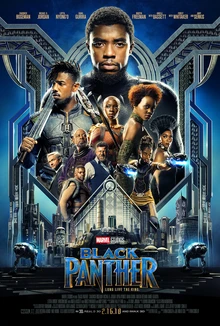
Blade II
A half-vampire hunter allies with vampires against mutant Reapers.

Alexander Kozlov (Atorero) · CC BY-SA 3.0
Blade II, released in 2002, is an American superhero film centered on the Marvel Comics character Blade. It serves as the second movie in the Blade series, following the 1998 original. Guillermo del Toro directed the film, with David S. Goyer writing the screenplay. The story follows Blade, a hybrid of human and vampire, as he continues safeguarding humans from vampires. Forced into an uneasy alliance with a select group of vampires, he battles mutant vampires that aim to wipe out both species.
New Line Cinema released the film in the United States on March 22, 2002. It performed well at the box office, earning $155 million. Critical reception was mixed; reviewers praised the acting, atmosphere, direction, and action scenes, but criticized the screenplay and limited character growth. A sequel, *Blade: Trinity*, came out in 2004.
**Plot** In Prague, Blade looks for his former mentor, Abraham Whistler, who was believed dead after an attack by Deacon Frost but was actually turned into a vampire and held captive for two years. After interrogating a vampire named Rush, Blade rescues Whistler and reverses his vampirism. Whistler then meets Scud, Blade's young and skilled new technician.
A plague is turning vampires into "Reapers"—savage, mutated creatures with an intense bloodlust. Their bite is highly infectious, transforming both humans and vampires. The original carrier of this Reaper strain is Jared Nomak, who despises the vampire race. To stop the Reapers, vampire leader Eli Damaskinos sends his servant Asad and his daughter Nyssa to negotiate a truce with Blade. Recognizing that humans will be the Reapers' next target after vampires, Blade reluctantly agrees to work with them. He joins the Bloodpack, an elite vampire squad originally formed to kill him, which includes Asad, Nyssa, Reinhardt, Chupa, Snowman, Priest, Verlaine, and her lover Lighthammer. When Reinhardt openly challenges him, Blade attaches an explosive to the back of his head to ensure compliance. The group investigates a vampire nightclub, encountering Reapers and learning they are immune to most vampire weaknesses except UV light. Nomak appears and tries to recruit Blade, but Blade refuses. He fights Nomak but cannot kill him before sunrise, and Nomak escapes. Lighthammer is bitten but hides it, while Priest is bitten and, as he transforms, is mercy-killed with sunlight.
Quick Facts
- Director
- Guillermo del Toro
- Producer
- Peter Frankfurt / Wesley Snipes / Patrick Palmer
- Writer
- David S. Goyer
- Based On
- Blade · Marv Wolfman · Gene Colan
- Starring
- Wesley Snipes / Kris Kristofferson / Ron Perlman / Leonor Varela / Norman Reedus / Luke Goss
- Music
- Marco Beltrami
- Cinematography
- Gabriel Beristain
- Editing
- Peter Amundson
- Studio
- New Line Cinema / Marvel Enterprises / Amen Ra Films
- Distributor
- New Line Cinema
- Released
- 22 March 2002
- Runtime
- 117 minutes
Facts from the source article.
Lore & Background
The plot begins in Prague, where Blade searches for his mentor Abraham Whistler, thought dead but turned into a vampire and held prisoner. After rescuing and curing Whistler, Blade learns of a pandemic turning vampires into Reapers—mutant creatures with a thirst for blood and an infectious bite. The original carrier is Jared Nomak, who hates the vampire race. Vampire overlord Eli Damaskinos sends his daughter Nyssa and servant Asad to strike a truce with Blade. Blade reluctantly allies with the Bloodpack, an elite vampire group originally assembled to kill him. They discover Reapers are immune to most vampire weaknesses except UV exposure. After battles and betrayals, Damaskinos reveals he created the Reapers to engineer a stronger vampire breed, and Nomak is his son. Blade ultimately kills Nomak and fulfills Nyssa's dying wish by embracing her as she disintegrates in sunlight.
Reader's Guide
Blade II was a box office success, grossing $155 million, and received mixed reviews from critics. It earned praise for its performances, atmosphere, direction, and action sequences, though its script and lack of character development were criticized. The film was followed by Blade: Trinity in 2004. Director Guillermo del Toro aimed to make vampires scary again, rejecting romanticized portrayals, and drew inspiration from comic books and Japanese animation. The film's visual effects were provided by Tippett Studio, with prosthetic makeup by Steve Johnson's XFX. Blade II remains a notable entry in the superhero horror genre, expanding the Blade franchise's mythology.
Did You Know?
- David S. Goyer originally planned to use the character Morbius, but Marvel wanted to keep him for a separate franchise.
- Guillermo del Toro was hired after Stephen Norrington declined to direct the sequel.
- The film's story was compared by Goyer to The Dirty Dozen.
- Tippett Studio created digital doubles of characters for computer-generated visual effects.
Legacy & Cultural Impact
Blade hit American screens on August 21, 1998, distributed by New Line Cinema, and it immediately distinguished itself as one of the darker superhero pictures of its era. Under the direction of Stephen Norrington and the screenplay of David S. Goyer, the film gave Wesley Snipes a role that would become one of his most defining screen performances. The commercial results were impressive: the picture earned approximately $131 million against a production budget of around $45 million, proving that a comic-book adaptation could be both a financial win and a tonal departure from the lighter fare audiences had grown accustomed to. The film is also widely recognized as Marvel Comics' first genuinely successful theatrical release, a milestone that helped validate the studio's characters for the big screen. That success set the stage for two sequels—Blade II in 2002 and Blade: Trinity in 2004—and kept Snipes in the role for well over a decade. As recently as 2024, he reprised the character in Deadpool & Wolverine, a reminder of how enduring the original film's impact has remained.
The Central Conflict
The narrative engine of the film is a generational war within the vampire world. Deacon Frost, played by Stephen Dorff, leads a faction of younger, self-made vampires who chafe under the authority of the ancient pure-blood Elders. Frost's ultimate ambition is to perform a ritual that would awaken La Magra, a so-called blood god, using twelve pure-blood vampires as conduits and Blade's own blood as the essential key. To seize power, Frost strips the Elders of their fangs and authority, torching Elder Dragonetti alive at sunrise. Meanwhile, Blade, whose real name is Eric Brooks, operates as a Daywalker, a human-vampire hybrid born in 1967 when his mother was bitten during a premature labor. He possesses vampire strengths without their typical weaknesses, save for a persistent need for human blood that he suppresses with a serum slowly losing its potency. The confrontation culminates at the Temple of Eternal Night, where Blade ultimately defeats Frost by administering an overdose of the anticoagulant EDTA, triggering a catastrophic reaction that destroys the vampire's physical form.
The Supporting Ensemble
Surrounding Snipes's Blade is a richly drawn ensemble that gives the film its layered texture. Kris Kristofferson plays Abraham Whistler, Blade's mentor and weaponsmith, who has waged a secret war against vampires using tools calibrated to their elemental vulnerabilities such as sunlight, silver, and garlic. N'Bushe Wright brings scientific ingenuity as Dr. Karen Jenson, a hematologist bitten by a vampire who discovers that the anticoagulant EDTA reacts explosively with vampire blood and synthesizes a vaccine for the infected. On the villainous side, Donal Logue appears as Quinn, a durable enforcer in Frost's service, while Udo Kier portrays the elder Gitano Dragonetti. Arly Jover plays Mercury, a fleet-footed vampire and one of Frost's lovers, and Traci Lords appears as Racquel, a seductive vampire who lures a victim into a blood rave. Kevin Patrick Walls is Officer Krieger, a human thrall called a familiar, and Tim Guinee plays Dr. Curtis Webb, whose failed transformation leaves him as a decomposing, zombie-like creature rather than a true vampire.
The Daywalker Concept & Character Origins
Blade the character was created in 1973 by writer Marv Wolfman and artist Gene Colan for Marvel Comics, and the 1998 film translates his core identity with striking clarity. He is a Dhampir, a human-vampire hybrid, born when his mother, Vanessa Brooks (Sanaa Lathan), was attacked by a vampire during a premature delivery in 1967. The mother survives the night and is later taken in by Frost, a revelation that shocks Blade at the Temple of Eternal Night. What makes the Daywalker concept so compelling is the asymmetry: Blade wields the supernatural speed, strength, and senses of a vampire yet is immune to their traditional vulnerabilities. His one remaining weakness is a compulsion to consume human blood, which he manages through a self-administered serum that is gradually failing due to overuse. He is also a highly trained martial artist who equips himself with a full arsenal of vampire-killing weapons. This blend of physical prowess, scientific ingenuity, and moral ambiguity gives the character a depth that sets him apart from the more conventional heroes of the period.
Gallery





Frequently Asked Questions
Who directed Blade II and when was it released?
Guillermo del Toro helmed the film, with David S. Goyer penning the script. New Line Cinema brought it to U.S. theaters on March 22, 2002.
What is the central conflict in Blade II?
Blade is compelled to join forces with a small band of vampires to stop the Reapers, a new strain of mutant vampires determined to eradicate both humans and their own kind.
Who is the main villain in Blade II?
Nomak leads the Reapers, a next-generation vampire faction that views both humans and traditional vampires as obsolete and seeks to destroy both.
How does Blade II differ tonally from the 1998 original?
Del Toro infused the sequel with a heavier gothic-horror atmosphere and more stylized action sequences, shifting the focus from a lone hunter versus a vampire clan to a three-sided war involving the Reaper threat.
How does Blade II end?
Blade ultimately takes down Nomak in a climactic showdown, securing survival for both humans and vampires and ending the Reaper threat.
More in African-American superhero films 1-21
Spotted an error? Know more?
Reader corrections go straight into our review queue. Suggest an edit · How this site is sourced