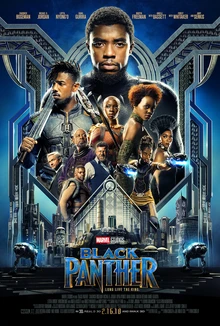
Blade (1998 film)
A dark superhero film that launched Marvel's film success.

khelvan · CC BY-SA 2.0
Blade, released in 1998, is an American superhero film based on the Marvel Comics character. It marks the first movie in the Blade series, with Stephen Norrington directing and David S. Goyer writing the script. Wesley Snipes plays the title role: a human-vampire hybrid who possesses vampire strengths but lacks their weaknesses, using these abilities to hunt vampires. The supporting cast includes Stephen Dorff, Kris Kristofferson, and N'Bushe Wright. New Line Cinema released the film in the United States on August 21, 1998. It was a commercial hit, earning $131 million worldwide against a $45 million budget, and is widely considered one of Snipes's most iconic roles. At the time, critics noted it as a particularly dark superhero film, and it is recognized as Marvel's first successful movie adaptation. Two sequels followed: Blade II (2002) and Blade: Trinity (2004). Snipes later returned to the character in the 2024 film Deadpool & Wolverine.
The plot begins in 1967, when a pregnant woman is attacked by a vampire, leading to premature labor. The baby survives, but the mother dies. Thirty years later, that child has become the vampire hunter known as Blade, or the "Daywalker." He raids a vampire-owned rave club run by Deacon Frost. A badly injured vampire from the raid ends up at a hospital, where he bites hematologist Karen Jenson before escaping. Blade takes Karen to a safe house run by his friend Abraham Whistler, who explains their secret war against vampires using weapons that exploit weaknesses like sunlight, silver, and garlic. Because Karen is now marked by a vampire bite, she is told to leave the city. Meanwhile, at a meeting of pure-blood vampire elders, Frost—a leader of younger, non-pure-blood vampires—is criticized for trying to start a war between humans and vampires. Back at her apartment, Karen is attacked by Officer Krieger, a human familiar loyal to Frost. Blade subdues Krieger, but Karen helps him escape. Blade later tracks Krieger down and forces him to reveal Frost's interest in an ancient vampire archive. Krieger reports this to Frost, who kills him for his failure. Frost then has Elder Dragonetti stripped of his fangs and burned alive by sunrise, stripping the other elders of their authority and imprisoning them.
Quick Facts
- Director
- Stephen Norrington
- Producer
- Peter Frankfurt / Wesley Snipes / Robert Engelman
- Writer
- David S. Goyer
- Based On
- Blade · Marv Wolfman · Gene Colan
- Starring
- Wesley Snipes / Stephen Dorff / Kris Kristofferson / N'Bushe Wright / Donal Logue
- Music
- Mark Isham
- Cinematography
- Theo van de Sande
- Editing
- Paul Rubell
- Studio
- New Line Cinema / Marvel Enterprises / Amen Ra Films / Imaginary Forces
- Distributor
- New Line Cinema
- Released
- 21 August 1998
- Runtime
- 120 minutes
Facts from the source article.
Lore & Background
The film follows Blade, a human-vampire hybrid known as the Daywalker, who possesses supernatural abilities without vampire weaknesses except a need for human blood. He raids a vampire-owned rave club and later protects hematologist Karen Jenson after she is bitten. With his mentor Abraham Whistler, Blade wages a secret war against vampires using weapons exploiting their weaknesses: sunlight, silver, and garlic. The plot centers on the vampire Deacon Frost, who seeks to perform a ritual to awaken the blood god La Magra using twelve pure-blood vampires and Blade's blood. Blade is captured and drained, but Karen allows him to drink her blood, enabling his recovery. Blade defeats Frost by injecting him with EDTA, causing a fatal reaction.
Reader's Guide
Blade is significant as Marvel's first successful film, paving the way for later superhero adaptations. It is considered one of Wesley Snipes's signature roles and established a darker tone for superhero cinema. The film was a commercial success, grossing $131 million on a $45 million budget. It spawned two sequels, Blade II (2002) and Blade: Trinity (2004), and Snipes reprised his role in the 2024 film Deadpool & Wolverine. The film's portrayal of vampires as biological, non-romantic villains marked a departure from earlier depictions, and its success demonstrated the viability of Marvel properties on screen.
Did You Know?
- Blade was originally developed with rapper LL Cool J interested in the lead role.
- New Line Cinema initially wanted Blade to be a spoof and asked if the character could be white.
- The film's version of Deacon Frost differs greatly from the comic, where he was an older white-haired church deacon.
- Wesley Snipes also produced the film through his company Amen Ra.
The Daywalker: Blade's Nature and Arsenal
Blade, whose true name is Eric Brooks, occupies a unique space between the human and vampire worlds. Born in 1967 after his mother Vanessa was bitten by a vampire during pregnancy, he inherited supernatural abilities without the typical vulnerabilities of his undead counterparts. The one exception is his need to consume human blood, a compulsion he manages through a self-administered serum that suppresses the urge—though overuse is beginning to erode its effectiveness. Known as the "Daywalker," he is a martial-arts expert who equips himself with weapons tailored to vampire weaknesses, including sunlight-based tools, silver, and garlic. His mentor and father figure, Abraham Whistler, a weaponsmith, has been his partner in a long-running secret war against the vampire race. Together they operate from a hidden safe house, crafting and deploying armaments that exploit the elemental vulnerabilities of their enemies. Blade's existence as a hybrid makes him both a hunter and, in the eyes of the vampire hierarchy, a potential key to something far more dangerous.
Deacon Frost and the Vampire Hierarchy
The film's central antagonist, Deacon Frost, leads a faction of younger vampires who are not natural-born and therefore regarded as socially inferior by the pure-blood elders. Frost's ambition extends beyond mere survival; he seeks to conquer the human race entirely. His grand design centers on a summoning ritual that would awaken an ancient entity called La Magra, the "blood god," using twelve pure-blood vampires as components, with Blade's unique hybrid blood serving as the essential catalyst. To seize control, Frost strips Elder Dragonetti of his fangs and burns him alive in the sunrise, then imprisons the remaining elders. His inner circle includes Quinn, a durable enforcer; Mercury, a fleet-footed vampire and Frost's lover; Racquel, a seductive vampire who lures victims to blood raves; and Krieger, a "familiar"—a human thrall bound to vampire service. Frost also keeps Blade's mother, Vanessa, alive under his control, using her as both a weapon and a bargaining chip. The vampire world in this film is one of rigid caste, ancient ritual, and ruthless power politics.
A Darker Register: Production and Commercial Breakthrough
Directed by Stephen Norrington and written by David S. Goyer, Blade arrived in American theaters on August 21, 1998, distributed by New Line Cinema. The film was a deliberate departure from the lighter superhero fare common at the time, embracing a gothic, noir-inflected tone that treated its vampire mythology with a seriousness unusual for the genre. Despite a production budget of $45 million, the picture grossed approximately $131 million worldwide, making it a significant commercial success. More importantly, it is widely recognized as Marvel's first financially successful film adaptation, a milestone that helped pave the way for the studio's later cinematic ventures. The character himself had been created in 1973 by writer Marv Wolfman and artist Gene Colan for Marvel Comics, and the screen version brought that comic-book hybrid hunter to life with a visual and narrative gravity that distinguished it from its contemporaries. Wesley Snipes's performance as the brooding, blood-thirsty Daywalker anchored the film and became one of his most defining roles.
Franchise Legacy and the Long Shadow of the Daywalker
Blade (1998) launched a franchise that would span multiple films and nearly three decades of screen presence. Two sequels followed: Blade II in 2002 and Blade: Trinity in 2004, each extending the mythology of the vampire hunter and his ongoing war against the undead. Wesley Snipes, whose portrayal of Eric Brooks is consistently cited as one of his signature performances, returned to the role in the 2024 film Deadpool & Wolverine, reuniting the character with a new generation of Marvel audiences. The original film's success demonstrated that a superhero property could thrive outside the traditional comic-book spectacle formula, relying instead on atmosphere, character depth, and a darker thematic palette. The supporting cast—Stephen Dorff as the scheming Frost, Kris Kristofferson as the grizzled Whistler, and N'Bushe Wright as the hematologist Karen Jenson—gave the story emotional texture beyond simple good-versus-evil conflict. For fans, the 1998 film remains the definitive entry point into the Blade universe, a template that subsequent installments and cameos have continued to reference and build upon.
Gallery



Frequently Asked Questions
Who is Blade (1998 film)?
Wesley Snipes stars as a half-vampire, half-human vigilante who dedicates his life to hunting down vampire kind. The 1998 New Line Cinema release is the first installment of the Blade film series.
What are Blade (1998 film)'s powers/role?
As a human-vampire hybrid, Blade possesses superhuman speed, strength, and heightened senses while being immune to classic vampire weaknesses like sunlight. His role in the story is that of a solitary hunter tracking vampires across the world.
Why is Blade (1998 film) important?
It demonstrated that a Black-led superhero movie could be a major commercial force, grossing $131 million worldwide on a $45 million budget. Many fans and critics credit it with opening doors for the broader Marvel cinematic era that followed.
Who directed and wrote Blade (1998 film)?
Stephen Norrington directed the film, while David S. Goyer wrote the screenplay. The supporting cast includes Stephen Dorff, Kris Kristofferson, and N'Bushe Wright.
More in African-American superhero films 1-21
Spotted an error? Know more?
Reader corrections go straight into our review queue. Suggest an edit · How this site is sourced