De Havilland DH.88 Comet
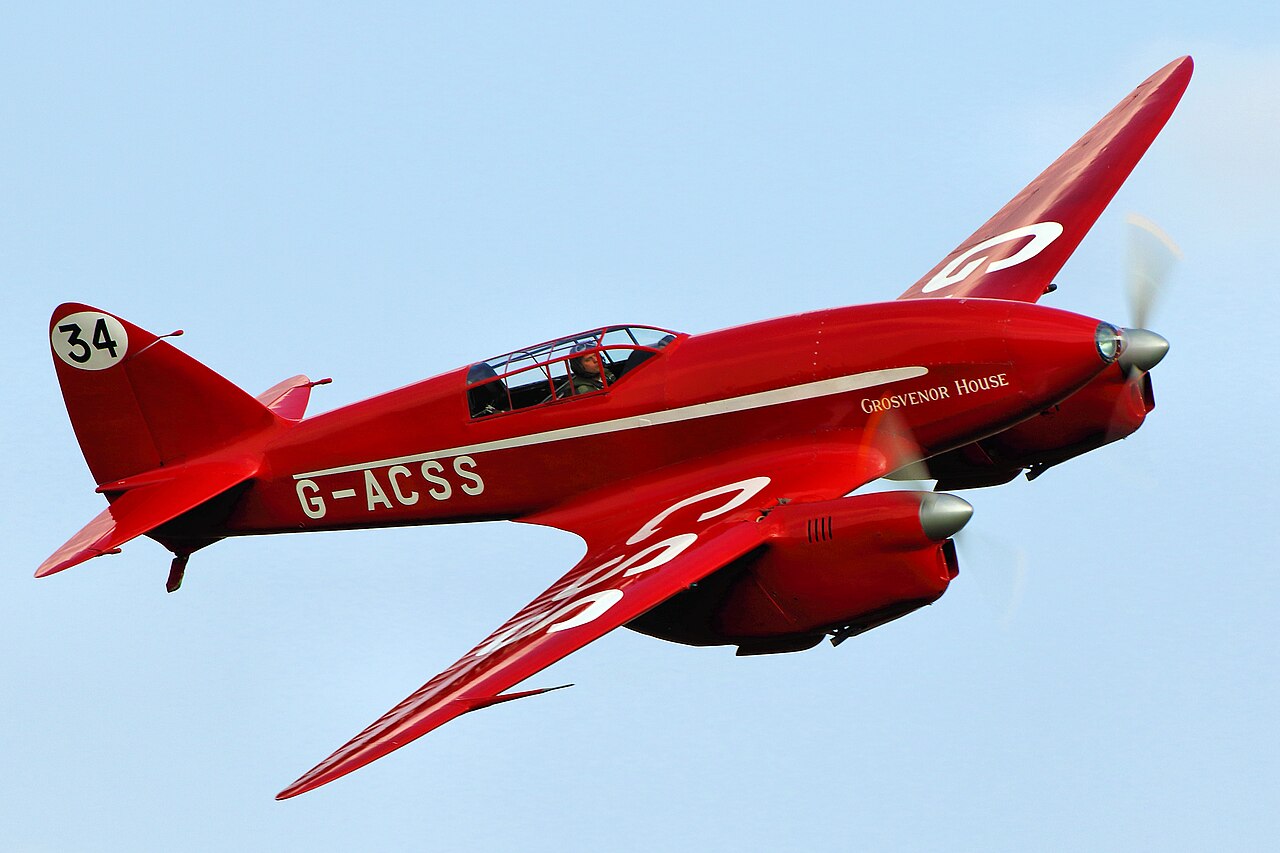
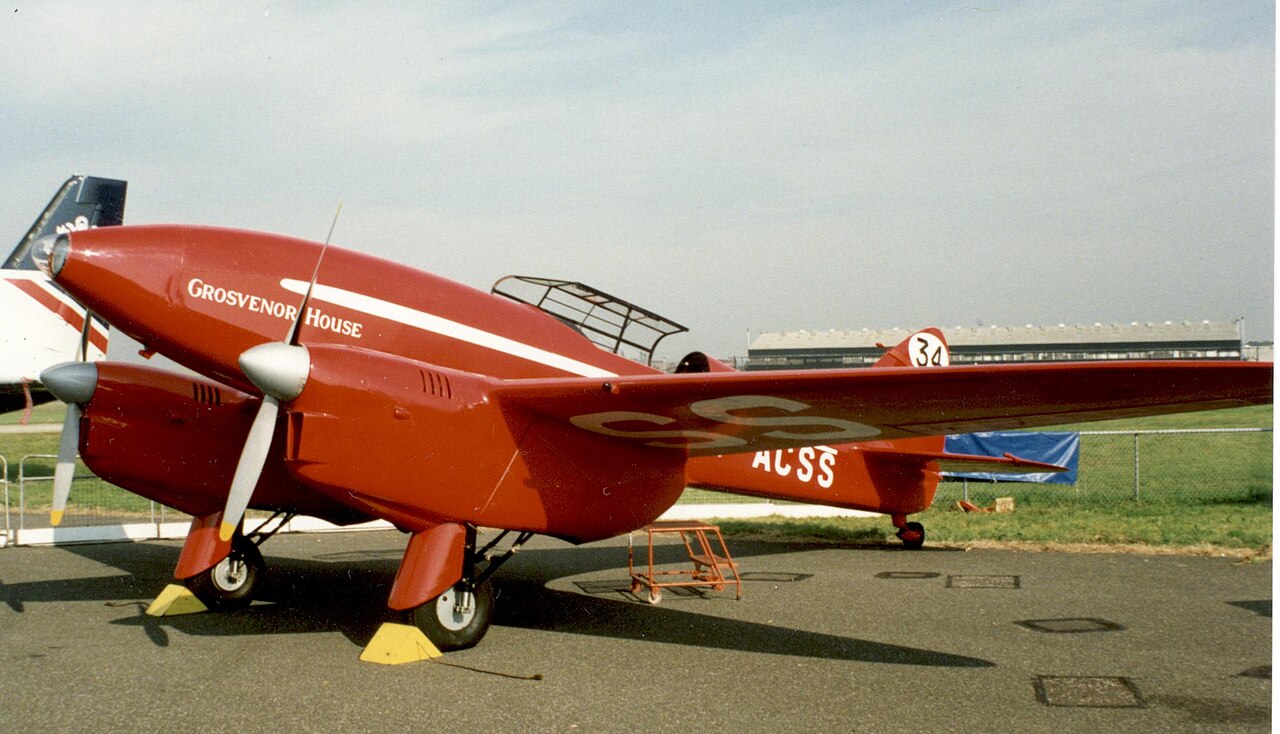
British twin-engined racer built for the 1934 MacRobertson Air Race.

Jimmy3d0 · Public domain
The de Havilland DH.88 Comet was a British two-seat, twin-engine aircraft built specifically for the 1934 MacRobertson Air Race from England to Australia. It became the first British plane to combine stressed-skin construction, cantilever monoplane wings, retractable landing gear, landing flaps, variable-pitch propellers, and an enclosed cockpit in a single airframe.
The race, planned for October 1934, marked the centenary of the Australian state of Victoria and was sponsored by confectionery maker Macpherson Robertson. At the time, no British monoplane airliner could match the new American designs, so Geoffrey de Havilland pushed for a serious British contender as a matter of national prestige. The company board knew they would not recover the full cost but saw the project as a way to boost their reputation and gain experience with fast monoplanes. In January 1934, they announced that if three orders came in by February 28, they would build a specialist racer guaranteed to reach 200 mph, named the Comet, priced at £5,000 each—about half the manufacturing cost. Three orders arrived on time: one from Jim Mollison (to be flown with his wife Amy Johnson), one from hotel owner Arthur Edwards, and one from motor racer Bernard Rubin.
The design did not fit standard racing aircraft specifications, so it was classed as a "Special, sub-division (f), Racing or Record." De Havilland focused on the long non-stop range needed for the race’s official stages. Initially, they considered a twin-engine, two-seat version of the DH.71 experimental monoplane, but performance was insufficient, so designer A. E. Hagg turned to a more innovative approach. The result was a cantilever monoplane with an enclosed cockpit, retractable undercarriage, flaps, and variable-pitch propellers to handle high take-off weights and fast cruising speeds.
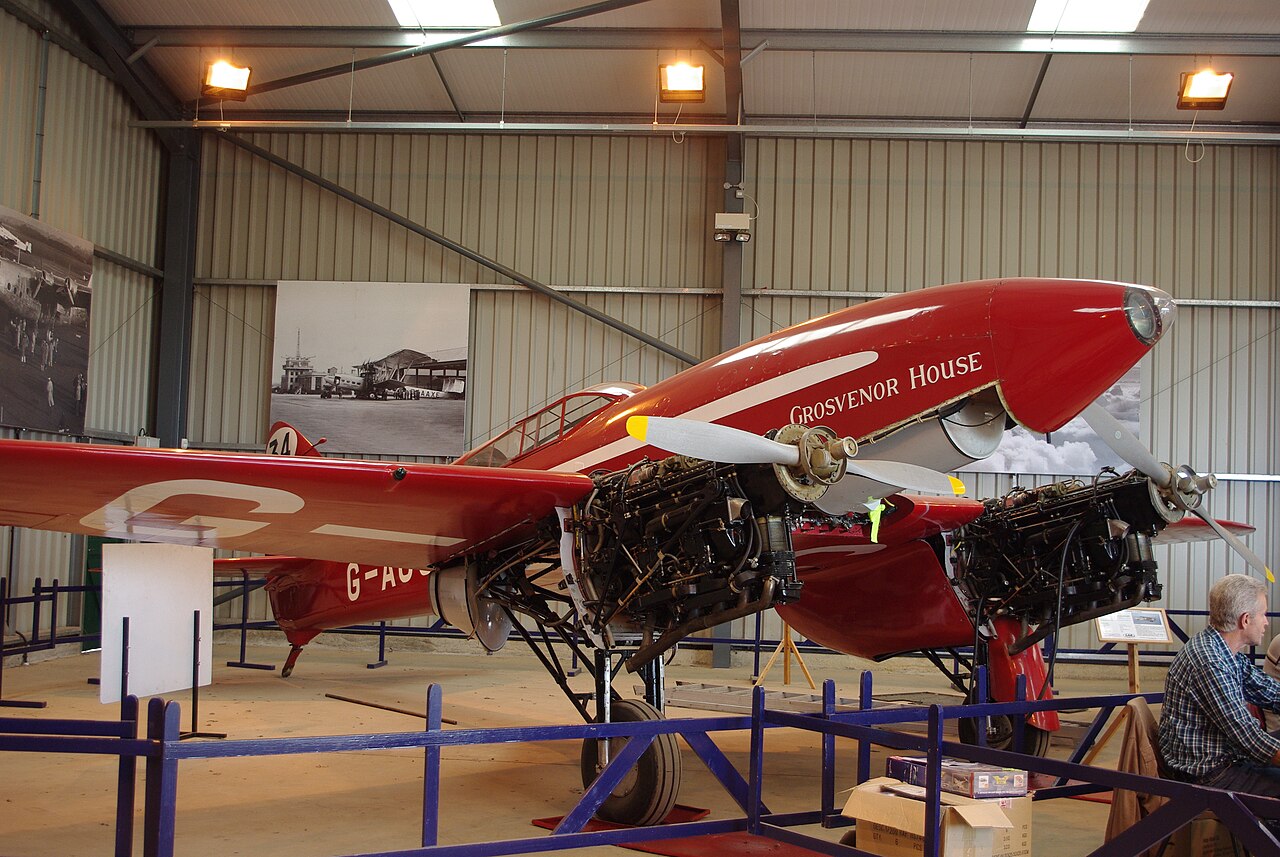
The aircraft had a low, tapered wing with a high aspect ratio, powered by two specially tuned Gipsy Six R engines. It was built almost entirely of wood; metal was used only for high-stress parts like engine bearers and undercarriage, and for complex curved fairings such as engine cowlings and wing root fairings. Sheet metal parts used a lightweight magnesium-aluminium alloy. Manually operated split flaps sat beneath the inboard rear wing sections and lower fuselage, while Frise ailerons were mass-balanced with lead strips in their leading edges.
Quick Facts
- Manufacturer
- de Havilland
- Designer
- A. E. Hagg
- First flight
- 8 September 1934
- Number built
- 5
Facts from the source article.
Lore & Background
The DH.88 Comet was developed in response to the 1934 MacRobertson Air Race, a multi-stage flight from the United Kingdom to Australia celebrating the centenary of the Australian State of Victoria. Geoffrey de Havilland was determined that Britain should field a serious competitor against the new generation of American monoplane airliners. The company board recognized that full investment would not be recouped but saw the project as enhancing prestige and providing experience in fast monoplanes. Three orders were obtained by the deadline of 28 February 1934, at a price of £5,000 each—half the estimated manufacturing cost.
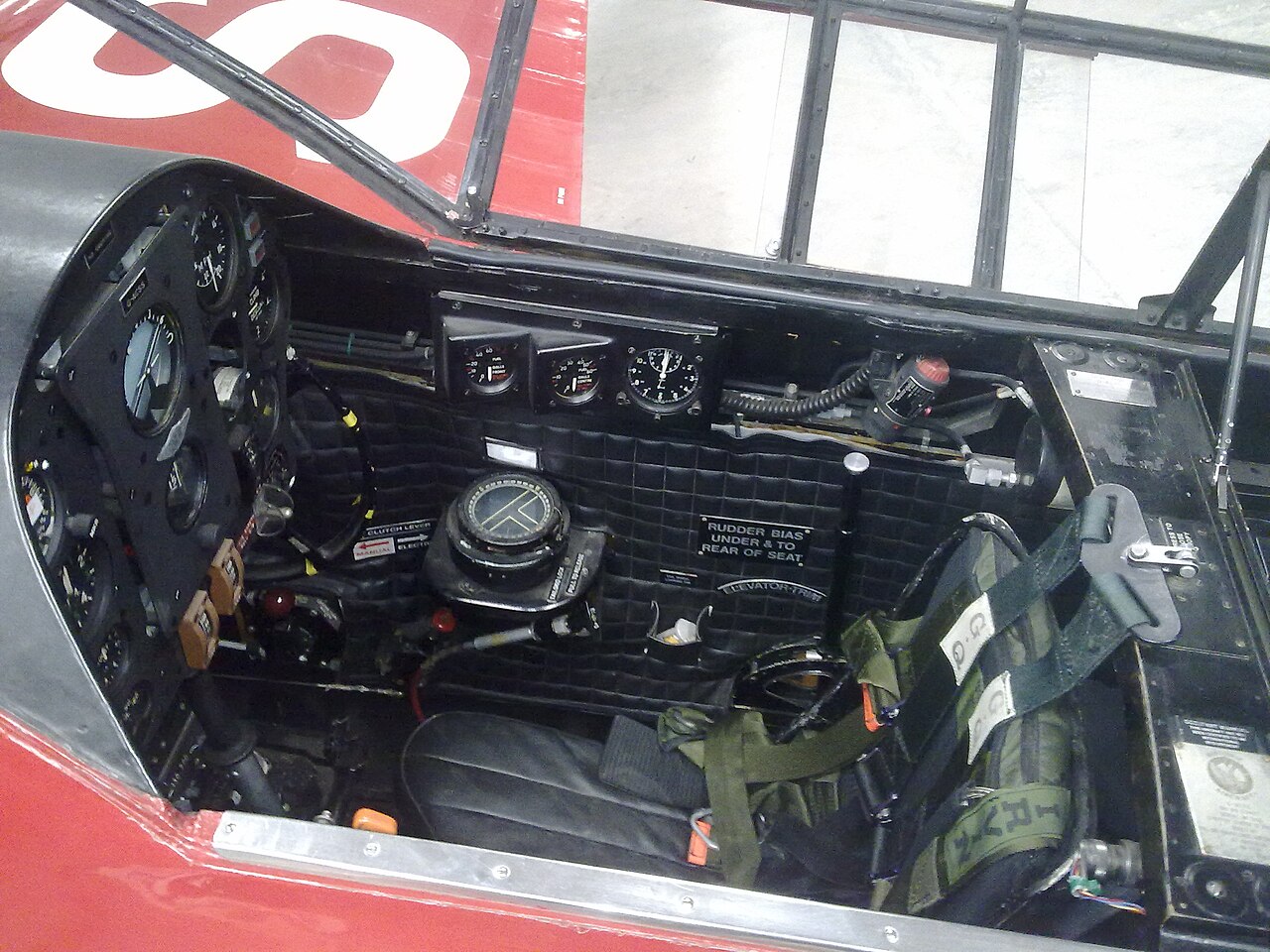
The design, led by A. E. Hagg, was a cantilever monoplane with enclosed cockpit, retractable undercarriage, flaps, and variable-pitch propellers. The aircraft was built almost entirely of wood, with metal limited to high-stress components and complex fairings. The wing used a stressed-skin construction with two layers of spruce planking laid diagonally, a technique adapted from lifeboat building made possible by high-strength synthetic bonding resins. The fuselage was plywood over spruce longerons, with spruce planking for compound curves. Fuel was carried in three fuselage tanks, and the cockpit seated pilot and navigator in tandem aft of the wing.
Flight tests began only six weeks before the race. Initially fitted with Hamilton-Standard propellers, these were replaced by French Ratier two-position pneumatically actuated propellers due to airflow interference. The Ratier blades were set to fine pitch on the ground using a bicycle pump and automatically switched to coarse pitch in flight, but could not be reset to fine pitch except on the ground. Other modifications included a landing light in the nose and a higher cockpit profile for improved visibility.
Reader's Guide
The DH.88 Comet's significance lies in its role as a pioneering high-speed aircraft that integrated multiple modern design features for the first time in a British airframe. Its development was driven by national prestige and the specific demands of the MacRobertson Air Race, where one example, G-ACSS Grosvenor House, won outright. The aircraft demonstrated the viability of stressed-skin wood construction using synthetic resins, a technique that surprised many in the industry. After the race, Comets established numerous aviation records and participated in further races. Three were evaluated by national governments, typically as mail planes. Two original Comets survived, G-ACSS and G-ACSP, and several full-scale replicas have been built. The type's legacy includes its influence on fast monoplane design and its demonstration that a purpose-built racer could achieve lasting performance and utility beyond a single competition.
Gallery

More in Aerobatic and Racing Aircraft
Spotted an error? Know more?
Reader corrections go straight into our review queue. Suggest an edit · How this site is sourced