Armstrong Whitworth Siskin
First all-metal fighter in Royal Air Force service.

SDASM Archives · No restrictions
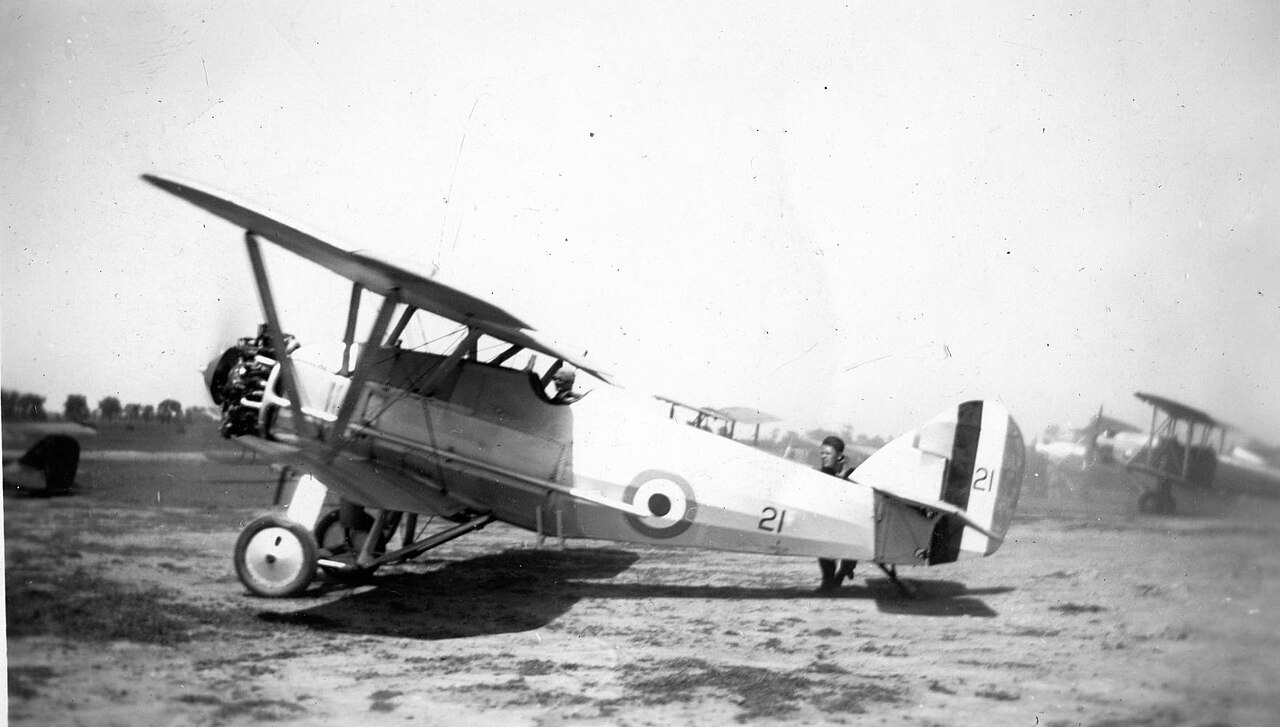
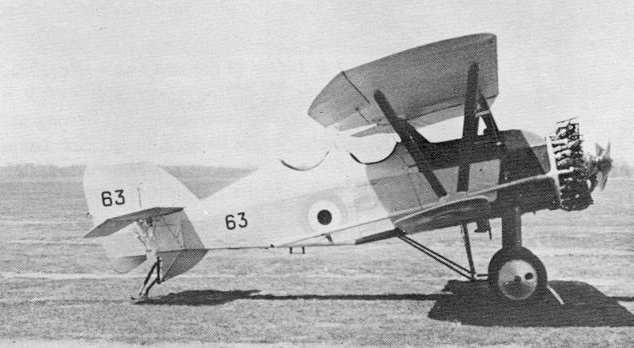
The Armstrong Whitworth Siskin was a single-seat sesquiplane fighter built by Armstrong Whitworth Aircraft. It became the first all-metal fighter to serve with the Royal Air Force and was among the first new fighters introduced after the First World War. Its origins lay in the Siddeley-Deasy S.R.2 Siskin, designed by Major F. M. Green, formerly of the Royal Aircraft Factory. Development was driven by the Air Ministry’s Specification Type I, which required a single-seat fighter powered by the ABC Dragonfly radial engine. That engine proved disappointing, delivering only 270 hp instead of the expected 320 hp, and suffered from unreliability, overheating, and crankshaft failures due to vibration. Despite this, the Siskin handled well and outperformed its rivals.
The S.R.2 Siskin was a single-bay biplane built from wood and fabric, with an angular shape and fixed landing gear featuring long oleo struts and radius rods connected to V-struts. Its wings were of unequal span, and the Dragonfly engine was mounted in a streamlined cowling with individual cooling channels for each cylinder. Armament consisted of two Vickers machine guns in front of the pilot. The first flight took place in May 1919.
In 1919, Siddeley-Deasy merged with Armstrong Whitworth, and the aviation side became Armstrong Whitworth Aircraft. Siddeley-Deasy had inherited the RAF 8 engine design, which by 1920 had been developed into the Armstrong Siddeley Jaguar. A Siskin prototype with a Jaguar engine flew on 20 March 1921. Air Ministry officials were impressed but insisted on an all-metal structure for RAF acceptance. In response to Specification 14/22, issued in 1922 for an all-metal single-seat fighter, Major Green redesigned the Siskin with an all-metal frame, creating the Siskin III. This marked the beginning of the British shift to metal military aircraft.
An initial contract for three production aircraft was placed on 13 October 1922, followed by an order for six more on 26 January 1923, including a two-seat variant. The Siskin III first flew on 7 May 1923. During testing, the ailerons were tapered to prevent jamming. Production aircraft had a composite wood and aluminium frame covered in doped linen. The first deliveries to the RAF began in January 1924, with No. 41 Squadron at RAF Northolt receiving its Siskin IIIs in May 1924. Eleven squadrons eventually operated the type.
Quick Facts
- Manufacturer
- Sir W.G. Armstrong Whitworth Aircraft Limited
- Designer
- F.M. Green
- First flight
- May 1919 as Siddeley-Deasy S.R.2 Siskin
- Introduction
- 1923
- Retired
- 1932
- Primary user
- Royal Air Force
- More users
- Royal Canadian Air Force; Royal Swedish Air Force
- Number built
- 485
Facts from the source article.
Lore & Background
The Siskin was a development of the Siddeley-Deasy S.R.2 Siskin designed by Major F. M. Green. A major impetus for its development was the Air Ministry's issuing of RAF Specification Type I, which called for a single-seat fighter powered by the ABC Dragonfly radial engine. The Dragonfly proved disappointing, delivering only 270 hp rather than the expected 320 hp, and was unreliable and prone to overheating and vibration. Despite the engine, the Siskin displayed good stability and handling characteristics, with performance that could outmatch its direct rivals for RAF orders.
In 1919, Siddeley-Deasy merged with Armstrong Whitworth. By 1920, the Armstrong Siddeley Jaguar engine had been developed sufficiently to replace the Dragonfly. A prototype Siskin fitted with a Jaguar flew on 20 March 1921. Air Ministry officials were impressed but urged Armstrong Whitworth to continue developing the aircraft as only an all-metal design would be acceptable to the RAF. During 1922, Air Ministry Specification 14/22 was issued for an all-metal single-seat high performance landplane, and the Siskin was submitted, leading to an order for a single Jaguar-powered prototype. Major Green redesigned it with an all-metal structure, as the Siskin III.
The Siskin IIIA was the main production version, first ordered during 1926, and was the first all-metal framed aircraft to be procured in quantity for the RAF. It was to have been powered with a Jaguar IV, but was given a supercharged Jaguar IVA engine instead. The supercharger had little effect on performance below 10000 ft, but greatly improved speed and climb above that height.
Reader's Guide
The Armstrong Whitworth Siskin marked a significant transition in British military aviation, being the first all-metal fighter to enter service with the Royal Air Force. Its development was heavily influenced by the failure of the ABC Dragonfly engine, which forced a redesign around the more reliable Armstrong Siddeley Jaguar. The Siskin III and IIIA variants served with eleven RAF squadrons from 1924 until October 1932, when they were replaced by the Bristol Bulldog. The type was relatively popular with pilots, being highly manoeuvrable, although slightly underpowered. Beyond the RAF, the Siskin was evaluated by several nations, with the Royal Canadian Air Force operating a sizable fleet from 1926 until shortly after the outbreak of the Second World War. RCAF Siskins were used in aerial displays and long distance tours around North America. The Siskin also played a role in the fortunes of Armstrong Whitworth, with export sales being a major factor for a time, though a Romanian order for 65 aircraft was cancelled following a fatal accident and possible political pressure by France. The Siskin's all-metal construction set a precedent for subsequent British fighter designs.
From Biplane Prototype to All-Metal Pioneer
The Siskin's origins trace back to the Siddeley-Deasy S.R.2, a wood-and-fabric single-bay biplane designed by Major F. M. Green. Its angular form and fixed landing gear with lengthy oleo struts gave it a distinctive silhouette, while unequal-span wings and a pair of Vickers machine guns flanking the pilot completed the layout. The aircraft's first flight came in May 1919, powered by the ABC Dragonfly radial engine specified under RAF Specification Type I. That engine proved a letdown, delivering only 270 horsepower against an expected 320, and plagued by overheating, vibration, and crankshaft failures. Yet the airframe itself showed promise, with favorable stability and handling that outpaced rival contenders. After Siddeley-Deasy merged into Armstrong Whitworth in 1919, the inherited RAF 8 engine design matured into the Armstrong Siddeley Jaguar. A prototype Siskin fitted with the Jaguar took to the air on 20 March 1921, impressing Air Ministry officials who then pushed for a full all-metal redesign, ultimately yielding the Siskin III under Specification 14/22.
A Decade of Frontline Service
The Siskin entered RAF service in May 1924 when the first Siskin IIIs arrived at No. 41 Squadron based at RAF Northolt, with No. 111 Squadron following shortly after. Over the next several years, eleven squadrons across the force would fly the type, making it a familiar sight in the post-war British sky. Pilots found the aircraft relatively popular, appreciating its handling qualities and the improved performance that the supercharged Jaguar IVA engine brought, particularly above 10,000 feet where the supercharger significantly boosted speed and climb. The Siskin IIIA, the main production variant ordered in 1926, held the distinction of being the first all-metal-framed aircraft procured in quantity for the RAF. Production was spread across several manufacturers—Blackburn, Bristol, Gloster, and Vickers took on subcontracted builds as Armstrong Whitworth's own Atlas program consumed capacity. The type remained in frontline service for over eight years before the final Siskins were swapped out for Bristol Bulldogs in October 1932.
Beyond British Shores
The Siskin's appeal extended well past the Channel. Armstrong Whitworth actively pursued export markets, and Siskin sales became a significant contributor to the company's financial health during the mid-1920s. Romania placed an order for 65 aircraft, but that deal collapsed after a Romanian pilot was killed in a takeoff crash during acceptance tests at Whitley Abbey, Coventry, in February 1925; French political pressure may have also played a role in the cancellation. The Royal Canadian Air Force took a more measured approach, evaluating two Siskin IIIs before committing to 12 IIIA variants delivered between 1926 and 1931, which the RCAF kept in service until just after the outbreak of the Second World War. Various other nations also evaluated the type, and several placed orders. The Siskin's competitive credentials were further showcased in air races, where examples of the fighter were entered in various competitions, demonstrating that the aircraft's performance held up against other contemporary designs on the international stage.
Paving the Way for Modern Military Aviation
The Siskin occupies a pivotal place in the story of British military aviation. As the first all-metal fighter operated by the Royal Air Force, it marked the beginning of a fundamental shift away from the wood-and-fabric construction that had defined aircraft design through the First World War. The all-metal Siskin III, redesigned by Major Green under Specification 14/22, represented the starting point of Britain's transition to metal structures for military aircraft—a transition that would define the next several decades of fighter development. The aircraft was also among the first new fighters to enter service in the immediate post-war period, bridging the gap between the obsolete biplanes of 1918 and the more advanced designs of the late 1920s and 1930s. Its development path, from the angular SR.2 biplane through engine changes and structural redesign, illustrated the iterative process by which interwar aviation standards were established, setting expectations for performance, materials, and reliability that subsequent RAF specifications would build upon.
Gallery



Frequently Asked Questions
What engine ultimately powered the Siskin in service?
The primary powerplant was the Armstrong Siddeley Jaguar radial engine. Earlier testing with the ABC Dragonfly proved underwhelming, producing only around 270 hp, which pushed the design team toward the Jaguar.
When did the Siskin first take to the air and reach operational units?
The prototype's initial flight occurred in May 1919, while the Jaguar-engined version first flew on 20 March 1921. The RAF began receiving operational deliveries in May 1924.
How widely was the Siskin deployed within the RAF?
Eleven RAF squadrons operated the Siskin as their frontline fighter. The Siskin III variant, which first flew on 7 May 1923, represented the final development iteration of the type.
More in Aerobatic and Racing Aircraft
Spotted an error? Know more?
Reader corrections go straight into our review queue. Suggest an edit · How this site is sourced