
The Legend of Zelda: Breath of the Wild
An open-world Zelda game emphasizing experimentation and nonlinear exploration.

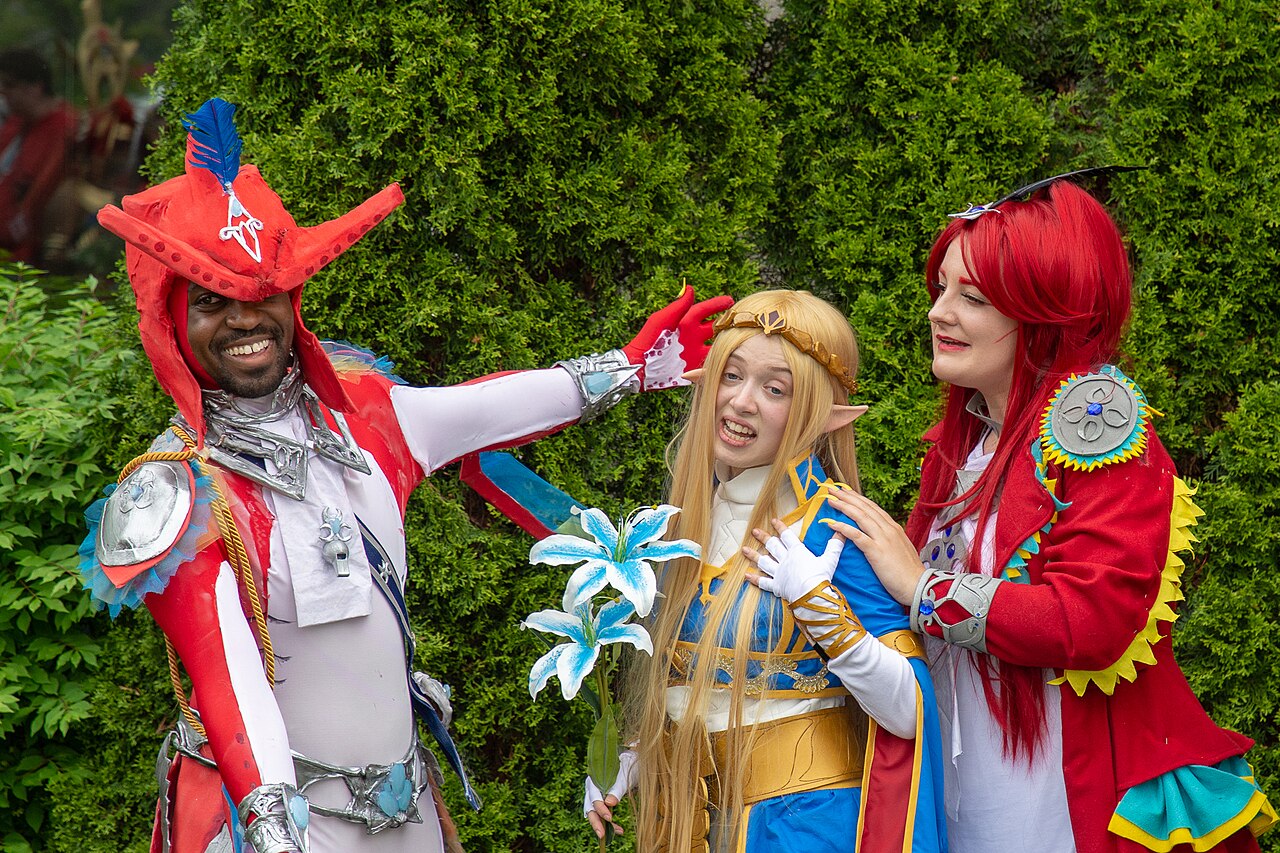
Xander Ashburn · CC BY 2.0
In 2017, Nintendo EPD released *The Legend of Zelda: Breath of the Wild* for the Wii U and Nintendo Switch. The story places Link near the end of the Zelda timeline, on a mission to rescue Princess Zelda and stop Calamity Ganon from destroying the world. The game is built around an open world that does not force a set path, rewarding players who explore freely and experiment with its systems. The story can be completed in any order.
Development began after *Skyward Sword* (2011) and lasted five years. Director Hidemaro Fujibayashi and producer Eiji Aonuma led the team in rethinking series conventions, introducing detailed physics and chemistry engines. Inspiration came from *Shadow of the Colossus* (2005) and *The Elder Scrolls V: Skyrim* (2011). Monolith Soft, known for the *Xenoblade* series, helped design the landscapes and topography due to their open-world experience.
*Breath of the Wild* launched on March 3, 2017, as the final Nintendo-published Wii U game and a launch title for the Switch. Critics praised its gameplay, open-world design, and attention to detail, though some noted technical performance issues. It won many year-end awards, including Game of the Year at the 2017 Game Awards and the 21st Annual D.I.C.E. Awards. It broke sales records for a Nintendo launch game, selling 35.76 million copies by June 2026, making it the best-selling *Zelda* game and one of the best-selling games ever.
Journalists consider it one of the greatest games of all time, calling it a landmark in open-world design for its emphasis on experimentation, physics-based sandbox, and emergent gameplay. Many developers cite it as inspiration, and it remains a common point of comparison for open-world games. A spinoff, *Hyrule Warriors: Age of Calamity*, came out in 2020, and a sequel, *Tears of the Kingdom*, followed in 2023. An enhanced version for the Nintendo Switch 2 released on June 5, 2025.
**Gameplay**
This is an open-world action-adventure game where the player controls Link to explore Hyrule. Nonlinear gameplay is encouraged by the lack of clear area entrances or exits, minimal instructions, and freedom to roam. A consistent physics engine allows players to solve problems in multiple ways rather than finding one solution.
Quick Facts
- Title
- The Legend of Zelda: Breath of the Wild
- Developer
- Nintendo EPDAdditional work by Monolith Soft
- Publisher
- Nintendo
- Series
- The Legend of Zelda
- Platforms
- Wii U · Nintendo Switch · Nintendo Switch 2
- Released
- Wii U, Nintendo Switch · March 3, 2017 · Nintendo Switch 2 · June 5, 2025
- Genre
- Action-adventure
- Modes
- Single-player
- Director
- Hidemaro Fujibayashi
- Producer
- Eiji Aonuma
- Programmer
- Takuhiro Dohta · Kenji Matsutani · Hiroshi Umemiya
- Artist
- Takumi Wada · Satoru Takizawa
Facts from the source article.
Lore & Background
Breath of the Wild's five-year development commenced after the release of The Legend of Zelda: Skyward Sword (2011). Led by director Hidemaro Fujibayashi and producer Eiji Aonuma, Nintendo EPD sought to rethink Zelda's conventions and introduced detailed chemistry and physics engines. The developers drew inspiration from Shadow of the Colossus (2005) and The Elder Scrolls V: Skyrim (2011). Monolith Soft, developer of the Xenoblade series, assisted in designing landscapes and topography due to their experience in open world games.
The game was released on March 3, 2017, as the final Nintendo-published Wii U game and as a launch game for the Switch. It received acclaim, with praise for its gameplay, open-world design, and attention to detail, though some reviewers criticized its technical performance. Breath of the Wild won numerous year-end accolades, including Game of the Year at the 2017 Game Awards and the 21st Annual D.I.C.E. Awards. It broke sales records for a Nintendo launch game and sold 35.76 million copies by June 2026, making it the bestselling Zelda game and one of the bestselling video games.
The plot takes place at the end of the Zelda timeline in Hyrule. An amnesiac Link awakens in the Shrine of Resurrection and learns from King Rhoam's spirit that he has slept for a century. The story recounts ancient Sheikah technology, the Champions, and Calamity Ganon's attack, which left Link wounded and Zelda sealing herself with Ganon in Hyrule Castle.
Reader's Guide
Breath of the Wild is considered one of the greatest video games of all time; journalists described it as a landmark in open world design for its emphasis on experimentation, physics-based sandbox, and emergent gameplay. Numerous developers cited Breath of the Wild as inspiration, and it is a popular point of comparison among open-world games. The game's unstructured world rewards exploration and nonlinear story completion, with a consistent physics engine and a 'chemistry engine' that governs object interactions. Players can approach problems in different ways, such as using metal objects to attract lightning during thunderstorms. The Sheikah Slate provides tools like remote bombs and time-stopping abilities. Weapons and shields degrade over time, encouraging creative use of the environment. Shrines and Divine Beasts offer puzzles and battles, while Korok Seeds expand inventory. The Nintendo Switch 2 version added support for Zelda Notes, featuring audio recordings by Princess Zelda to assist players. A spinoff, Hyrule Warriors: Age of Calamity, was released in 2020, and a sequel, The Legend of Zelda: Tears of the Kingdom, was released in 2023. An enhanced version for the Nintendo Switch 2 was released on June 5, 2025.
Did You Know?
- Monolith Soft, known for the Xenoblade series, assisted in designing the game's landscapes and topography.
- The Master Sword is the only unbreakable weapon, but it can run out of energy after extended use, requiring a 10-minute recharge.
Development & Design Philosophy
The five-year development cycle began after the release of Skyward Sword in 2011. Led by director Hidemaro Fujibayashi and producer Eiji Aonuma at Nintendo EPD, the team set out to fundamentally rethink what a Zelda game could be. Rather than following the series' traditional structure, they drew creative inspiration from outside the franchise—specifically Shadow of the Colossus (2005) and The Elder Scrolls V: Skyrim (2011). To realize their vision of a truly open, interactive world, EPD brought in Monolith Soft, the studio behind the Xenoblade series, to assist with landscape and topography design, leveraging their expertise in building expansive open environments. The team also introduced a detailed chemistry engine and a physics engine, elements entirely new to the Zelda formula. These systems were designed to let players approach problems in multiple ways rather than seeking a single intended solution, fundamentally shifting the series toward experimentation and player-driven discovery.
Gameplay & World Design
Breath of the Wild redefined what it means to play a Zelda title. The world of Hyrule is deliberately unstructured: there are no defined area entrances or exits, minimal hand-holding from the game, and a strong push toward free exploration. A consistent physics engine and a chemistry engine that assigns physical properties to nearly every object means players can solve problems in countless ways. During a thunderstorm, for instance, carrying metal invites a lightning strike, but players can also hurl metal at enemies to redirect the bolt. Link's toolkit includes running, climbing, swimming, and paragliding, all governed by a stamina system. Weapons and shields degrade and shatter with use, and many items serve multiple purposes—wooden weapons can start fires, wooden shields can collect incoming arrows, and certain shields double as makeshift snowboards. The Sheikah Slate, a magical tablet, grants remote bombs, metal manipulation, ice-block formation on water, and temporary time-stop abilities, while also housing a photo-based compendium for cataloguing the world. Combat can be as simple as rolling a boulder off a cliff into an enemy camp, and the story can be completed in any order the player chooses.
Release, Reception & Commercial Success
Released on March 3, 2017, Breath of the Wild held a unique dual position: it was the final Nintendo-published title for the Wii U while simultaneously serving as a launch game for the Nintendo Switch. The critical response was overwhelmingly positive, with reviewers lauding the gameplay depth, the open-world design, and the meticulous attention to detail, though a minority flagged technical performance issues. The game swept year-end awards, claiming Game of the Year at both the 2017 Game Awards and the 21st Annual D.I.C.E. Awards. Commercially, it shattered the record for a Nintendo launch title and, by June 2026, had sold 35.76 million copies worldwide. That figure cements it as the best-selling entry in the Zelda franchise and places it among the highest-selling video games of all time. The game's success was not merely a product of the Switch's hardware but a testament to a design philosophy that gave players unprecedented freedom within a richly detailed world.
Legacy & Cultural Impact
Breath of the Wild is widely regarded as one of the greatest video games ever made. Journalists and critics have described it as a landmark moment in open-world design, specifically praising its emphasis on experimentation, its physics-based sandbox, and the emergent gameplay that arises from its chemistry engine meeting player creativity. Its influence on the broader industry has been profound: numerous developers have cited it as a direct inspiration, and it has become a standard point of comparison whenever a new open-world title is evaluated. The game's world and story have also spawned further entries in the franchise, including the 2020 spinoff Hyrule Warriors: Age of Calamity. A full sequel, The Legend of Zelda: Tears of the Kingdom, arrived in 2023, and an enhanced edition for the Nintendo Switch 2 was released on June 5, 2025, ensuring the experience continues to reach new audiences nearly a decade after its initial launch.
Gallery





Frequently Asked Questions
What is The Legend of Zelda: Breath of the Wild?
It is an open-world action-adventure game developed by Nintendo EPD and released on March 3, 2017, for the Wii U and Nintendo Switch. The title follows Link as he awakens a century after Calamity Ganon's devastation and sets out to free Hyrule while rescuing Princess Zelda.
What are The Legend of Zelda: Breath of the Wild's core abilities and mechanics?
The game centers on a physics- and chemistry-driven sandbox where Link can climb nearly any surface, cook ingredients, exploit elemental reactions, and approach every challenge in countless ways. There is no prescribed route; players are free to tackle shrines, dungeons, and the final confrontation in whatever order they choose.
Why is The Legend of Zelda: Breath of the Wild important to the adventure-game genre?
It redefined what an open-world game could feel like by prioritizing player curiosity and experimentation over checklists and linear progression. With over 35 million copies sold, it also demonstrated that a console-exclusive title could set a new benchmark for freedom and discovery in the medium.
Who directed and produced The Legend of Zelda: Breath of the Wild?
Hidemaro Fujibayashi served as director and Eiji Aonuma as producer, leading Nintendo EPD through a roughly five-year development cycle that followed Skyward Sword. Their vision was to strip away the series' traditional structure and let players discover Hyrule at their own pace.
More in Adventure Games of the 2010s, Part 5 1-24
Spotted an error? Know more?
Reader corrections go straight into our review queue. Suggest an edit · How this site is sourced