Still Life 2
FBI agent and journalist hunt the East Coast Killer.

Arthur Jonauskas · CC BY-SA 4.0
Still Life 2, a 2009 adventure game, was created by the French studio Gameco Studios and released by MC2 France under the Microïds label. It continues the story from the 2005 game Still Life and builds on characters and themes introduced in 2003's Post Mortem.
Players control FBI Agent Victoria McPherson as she pursues a serial killer called the East Coast Killer. The action takes place in Maine. Like its predecessor, the game alternates between two characters: McPherson and journalist Paloma Hernandez, one of the killer's victims who had been reporting on the crimes. This shifts the gameplay between investigation and survival.
A short introduction, posted on August 31, covers in-game dates of October 2 and 3, 2008. On the evening of October 2, a missing person's body is found near Highway 201 in Jackman. A video sent to police and media identifies the killer as the East Coast Killer. McPherson sees Hernandez reporting on TV and arranges a meeting. Hernandez is abducted and wakes up on October 3 in the killer's rundown house.
The East Coast Killer lets Hernandez call McPherson with clues to the house's location, intending to trap and kill her. This plan was devised with Hawker, an ex-marine and former FBI agent who was dismissed after McPherson refused to support his claim that killing an innocent person was justified. Though ambushed, McPherson escapes and saves herself and Hernandez, but nearly a dozen police officers and a rookie FBI agent are killed. Flashbacks reveal that the Chicago Killer from the previous game was Richard Valdez, Victoria's boyfriend, who turned out to be the grandson of the man Gus was following in Prague.
The first Still Life drew controversy for its lack of an ending, revealing no villain and setting up a finale that remained unmade for some time. On December 6, 2007, Microïds announced development of this sequel, which was released in April 2009. GameCo began development in June 2007. The game was also made for Apple Macintosh computers.
In June 2008, a teaser video and screenshots appeared online, showing an abandoned mansion with a woman screaming in the distance. The video gave a tentative release date of fall 2008. A second trailer came in November 2008. On August 31, more cinematic and in-game screenshots were released.
Quick Facts
- Title
- Still Life 2
- Developer
- Gameco Studios
- Designer
- Bruno Martin
- Series
- Still Life
- Released
- FRA · 14 May 2009 · NA · 11 August 2009 · UK · 19 February 2010
- Genre
- Adventure
- Modes
- Single-player
- Platforms
- Microsoft Windows, Mac OS X
Facts from the source article.
Lore & Background
The game uses the same storytelling device as its predecessor, switching back and forth between two player characters: FBI Agent Victoria McPherson and journalist Paloma Hernandez, one of the killer's victims who has been covering the East Coast Killer's crimes. The story begins with the discovery of a missing person's body on Highway 201 near Jackman on October 2, 2008. McPherson sees Hernandez reporting on the killing on TV and arranges a meeting, but Hernandez is abducted and wakes up in the killer's dilapidated house. The East Coast Killer allowed Hernandez to call McPherson with clues to the location, a trap set with an ex-marine and former FBI agent named Hawker, who had been dismissed when McPherson refused to back his claim that killing an innocent person was justified. McPherson survives the ambush and saves herself and Hernandez, though nearly a dozen police officers and a rookie FBI agent are killed. Flashbacks reveal that the Chicago Killer was Richard Valdez, Victoria's boyfriend from the previous game, who turned out to be the grandson of the man Gus was following through Prague.
Reader's Guide
Still Life 2 was developed to resolve the controversy surrounding the first Still Life, which ended without revealing the villain. Development began in June 2007 by GameCo, and the game was announced on 6 December 2007. A teaser video and screenshots were posted in June 2008, with a second trailer in November 2008. The release was pushed back from November 2008 to the first quarter of 2009. A machinima contest was launched on December 8, with over 120 entries; the winner's name was listed in the game credits. A demo version was released containing sections from early in the game. The game received mixed reviews: critics praised the visuals but complained about the gameplay, with some noting it did not live up to its predecessor. IGN's Neilie Johnson said it 'fails to improve significantly on the previous title,' while GameSpot's Brett Todd found it enjoyable for fans of old-fashioned adventures. AdventureGamers' Stuart Young criticized the 3D graphics as dated and the controls as cumbersome, and Diehard GameFAN's Alex Lucard called the gameplay 'worthless' with 'poor' replayability, concluding it was a 'below average game.'
Did You Know?
- The game was developed by French company Gameco Studios and published by MC2 France under their Microïds label.
- A machinima contest with over 120 entries was held, and the winner's name was listed in the game credits.
- The game was released in Germany on 30 March 2009, before its French release on 14 May 2009.
Development Under Constraint
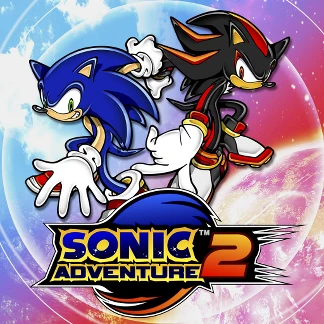
Following the 1998 release of the original Sonic Adventure, Sega restructured its development pipeline. A segment of the core Sonic Team relocated to San Francisco, forming a new branch called Sonic Team USA, which would take the lead on the sequel. The project ran for roughly eighteen months under director Takashi Iizuka and producer Yuji Naka, all while Sega itself navigated a period of significant corporate instability. The resulting team was considerably leaner than the one behind the first Adventure, and the design philosophy reflected that constraint: a streamlined, action-forward structure that gave each of the six playable characters a roughly equal share of screen time. The stage design drew inspiration from real American landscapes, with settings echoing San Francisco's urban sprawl and the sweeping terrain of Yosemite. The musical score, crafted by a quartet of composers including Jun Senoue and Fumie Kumatani, deliberately ranged across pop-punk, glam metal, rap, and orchestral textures, even bringing in dedicated metal vocalists to perform on select tracks.
Three Rhythms, One World
The game splits its narrative into two parallel campaigns. In the Hero track, players rotate through Sonic, Tails, and Knuckles as they work to protect the world; in the Dark track, Shadow, Eggman, and Rouge pursue global domination. Each character brings a distinct mechanical identity. Sonic and Shadow deliver high-speed platforming with homing attacks and rail-grinding. Tails and Eggman pilot mechs in slower, multidirectional shooting sequences where hovering and short hops replace sprinting. Knuckles and Rouge roam open environments, using a radar and puzzle clues from friendly robots to locate three Master Emerald shards per stage, while gliding, scaling walls, and digging for power-ups. The classic ring-collection health system underpins all three styles, though the mech-based characters also carry a regenerating health bar. Beyond the main story, players can raise Chao—virtual pets with five stat categories and a Hero-to-Dark moral axis that shifts based on which characters they bond with. A collection of 180 emblems rewards mission completion and Chao care, and gathering every one unlocks a 3D recreation of the original Green Hill Zone.
A Farewell to Sega Hardware
Sonic Adventure 2 launched in June 2001, timed to mark the franchise's tenth anniversary. Its position in Sega's corporate timeline made it a bittersweet milestone: it was the last Sonic title to appear on a Sega-branded hardware platform, shipping just months after the company pulled the Dreamcast from the market and pivoted to third-party development. Later that same year, the game was ported to Nintendo's GameCube under the subtitle Battle, making it the first Sonic entry on a Nintendo console. Critics of the Dreamcast original praised the variety of gameplay modes, the visual presentation, and the eclectic soundtrack, while flagging the camera behavior, voice acting, and narrative pacing as weak points. Reviews of the Battle port were somewhat cooler, yet the title still moved 1.7 million copies worldwide, cementing its status as one of the GameCube's top sellers and the best-selling third-party title on the system. The commercial success helped pave the way for Sonic to become a genuinely multiplatform franchise, a shift that would begin in earnest with Sonic Heroes in 2003.
Echoes That Outlived the Console
The GameCube port opened the door for a generation of players who had grown up on Nintendo hardware, broadening Sonic's audience considerably. Perhaps the most lasting character-level impact was Shadow the Hedgehog, whose brooding, antiheroic design in the Dark campaign made him one of the franchise's most beloved figures. He would go on to headline his own spin-off titles, including Shadow the Hedgehog in 2005 and Shadow Generations in 2024. The game's opening stage, City Escape, is frequently cited by fans and critics as one of the finest introductory levels in all of video gaming. Adventure 2 has consistently ranked among the top entries in the series, though its six-character structure has also made it something of a divisive pick within the fanbase. The story found new life in the Sonic X anime series that aired from 2003 to 2005 and later in the 2024 live-action film Sonic the Hedgehog 3. A 2012 re-release brought the game to PlayStation 3, Xbox 360, and Windows, keeping it accessible for new and returning players alike.
Gallery



Frequently Asked Questions
What is Still Life 2?
Still Life 2 is a 2009 point-and-click adventure game developed by the French studio Gameco Studios and published by MC2 France under the Microïds brand. It serves as the direct sequel to the 2005 title Still Life and carries forward narrative threads first planted in the 2003 game Post Mortem.
Who do you play as in Still Life 2?
The game alternates between two protagonists: FBI Agent Victoria McPherson, who is tracking a serial killer known as the East Coast Killer, and journalist Paloma Hernandez, a victim of that killer who was investigating the crimes before her attack. Switching between their perspectives changes how puzzles and story beats unfold.
Where is Still Life 2 set?
The entire investigation takes place in the state of Maine, where McPherson and Hernandez work to piece together the East Coast Killer's pattern of murders and uncover the truth behind the crimes.
What platforms and regions was Still Life 2 released in?
The game shipped for Windows and Apple Macintosh, with staggered regional launches beginning in Germany in March 2009, followed by France in May 2009, North America in August 2009, and the United Kingdom in February 2010.
Why is Still Life 2 important to adventure-game fans?
It is the third entry in a connected trilogy that began with Post Mortem (2003), making it the capstone for a shared universe of serial-killer investigations. For genre enthusiasts, it stands as a late-era example of the classic French point-and-click style before the format largely fell out of mainstream production.
More in Adventure Games of the 2000s, Part 2 1-22
Spotted an error? Know more?
Reader corrections go straight into our review queue. Suggest an edit · How this site is sourced