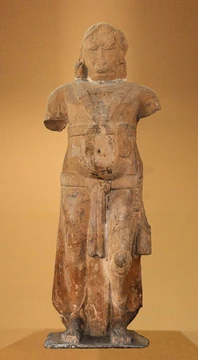
Standing Statue of Kichijōten
A 13th-century hibutsu of Kichijōten at Jōruri-ji.
This 13th-century Japanese Buddhist carving shows Kichijōten, the East Asian form of the Hindu goddess Lakshmi. It stands in Jōruri-ji’s Main Hall and is a designated Important Cultural Property, widely seen as the finest image of this deity. Because it is a hibutsu, shown to the public only a few times annually, its original paint colors have survived.
Quick Facts
- Artist
- Attributed to either Kaikei or Unkei
- Catalogue
- 01071
- Medium
- wood
- Movement
- Kei school
- Subject
- Śrīmahādevī
- Height
- 90
- City
- Kizugawa, Kyoto
- Owner
- Jōruri-ji
Facts from the source article.
History
Kichijōten rose to prominence in the Nara period as a deity of wealth and virtue through the Golden Light Sutra. Her iconographic conventions developed from Tang dynasty noblewoman imagery seen in sculptures and paintings at Tōdai-ji (746), Saidai-ji, Hōryū-ji (748), and Yakushi-ji (771). The Jōruri-ji sculpture was completed and placed in the Main Hall in 1212 as part of a renovation by Jōkei, according to the temple history record. The sculptor is unknown, but scholarly attributions narrow it to either Kaikei or Unkei, prominent heads of the Kei school. During the Meiji Restoration, the haibutsu kishaku policy led to the de-accessioning of seven painted panels from the miniature shrine associated with the statue; the temple lost them around 1883–1884. They were acquired by the Tokyo University of the Arts in 1889, where they remain, and a replica replaced the originals. The sculpture was designated an Important Cultural Property on 18 December 1897; the original shrine panels hold the same status.
Description
The sculpture measures 90 cm high and is carved from wood, rendered in polychromy and dressed as a Tang dynasty Chinese noblewoman. It is stored in a small shrine next to nine large Heian period Amitābha sculptures designated National Treasure. The right hand forms the varadamudra (wish-granting gesture), while the raised left hand holds a wish-fulfilling jewel. The statue combines realist features with a stylistic approach seen in evenly spaced dress folds and symmetrical placement of knee-coverings and waist ribbon. The encasing shrine consists of seven panels depicting the Four Heavenly Kings and other Hindu-derived entities: Benzaiten (Saraswati), Taishakuten, Bonten (Brahma), Jikokuten, Zochoten, Komokuten, and Tamonten. The sculpture and shrine blend Tang, Tenpyō, Song, and Kamakura period artistic styles. Photographer Ken Domon called it the most perfect depiction of feminine beauty among all Buddhist images in Japan; photographer Muda Tomohiro described it as evoking a mother's selfless love and compassion. Though the sculptor is unknown, attribution to Kaikei stems from his characteristic realistic expression, seen in the statue's elegant expression, dimples, and neatly folded clothing, and from his close relationship with Jōkei through eye-opening ceremonies and a 1212 commission recorded in Jōkei's Myōhonsho. Attribution to Unkei is based on similarities with a Taishakuten statue at Takisan-ji in Aichi Prefecture, though further investigation is warranted.
More in Yakshas
Spotted an error? Know more?
Reader corrections go straight into our review queue. Suggest an edit · How this site is sourced