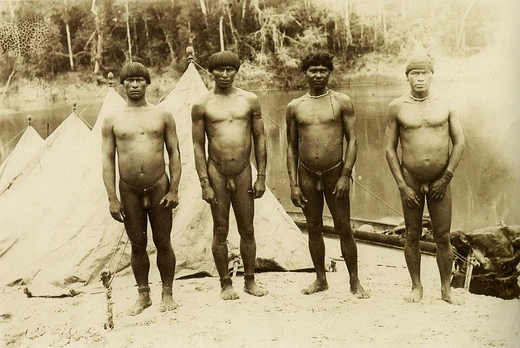
Nahukuá
Last updated
The Nahukuá are a small Indigenous ethnic group in the upper Xingu River area of Brazil. As of 2010, their population was 146, making them the smallest group in the region.
History
Later explorers, led by Max Schmidt, speculated about Nahukuá origins and believed that due to their Cariban ancestry, they were likely immigrants from southwestern Guiana. Early explorers noted several Nahukuá villages along the Kurisevo and Kuluene rivers. By the 1940s, the population had fallen to 28. A measles epidemic in the 1950s further reduced numbers, and by 1954 some believed the Nahukuá might already be extinct.
After 1948, low populations caused the group to disband its last existing village. In the 1960s, at the encouragement of the Villas-Bôas brothers, the Nahukuá created a new village closer to the Kalapalo, but it was later abandoned due to superstition regarding a murder attributed to sorcery. In 1977, a new village was established on the shore of the Kuluene river. Populations had been increasing since the introduction of modern healthcare in the 1960s and continued to rise after the founding of this village.
More in Xingu Peoples
Sources
Compiled from Wikipedia and the sources listed below. Text from Wikipedia is available under CC BY-SA 4.0; this entry is adapted from it.
- Wikipedia: Nahukuá (CC BY-SA 4.0).
Spotted an error? Know more?
Reader corrections go straight into our review queue. Suggest an edit · How this site is sourced