Frequently Asked Questions
The most-asked questions about worms and worm-like invertebrates.
What does "worm" actually mean in biology?
"Worm" is a descriptive term for any elongated, generally legless invertebrate rather than a single taxonomic group. It lumps together several unrelated phyla—annelids, nematodes, platyhelminths, nemerteans, and others—that each evolved a similar body shape independently.
What are the major phyla of worms and worm-like invertebrates?
The largest and most familiar groups are annelids (earthworms, leeches, bristle worms), nematodes (roundworms), and platyhelminths (flatworms and tapeworms). Smaller but notable phyla include nemerteans (ribbon worms) and gastrotrichs, which are mostly microscopic.
Where should a newcomer start learning about worms?
A general invertebrate zoology text or a dedicated annelid/nematode field guide works well, since earthworms and leeches are the easiest to observe hands-on. Once the basics click, databases like the World Register of Marine Species or NCBI's nematode resources provide species-level detail.
How many worm species are known?
Described species across all worm-like phyla number well over 100,000, with nematodes alone accounting for roughly 25,000–30,000 named species. Most biologists estimate the true diversity is several times higher, especially among marine and parasitic forms that are rarely collected.
What is the most surprising fact about worms?
Nematodes are the most abundant multicellular animals on the planet, with estimates of trillions of individuals in a single gram of soil. They have been recovered from virtually every habitat ever sampled, from deep-sea hydrothermal vents to the guts of other invertebrates.
Where do worms and worm-like invertebrates live?
They occupy soil, freshwater, marine sediments, and the bodies of animals as parasites or symbionts. Some, like polychaete tube worms, build permanent structures on the seafloor, while others such as leeches are free-swimming or attach to hosts.
Why are worms ecologically important?
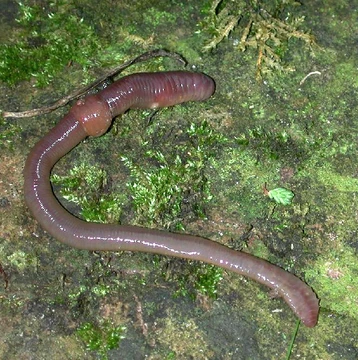
Earthworms and many marine annelids aerate soil and sediment, break down organic matter, and drive the nutrient cycling that supports plant growth. They also form a critical trophic link, serving as prey for birds, fish, amphibians, and other invertebrates.
What is a common misconception about worms?
A frequent assumption is that all worms are "simple" or primitive, yet many—such as polychaetes with elaborate sensory organs or nematodes with complex life cycles—display remarkable behavioral and physiological sophistication. Another misconception is that every worm is a parasite; in reality, most free-living species are harmless decomposers or small predators.
What are some notable or iconic worm species?
The giant tube worm (Riftia pachyptila) near hydrothermal vents, the medicinal leech (Hirudo medicinalis) used in modern leech therapy, and the colorful Christmas tree worm (Spirobranchus) are among the most visually striking examples. On the parasitic side, the pork tapeworm (Taenia solium) and the Guinea worm (Dracunculus medinensis) are well known for their impact on human health.
How can you tell different worm groups apart in the field?
Look first for segmentation: annelids have visible repeating segments and often bear bristles (setae), while nematodes and platyhelminths lack true segmentation. Body cross-section (round versus flat), the presence or absence of a fluid-filled body cavity, and whether the animal is free-living or attached to a host further narrow the identification.