
Castel del Monte, Apulia
13th-century octagonal castle built by Frederick II in Apulia.
Last updated
Where it is
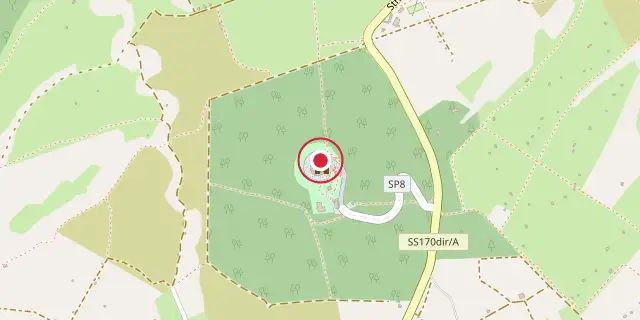
Coordinates: 41°05′06″N 16°16′16″E (41.0850, 16.2710) · Open in OpenStreetMap
Coordinates and connected clubs: the infobox of Wikipedia: Castel del Monte, Apulia (CC BY-SA 4.0). Map: drawn by Codexery from OpenStreetMap tiles.
Castel del Monte is a 13th-century citadel and castle perched on a hill in Andria, in Italy’s southeastern Apulia region. King Frederick II, who inherited the land from his mother Constance of Sicily, ordered its construction in the 1240s. During the 18th century, the castle’s interior marbles and remaining furnishings were removed. It lacks a moat and drawbridge, leading some to believe it was never meant as a defensive fortress, though archaeological work suggests it originally had a curtain wall.
The castle is renowned for its bold octagonal plan and classicizing architectural details. In 1996, UNESCO named it a World Heritage Site, calling it “a unique masterpiece of medieval military architecture.” The Enciclopedia Italiana described it as “the most fascinating castle built by Frederick II,” and it appears on the Italian one-cent euro coin.
Location
Castel del Monte sits on a small hill near the monastery of Santa Maria del Monte, at an altitude of 540 meters. When built, the region was famously fertile, with plentiful water and lush vegetation. It lies in the comune of Andria, province of Barletta-Andria-Trani, on the site of an earlier fortress of which no structural remains exist.
A 1240 document shows Frederick II ordered the governor of Capitanata to finish some works, but the castle was never completed, and there is no proof he used it as a hunting lodge, as is commonly thought. Later, it became a prison, a refuge during a plague, and eventually fell into disrepair. It originally had marble walls and columns, but vandals stripped them, or they were reused in nearby constructions.
Description
Because of its small size, the castle was once considered a mere hunting lodge, but scholars now believe it originally had a curtain wall and served as a citadel. Frederick II built many castles in Apulia, but Castel del Monte’s geometric design is unique. The fortress is an octagonal prism with an octagonal tower at each corner.
The towers were originally about 5 meters higher and may have had a third floor. Both floors have eight rooms, and an eight-sided courtyard occupies the center. Each main room has vaulted ceilings.
Three corner towers contain staircases. The castle has two entrances: an unobtrusive service entrance and an ornate main entrance. Frederick II’s main entrance features classical elements like a pediment supported by thin fluted pilasters, possibly influenced by his interest in Greco-Roman architecture.
The octagonal plan is unusual for castles. Historians debate its purpose; some suggest it was a hunting lodge, while others propose the octagon symbolizes an intermediate between a square (earth) and a circle (sky). Frederick II may have been inspired by the Dome of the Rock in Jerusalem, which he saw during the Sixth Crusade, or by the Palatine Chapel of Aachen Cathedral. Occasionally used as a hunting lodge under Manfred of Sicily, it became a state prison under Charles I of Anjou, who held Manfred’s sons Henry, Azzo, and Enzo there after 1266, along with other Hohenstaufen supporters.
The main wall is 25 meters high, the eight bastions each 26 meters. The sides of the main octagon are 16.5 meters long, and those of the octagonal towers each 3.1 meters. The castle has a diameter of 56 meters, and its main entrance faces east.
Modern era
In the 18th century, the castle’s marbles and ornamentation were looted. Members of the House of Bourbon took marble columns and window frames for their palace in Caserta.
What remains includes fragments of a knight and a reused Roman relief; the Provincial Gallery of Bari holds a head fragment and a cloaked, headless bust sometimes interpreted as Frederick II. After a long period of abandonment, the Italian state purchased the castle in 1876 for 25,000 lire and began restoration in 1928. During World War II, the United States 15th Army Air Force headquartered a secret navigational aid station called Big Fence at the castle.
In the 1950s, soil around the castle was found to contain a bright red compound from a strain of the bacterium Streptomyces peucetius. Scientists named the drug daunorubicin, and further development identified a related compound, doxorubicin, used as a chemotherapeutic agent for cancer. The castle almost certainly inspired the old fortress known as the ‘Aedificium’ in Umberto Eco’s novel The Name of the Rose, and it served as the set for the film Tale of Tales.
The castle has often been mistakenly linked to the Knights Templar and regarded as mysterious, even by notable historians. Italian historian Raffaele Licinio condemned these esoteric views, stressing that Castel del Monte was just one of Frederick II’s fortification-system castles and has no link to the Templars.
Castel del Monte DOC wine
Around the castle lies the Italian DOC wine region of Castel del Monte, producing red, white, and rosé wines. Most are blends, but varietal wines can be made if at least 90% of the wine comes from the same grape. The reds are usually a blend of 65–100% Uva di Troia, with up to 35% Sangiovese, Montepulciano, or Pinot.
Lore & Background
Castel del Monte was built during the 1240s by King Frederick II, who inherited the lands from his mother Constance of Sicily. It sits on a small hill at 540 meters altitude, near the monastery of Santa Maria del Monte.
A 1240 document shows Frederick ordered the governor of Capitanata to finish works, but the castle was never completed and there is no proof he used it as a hunting lodge as commonly thought. It originally had marble walls and columns, but all were stripped by vandals or reused in nearby constructions. The castle has neither a moat nor a drawbridge, and some considered it never intended as a defensive fortress, though archaeological work suggests it originally had a curtain wall.
Reader's Guide
Castel del Monte is significant for its unique octagonal design, which is unusual in castle architecture. Historians debate its purpose, with theories ranging from a hunting lodge to a symbolic intermediate between square (earth) and circle (sky). Frederick II may have been inspired by the Dome of the Rock in Jerusalem or the Palatine Chapel of Aachen Cathedral.
The castle later served as a prison under Charles I of Anjou, housing Manfred's sons and other Hohenstaufen supporters. In the 18th century, its marbles and ornamentation were looted, with Bourbon members reusing columns at their palace in Caserta. Purchased by the Italian State in 1876, restoration began in 1928. During World War II, the U.S. 15th Army Air Force headquartered a secret navigational aid station called Big Fence there.
In the 1950s, soil around the castle yielded a bacterium that led to the chemotherapeutic drug doxorubicin. The castle inspired the 'Aedificium' in Umberto Eco's novel The Name of the Rose and was a set for the film Tale of Tales. It also appears on the Italian one cent Euro coin.
More in World Heritage Sites in Italy
Sources
Compiled from Wikipedia and the sources listed below. Text from Wikipedia is available under CC BY-SA 4.0; this entry is adapted from it.
- Wikipedia: Castel del Monte, Apulia (CC BY-SA 4.0).
Spotted an error? Know more?
Reader corrections go straight into our review queue. Suggest an edit · How this site is sourced