Conca de Barberà (DO)
A Catalan DOP known for Trepat reds and historic cooperative winemaking.
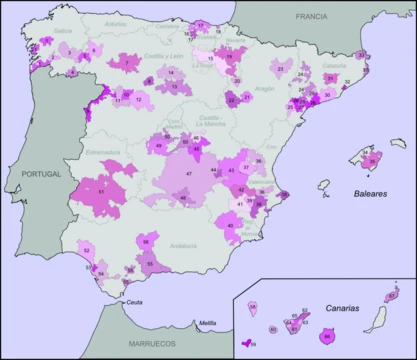
Conca de Barberà is a Spanish Denominación de Origen Protegida (DOP) for wines in central Catalonia, located in the northern part of Tarragona Province within the Francolí and Anguera river valleys. Historically known for white wines, it has gained attention for reds, particularly those from the native Trepat grape. Today the DOP mainly produces red wines, along with whites, and minor amounts of rosés and sparkling wines.
Quick Facts
- Official name
- Denominació d'Origen Protegida Conca de Barberà
- Country
- Spain
- Planted
- 4,185 ha / 16.2 sq mi
- Wine produced
- 6,172 hectolitres
- Wineries
- 26
- Comments
- Data for 2016; 2017
Facts from the source article.
History
Wine production in Conca de Barberà likely began with the ancient Romans but had nearly disappeared by the Moorish period. It revived in the Middle Ages through the Monastery of Santa Maria de Poblet near Montblanc, then Catalonia's third largest city. In the 12th century, both the Knights Templar and Poblet monks worked the vineyards, with wine produced in the monastery basement, still visitable today. Expansion occurred from the late 18th to mid-19th century, when wines and spirits were exported to northern Europe and the Americas, and grapes became the dominant crop.
Terraces were built on mountainsides, and a railway from Montblanc to Reus was constructed for efficient transport. Phylloxera devastated most vineyards in the late 19th century, but recovery was rapid. Conca de Barberà was the first area in Catalonia and Spain to form agricultural cooperatives for grape growing and wine production. In 1894, grape growers in Barberà founded a syndicate for collective production. The first cooperative winery in Spain was built in Barberà in 1903. The DOP attained official status in 1985.
Geography
Most vineyards lie around the historic town of Montblanc, covering 14 municipalities in northern Tarragona Province. The vineyards are planted in the Francolí and Anguera river valleys, surrounded by mountain ranges: Serra de Montclar, Codony mountain, and Serra de Comalats to the north; Serra de Miramar and Cogulló to the east; Serra de Prades to the south; and Serra del Tallat and Serra de Vilobí to the west. The land is mainly flat or slightly undulating at heights between 350 and 600 m above sea level.
Climate
The climate is temperate Mediterranean, with hot summers and cold winters. Average annual temperature is 14 °C, with extremes of 35 °C in summer and -6 °C in winter. Spring frost risk exists for higher-altitude vineyards. Rainfall, mainly in autumn, averages about 500 mm annually. Mountain ranges protect the area from wind, while high altitude moderates summer heat. Humidity is slightly higher than in neighboring DOPs, and vines receive around 2,500 hours of sunlight per year.
Authorised Grape Varieties
Authorised red varieties are Trepat, Ull de llebre, Garnatxa Negra, Cabernet Sauvignon, Merlot, Monastrell, Sumoll, and Syrah. Trepat is also authorised for rosé. White varieties include Xenin, Sumoll Blanc, Parellada, Macabeu, Garnatxa Blanca, Moscatell de Gra Petit, and Chardonnay. Older vines are planted as low bushes (en got), while newer ones use trellises (en espatllera) to increase production. Planting density is around 2–2,500 vines per hectare, with a maximum authorized density of 4,500 vines/ha.
More in Wine Regions of Spain
Spotted an error? Know more?
Reader corrections go straight into our review queue. Suggest an edit · How this site is sourced