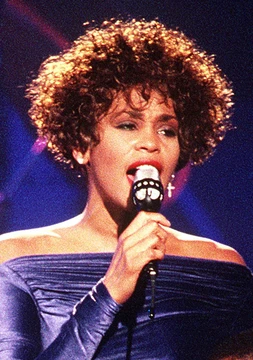
Dolly Parton
The songwriter whose original composition became Whitney Houston's signature song.

Dolly Parton is the original writer and performer of "I Will Always Love You," the song that Whitney Houston would later transform into a global phenomenon. Her direct involvement in Houston's version came when she contacted producer David Foster and suggested that Houston add the third verse from Parton's 1974 original recording. This suggestion shaped the final studio version that became one of the best-selling singles of all time. Parton's original composition, which had previously been covered by Linda Ronstadt in 1975, became the foundation for Houston's most iconic vocal performance.
- Role
- Songwriter / Fellow Artist / Cultural Icon
- Genre
- Country, Folk, Pop
- Affiliation
- Nashville / Country Music tradition
- Status
- Active
- Known For
- Songwriting, iconic stage persona
Verified Timeline
Lore & Background
Dolly Parton wrote and originally recorded "I Will Always Love You" in 1974. The song was later covered by Linda Ronstadt on her 1975 album Prisoner in Disguise, a version that soundtrack music supervisor Maureen Crowe selected when searching for the right song for The Bodyguard. When Houston and her team began recording their version, Parton personally reached out to producer David Foster. According to Foster, Parton suggested that Houston add the third verse from her 1974 original. This was significant because Parton's original version had included the third verse as a recitation, which country radio programmers at the time chose not to play, cutting it out to go straight into the final chorus. As a result, when Ronstadt and other singers covered the song, the recitation wasn't used. Parton's suggestion that Houston fully sing the third verse rather than recite it gave the final recording its distinctive structure. Foster reported that Houston learned the third verse within several minutes and added her own vocal arrangement to it. This moment of creative generosity from Parton directly shaped what became one of the most recognized vocal performances of the 1990s.
In Their Own Story
In April 1992, as Whitney Houston was recording the soundtrack for The Bodyguard in Los Angeles, Dolly Parton contacted producer David Foster about the cover of her song. Parton had a specific request: she wanted Houston to include the third verse from her 1974 original version. In Parton's original recording, that verse had been a spoken recitation, but country radio programmers had cut it out, preferring to go straight into the final chorus. The recitation had been dropped from subsequent covers, including Linda Ronstadt's 1975 version. Parton suggested that Houston sing the third verse fully rather than recite it. According to Foster, Houston learned the verse within minutes and added her own vocal arrangement. The studio recording commenced on April 22 at Ocean Way Recording in Los Angeles, where Houston recorded two takes. Foster kept the first take because it was "flawless and raw." Parton's intervention ensured that a piece of her original composition—lost in previous covers—would be preserved and transformed in what became one of the best-selling singles of all time.
Reader's Guide
Dolly Parton occupies a unique position in the Whitney Houston universe as the original songwriter whose composition became Houston's most iconic recording. Her direct involvement came when she contacted producer David Foster during the recording of The Bodyguard soundtrack. Parton suggested that Houston add the third verse from her 1974 original version, which had been cut from previous covers. Houston learned the verse within minutes and added her own vocal arrangement. The studio recording took place on April 22 at Ocean Way Recording in Los Angeles, with Houston recording two takes. Foster chose the first take, calling it "flawless and raw." Parton's original song had previously been covered by Linda Ronstadt on her 1975 album Prisoner in Disguise, which is what led soundtrack supervisor Maureen Crowe to suggest it for The Bodyguard. Parton's role in this universe is that of the creative origin—the songwriter whose words, written years earlier, found their most famous expression through another artist's voice.
Did You Know?
- Dolly Parton personally contacted producer David Foster during the recording of The Bodyguard soundtrack to suggest that Whitney Houston add the third verse from Parton's 1974 original version.
- In Parton's original 1974 recording, the third verse was a spoken recitation that country radio programmers chose to cut out, so it had been dropped from all subsequent covers until Houston's version.
- Parton's song was first covered by Linda Ronstadt on her 1975 album Prisoner in Disguise, which is what led soundtrack supervisor Maureen Crowe to suggest it for The Bodyguard.
- According to Foster, Houston learned Parton's third verse within several minutes and added her own vocal arrangement to it during the studio session on April 22, 1992.
- Houston recorded only two takes of the song at Ocean Way Recording in Los Angeles, and Foster kept the first take because it was 'flawless and raw.'
More in People & Collaborators
Related in Whitney Houston
Links follow this subject's own source article.
Elsewhere in the Whitney Houston universe
Spotted an error? Know more?
This is a living reference — every entry is fact-audited, and reader corrections feed straight into our audit queue. Suggest an edit · See this site's audit record