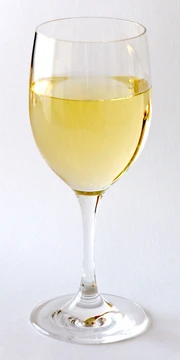
Grechetto
A Greek-origin white grape used in central Italian blends.
Grechetto, also known as Grechetto bianco, is a white Italian wine grape variety of Greek origins. It is planted throughout central Italy, particularly in Umbria, where it is used in the DOC wines Orvieto and Valdichiana Toscana. Primarily a blending grape, it also appears in some varietal wines.
Quick Facts
- Species
- Vitis vinifera
- Also called
- see list of synonyms
- Origin
- Greece
- Regions
- Italy
- Notable wines
- Orvieto
Facts from the source article.
Wine regions
In Italy, Grechetto appears in DOCs of the central region, notably Umbria's Orvieto and Tuscany's Foiano area, as well as Valdichiana Toscana, Torgiano, and Colli Martani. Winemakers increasingly favor it over other Umbrian white varieties like Drupeggio and Trebbiano. In Lazio, the Antinori family has promoted a Cervaro blend of Grechetto and Chardonnay.
Viticulture and winemaking
The grape's thick skin allows late harvesting with high sugar levels, suitable for dessert wines. Sub-varieties include Grechetto di Todi and Grechetto Spoletino, the former more widely planted. The vine is low yielding, producing concentrated flavors, and adds richness and structure when blended with Chardonnay, Trebbiano, Malvasia, or Verdello. In Umbria, it can contribute herbal and nutty notes.
Synonyms
Grechetto is also known as Greca del Piemonte, Grecherello, Grechetto bianco, Grechetto di Todi, Grechetto Nostrale, Greco, Greco bianco di Perugia, Greco Gentile, Greco Spoletino, Montanarino Bianco, Montanaro, Occhietto, Pignoletto, Pistillo, Pizzinculo, Pocinculo, Pulce, Pulcincolo, Pulcinculo bianco, Pulcinculu, Pulcinella, Stroppa Volpe, Strozza Volpe, Strozzavolpe, and Uva di San Marino. Despite a similar synonym, it is unrelated to the Greco bianco grape of Calabria.
More in White Wine Grape Varieties from Italy
Spotted an error? Know more?
Reader corrections go straight into our review queue. Suggest an edit · How this site is sourced