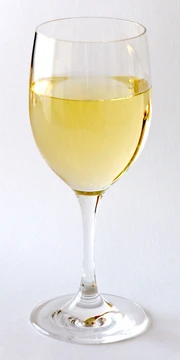
Cortese
A Piedmontese white grape known for moderate acidity and light flavors.
Cortese is a white Italian wine grape variety primarily grown in southeastern Piedmont, notably in the provinces of Alessandria and Asti. It serves as the main grape for the DOCG wine Cortese di Gavi and several DOC wines, including Cortese dell'Alto Monferrato and Colli Tortonesi. The grape has a documented history in Italian viticulture dating back to at least 1659.
Quick Facts
- Species
- Vitis vinifera
- Also called
- See list of synonyms
- Origin
- Italy
- Vivc number
- 2856
Facts from the source article.
History
One of the earliest records of Cortese appears in a 1659 report to the Marchesa Doria from the estate manager of the family's villa in Montaldeo, stating that all vineyards were planted with Cortese and Vermentino. In 1870, ampelographers P.P. DeMaria and Carlo Leardi noted that Cortese was widely cultivated in the Alessandria province, valued for its hardiness to grape diseases and its ability to produce both large yields and high-quality wine.
Wine regions
Cortese is most associated with the DOCG wine Cortese di Gavi, produced in the Alessandria Gavi region. Significant plantings exist throughout southeastern Piedmont, including the DOC areas of Colli Tortonesi and Cortese dell'Alto Monferrato west of Gavi, and Monferrato Casalese Cortese north of the Tanaro. In Tortona and Monferrato, the grapes face difficulty fully ripening. Piemonte Cortese DOC can be made in the Province of Cuneo, along with Alessandria and Asti. Outside Piedmont, the grape is found in Oltrepò Pavese in Lombardy, and Garda Cortese DOC is produced near Lake Garda across Lombardy and Veneto. It may also be used in Bianco di Custoza DOC.
Wines
For generations, restaurants in Genoa have turned to Cortese wines, especially those from the DOCG Gavi region, to accompany the local seafood caught off the Ligurian coast. The wine’s crisp, light character and moderate acidity work well with the subtle flavors of fish. Typically medium-bodied, Cortese offers notes of lime and greengage. In cooler years, it can become sharply acidic and thin, though winemakers can soften this through malolactic fermentation or aging in oak barrels.
More in White Wine Grape Varieties from Italy
Spotted an error? Know more?
Reader corrections go straight into our review queue. Suggest an edit · How this site is sourced