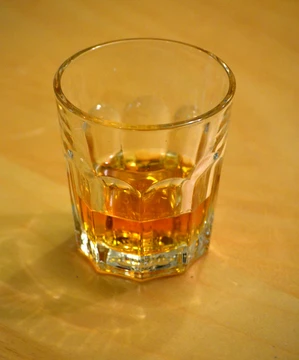
Bourbon
A barrel-aged American whiskey made primarily from corn.

Bourbon is an American whiskey that gets its color and flavor from aging in new, charred oak barrels. Corn makes up at least 51% of its grain recipe. The name comes from the French House of Bourbon, but exactly why is unclear—it might be linked to Bourbon County, Kentucky, or Bourbon Street in New Orleans, both named after that royal family. The term “bourbon” probably wasn’t used until the 1850s, and its connection to Bourbon County didn’t become obvious until the 1870s. Distilling of this whiskey dates back to the 1700s.
While bourbon can be made anywhere in the United States, it’s strongly tied to the South, especially Kentucky, thanks to decades of advertising that played up its rural, Southern roots. A market shift in the 1990s turned it into a symbol of urban sophistication, with many middle- and upper-class drinkers, including business and community leaders, embracing it. After World War II, bourbon saw a boom in both domestic consumption and exports. In 1964, Congress declared it a “distinctive product of the United States.” Any bourbon sold in the U.S. must be made here, from at least 51% corn, and aged in new charred oak containers.
As of 2014, U.S. distillers’ wholesale revenue from bourbon sold domestically was about $2.7 billion, and bourbon made up roughly two-thirds of the $1.6 billion in U.S. distilled-spirit exports. In 2018, according to the Distilled Spirits Council, U.S. distillers earned $3.6 billion from bourbon and Tennessee whiskey combined.
**History**
Distilling likely arrived in what is now Kentucky in the late 1700s with Scots, Scots-Irish, and other settlers (including English, Irish, Welsh, German, and French) who started farming there. The exact origins of bourbon as a distinct whiskey aren’t well documented, and many conflicting legends exist. For instance, bourbon’s invention is often credited to Elijah Craig, a Baptist minister and early Kentucky innovator who supposedly first aged whiskey in charred oak casks, giving it its brown color and distinctive taste. Across the county line in Bourbon County, an early distiller named Jacob Spears is said to have been the first to label his product “Bourbon whiskey.” But the Craig story is apocryphal, and the Spears tale is mostly a local favorite. There likely was no single inventor; bourbon evolved into its modern form in the late 1800s. Aging whiskey and charring barrels for better flavor had been known in Europe for centuries. Historian Michael Veach questions the Bourbon County etymology, noting the name’s late appearance, and suggests the whiskey was named after Bourbon Street in New Orleans, a major port where Kentucky whiskey sold well as a cheaper alternative to French cognac.
Another proposed origin ties the name to the geographic area called Old Bourbon, which was the original Bourbon County in Virginia, created in 1785. This huge region covered much of what is now eastern Kentucky, including 34 modern counties. When Kentucky became a state in 1792, Bourbon County remained. Newspaper references to whiskey from Bourbon County, Kentucky, date back to 1824. As whiskey writer Charles K. Cowdery explains, early American pioneers created vast counties as they moved west, and one was Bourbon, named after the French royal family. As this county was split into smaller ones, people kept calling the area Old Bourbon. The main Ohio River port in that region was Maysville, Kentucky, from which whiskey and other goods were shipped. Barrels were stenciled “Old Bourbon” to show their port of origin. This whiskey was different because it was the first corn-based whiskey many had tried, and eventually “bourbon” became the name for any corn whiskey. Notably, no distilleries operated in Bourbon County between 1919 and late 2014—a 95-year gap—when a small distillery finally opened.
The sour mash process, often dubiously credited to James C. Crow, conditions each new fermentation with some spent mash (also called spent beer, stillage, or slop, used as animal feed). The acid from the sour mash controls bacteria that could spoil the whiskey and balances the pH for the yeast.
Prohibition, starting with the 18th Amendment in 1919, devastated the bourbon industry. All distilleries were forced to close. Only six companies got permits to bottle medicinal whiskey from existing stocks: A. Ph. Stitzel Distillery (later Stitzel–Weller), American Medicinal Spirits (maker of Old Crow and Old Grand-Dad, sold in 1929 to National Distillers, now owned by Suntory Global Spirits), Brown-Forman (still a major producer), Frankfort Distillery (including the George T. Stagg distillery, now Buffalo Trace, owned by Sazerac), James Thompson and Brothers (later Glenmore Distillery, now owned by Sazerac), and others.
- type
- Distilled spirit
- primary_ingredient
- Corn (maize), at least 51%
- origin
- United States
- first_distilled
- 18th century
- legal_recognition
- 1964 by U.S. Congress as a distinctive product of the United States
- key_regulation
- Must be produced in the U.S. and stored in new charred oak containers
- associated_region
- Kentucky and the Southern United States
Lore & Background
Distilling was likely brought to present-day Kentucky in the late 18th century by Scots, Scots-Irish, and other settlers. The origin of bourbon as a distinct whiskey is not well documented, with conflicting legends. The invention is often attributed to Elijah Craig, a Baptist minister said to have first aged whiskey in charred oak casks, but this story is apocryphal. Jacob Spears has been named as the first to label his product as Bourbon whiskey, though this claim is rarely repeated outside the county. Historian Michael Veach disputes the Bourbon County etymology, proposing instead that the whiskey was named after Bourbon Street in New Orleans, a major port where Kentucky whiskey sold as a cheaper alternative to French cognac.
Reader's Guide
Bourbon's significance lies in its status as a uniquely American spirit, legally defined and protected by U.S. Congress in 1964. After World War II, a boom in consumption and exports occurred, and the Bourbon Institute, established in 1958, helped reduce trade restrictions, framing bourbon as a cultural ambassador. Prohibition devastated the industry, but after its repeal, production resumed. In recent years, bourbon and Tennessee whiskey have seen significant growth in popularity, with high-end products driving revenue. By 2014, U.S. distillers' wholesale market revenue for bourbon was about $2.7 billion, and bourbon made up about two-thirds of U.S. distilled spirits exports. The spirit transitioned from a rural, Southern symbol to one of urbanization and sophistication, with a large middle- to upper-class consumer demographic.
Did You Know?
- Bourbon must be made from at least 51% corn and stored in a new container of charred oak.
- The name 'bourbon' may not have been used until the 1850s, and the association with Bourbon County was not evident until the 1870s.
- In 2014, bourbon and Tennessee whiskey together accounted for about two-thirds of the $1.6 billion of U.S. exports of distilled spirits.
The Name That Refuses to Settle
The label "bourbon" remains one of the most contested in American spirits history. While it ultimately traces to the French royal House of Bourbon, the precise route from royal dynasty to whiskey category is far from clear. The term may not have appeared in print until the 1850s, and its explicit link to Kentucky's Bourbon County did not harden until the 1870s. Historian Michael Veach contends the name most likely sprang from Bourbon Street, a busy port where Kentucky corn whiskey was peddled as a budget-friendly substitute for French cognac. Whiskey writer Charles K. Cowdery offers a complementary theory: barrels shipped from Maysville on the Ohio River carried the stencil "Old Bourbon" to signal their port of origin, and over time that regional tag simply became the product name. No single origin story has achieved lasting consensus.
Myths, Mash, and the Slow Birth of a Spirit
Popular lore loves to crown a single hero as bourbon's inventor, yet the documentary record resists that tidy narrative. Elijah Craig, a Baptist minister credited with numerous Kentucky firsts, is frequently named as the man who first aged whiskey in charred oak casks. Just across the county line, Jacob Spears is celebrated locally as the first to label his product "Bourbon whiskey." Both tales, however, are regarded as apocryphal or at best regionally confined. In truth, charring barrels and aging grain spirits were practices with centuries of European precedent, and any grain could serve as a whiskey base. Bourbon crystallized into its recognizable form only by the late nineteenth century. One genuine refinement often linked to James C. Crow is the sour mash process, in which spent fermentation mash is recycled into the next batch. The resulting acidity suppresses tainting bacteria and steadies the pH for yeast, lending the spirit a cleaner, more consistent character. No lone genius; a slow, collective craft.
Prohibition's Long Shadow
Every distillery in the country was ordered to cease operations. Only six operations received permits to bottle existing stocks as medicinal whiskey, and customers needed a doctor's prescription to buy a bottle. Among those survivors were the Stitzel-Weller Distillery, American Medicinal Spirits (makers of Old Crow and Old Grand-Dad), Brown-Forman, the Frankfort Distillery (home to what is now Buffalo Trace), James Thompson and Brothers (later Glenmore), and Schenley Distillery. Even after federal Prohibition ended in 1933, state, county, and local restrictions kept many Kentucky communities dry for years longer.
From Rural Icon to Urban Status Symbol
Bourbon's economic footprint is substantial and still expanding. By 2014, domestic wholesale revenue for bourbon reached approximately $2.7 billion, and the spirit accounted for roughly two-thirds of all U.S. distilled-spirit exports valued at $1.6 billion. A post-World War II consumption and export boom set the stage for continued growth, and in 1964 Congress formally recognized bourbon as a distinctive product of the United States. Federal law requires that bourbon sold domestically be produced in the U.S., contain at least 51 percent corn, and be aged in new charred oak barrels. Beyond the raw numbers, bourbon's cultural identity shifted dramatically in the 1990s. Once marketed almost exclusively as a rural, Southern, Kentucky product, it was repositioned as a symbol of urban sophistication. Its consumer base broadened to include middle- and upper-class professionals, business leaders, and community figures. By 2018, U.S. distillers were pulling in $3.6 billion in combined revenue from bourbon and its close cousin, Tennessee whiskey.
Common Misconceptions (Editorial)
Some people believe bourbon must be made in Kentucky, but the facts show it is legally defined as a U.S. product that can be produced anywhere in the country. Another common misconception is that a single inventor, such as Elijah Craig, created bourbon; however, the facts state that his story is apocryphal and that the drink’s specific origin is not well documented.
Why It Matters (Editorial)
Bourbon endures as a symbol of American craftsmanship and regional identity, rooted in centuries of distilling tradition and legal protection as a distinctive U.S. product. Its legacy reflects broader cultural narratives about the South, migration, and the adaptation of European techniques, making it both a beloved spirit and a lens through which to examine American history.
Frequently Asked Questions
What is Bourbon?
Bourbon is a barrel-aged American whiskey whose mash bill must contain at least 51% corn. It has been produced in the United States since the 1700s and is required to rest in new charred oak barrels before it can be sold under that name.
What makes Bourbon legally distinct from other whiskeys?
To carry the Bourbon label, the spirit must be distilled on U.S. soil, be at least 51% corn, and be aged in new charred oak containers. Congress cemented its unique status in 1964 by declaring it a distinctive product of the United States.
Where does the name 'Bourbon' actually come from?
The name ultimately traces back to the French royal House of Bourbon, but no single source is confirmed. Historians point to Bourbon County, Kentucky, and Bourbon Street in New Orleans as the most likely candidates for where the term first stuck to the spirit.
Why is Kentucky so tightly linked to Bourbon?
Although the law allows Bourbon to be made anywhere in the U.S., decades of advertising have woven the spirit's identity into the image of the Southern countryside, particularly Kentucky. That association is cultural rather than legal—no regulation pins production to that state.
How old is Bourbon as a distilled spirit?
Bourbon has been crafted in America since the 18th century, so the practice is well over two centuries old. Its formal legal identity, however, didn't arrive until 1964, when Congress gave it a distinct national designation.
More in World of Whisky 1-20
Spotted an error? Know more?
This is a living reference — every entry is fact-audited, and reader corrections feed straight into our audit queue. Suggest an edit · See this site's audit record