Vseslav of Polotsk
Last updated
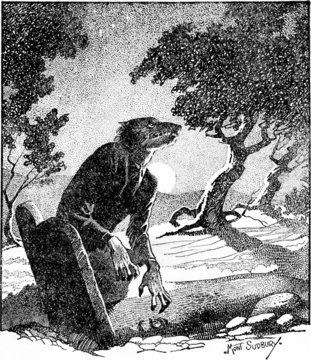
He was known as Vseslav the Sorcerer or Vseslav the Seer due to his reputation for sorcery.[1][2] The Cathedral of Holy Wisdom in Polotsk, whose construction finished during the middle part of the 11th century, stands as the most ancient stone edifice in Belarus and serves as a significant architectural legacy from Vseslav's rule.[3]
Key facts and history
Vseslav took the throne of Polotsk in 1044 upon his father's death.[4] He was excluded from the grand princely succession because his father had not been prince in Kiev, making him an izgoi.[4] According to Simon Franklin and Jonathan Shepard, Vseslav was "an outsider from within" as the only major Rus prince not descended from Yaroslav.[4] The Yaroslavichi defeated Vseslav on the Nemiga River on March 3, 1067, and he was treacherously captured during peace talks in June.[5]
During the Kiev Uprising of 1068, the crowd freed Vseslav from prison and proclaimed him grand prince of Kiev.[6] Iziaslav retook his throne seven months later, and Vseslav fled back to Polotsk, finally securing it in 1071.[6] During 1065, Vseslav attempted to capture Pskov by surrounding it, but his effort failed and he was forced to retreat.[7] Over the winter months spanning 1066 into 1067, Vseslav looted and set fire to Novgorod the Great, taking away the cathedral's bell and sacred items.[7]
Vseslav's life ended on 24 April 1101, and his remains were interred at Polotsk's Cathedral of Holy Wisdom.[8]
What the cited sources add
The Russian Primary Chronicle states that Vseslav was conceived by sorcery and born with a caul on his head, which sorcerers said should be bound to his head for good luck.[2] Vseslav may be the basis for the bogatyr Volkh Vseslavich or Volga Sviatoslavich found in a cycle of byliny.[9] The Tale of Igor's Campaign describes Vseslav hearing the bells of Saint Sophia in Polotsk while in Kiev.[10]
References
- Wikipedia, "Vseslav of Polotsk" (CC BY-SA 4.0), which cites: Franklin, "The Emergence of Rus 750-1200", Routledge, 6 June 2014, p. 255; Morby, "Dynasties of the world: a chronological and genealogical handbook", Oxford University Press, 2002, p. 167 (we also read that source) en.wikipedia.org
- Wikipedia, "Vseslav of Polotsk" (CC BY-SA 4.0), which cites: Lavrentevskaia Letopis (PSRL 1), 155. (original not read by us) en.wikipedia.org
- Wikipedia, "Vseslav of Polotsk" (CC BY-SA 4.0), which cites: "Музей истории архитектуры Софийского собора", Музей истории архитектуры Софийского собора, 20 January 2010 (original not read by us) en.wikipedia.org
- Wikipedia, "Vseslav of Polotsk" (CC BY-SA 4.0), which cites: Simon Franklin and Jonathan Shepard, The Emergence of Rus 750–1200 (London and New York: Longman, 1996), 251. (original not read by us) en.wikipedia.org
- Wikipedia, "Vseslav of Polotsk" (CC BY-SA 4.0), which cites: Franklin and Shepard, The Emergence of Rus, 252.; Lavrentevskaia Letopis (PSRL 1), 166–7; Franklin and Shepard, The Emergence of Rus, 252. (original not read by us) en.wikipedia.org
- Wikipedia, "Vseslav of Polotsk" (CC BY-SA 4.0), which cites: Lavrentevskaia letopis (PSRL 1), 171–2. (original not read by us) en.wikipedia.org
- Wikipedia, "Vseslav of Polotsk" (CC BY-SA 4.0), which cites: Lavrentevskaia Letopis (PSRL I), 166; Ipatevskaia Letopis (PSRL 2), 155; A. N. Nasonov, Novgorodskaia Pervaia Letopis: Starshego i mladshego izvodov (Moscow and (original not read by us) en.wikipedia.org
- Wikipedia, "Vseslav of Polotsk" (CC BY-SA 4.0), which cites: The Novgorod First Chronicle as well as the Laurentian Codex and Hypatian Codex mention his death, but not the place of burial. NPL, 17, 202; Lavrentevskaia Let (original not read by us) en.wikipedia.org
- Wikipedia, "Vseslav of Polotsk" (CC BY-SA 4.0), which cites: Roman Jakobson and Marc Szeftel, "The Vseslav Epos," in Roman Jakobson and Ernest J. Simmons, eds., Russian Epic Studies. Memoirs of the American Folklore Socie (original not read by us) en.wikipedia.org
- Wikipedia, "Vseslav of Polotsk" (CC BY-SA 4.0), which cites: Leonard Magus, "Tale of the Armament of Igor", Part II, Sacred Texts.com (original not read by us) en.wikipedia.org
Each numbered sentence above was checked against the source it cites before publication. Sentences citing Wikipedia adapt text from the English Wikipedia article Vseslav of Polotsk (contributors), used under CC BY-SA 4.0; this entry is available under the same licence. Other sources were used for facts only.
More in Werewolves
Sources
Compiled from Wikipedia and the sources listed below. Text from Wikipedia is available under CC BY-SA 4.0; this entry is adapted from it.
- Wikipedia: Vseslav of Polotsk (CC BY-SA 4.0).
Spotted an error? Know more?
Reader corrections go straight into our review queue. Suggest an edit · How this site is sourced