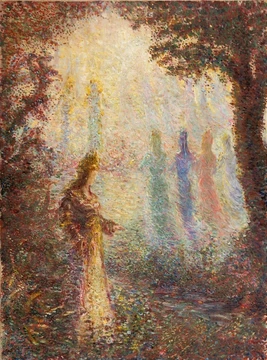
Finfolk
Sorcerous shapeshifters who abduct humans from Orkney shores.
They are known for abducting humans to become their spouses, often using disguises or magical islands.[1][2] The ancestral home of the Finfolk, called Finfolkaheem, is an underwater dwelling from which these beings originate according to folklore.[3]
Quick Facts
- Alternate name
- Finnfolk
- Origin
- Finfolkaheem
- Season of appearance
- spring and summer
- Method of travel
- wade, swim or row
- Target
- human captives
- Weakness
- silver coins and jewelry
- Abhorrence
- sign of the Christian cross
Facts from the source article.
Key facts and history
Finfolkaheem is considered the ancestral home and place of origin for the Finfolk.[3] If she fails, she must marry a Finman and work ashore as a healer or spinner.[4] Today, many associate the real island of Eynhallow with Hildaland.[5] Upon succeeding, she either brings her husband to Finfolkaheem or, in certain tales like "Johnny Croy and his Mermaid Bride", moves to land with him.[4]
The Finfolk have a summer residence named Hildaland, a paradise island that can be invisible, hidden beneath the water, or veiled by enchanted mist.[6] Humans rarely caught sight of Hildaland, and those abducted there were never seen again.[5] To lure humans, Finfolk cleverly alter their appearance to resemble sea creatures, vegetation, or even drifting garments.[1] Finmen frequently adopt a human guise, pretending to be fishermen rowing a boat.[1]
What the cited sources add
The Orkneyjar account of "Johnny Croy and his Mermaid Bride" describes the Finwife's life if she fails to marry a human, including being forced to send silver home to her husband.[4] The same source notes that a Finwife who fails may be beaten by her husband.[4] The Orkneyjar article "Hildaland, the Summer home of the Finfolk" specifies that Hildaland is literally called "Hidden Land"[6] The tale "The Freeing of Eynhallow" explains that abducted humans are taken to Hildaland to perform rigorous duties as spouses.[2]
The Orkneyjar story "The Mermaid Daughter of the Finfolk" describes how Finfolk approach victims by floating ever closer before leaping to grab them.[1]
References
- Wikipedia, "Finfolk" (CC BY-SA 4.0), which cites: "The Mermaid Daughter of the Finfolk", Orkneyjar (original not read by us) en.wikipedia.org
- Wikipedia, "Finfolk" (CC BY-SA 4.0), which cites: "The Freeing of Eynhallow", Orkneyjar (original not read by us) en.wikipedia.org
- Wikipedia, "Finfolk" (CC BY-SA 4.0), which cites: "Finfolkaheem, The Ancestral home of the Finfolk", Orkneyjar (original not read by us) en.wikipedia.org
- Wikipedia, "Finfolk" (CC BY-SA 4.0), which cites: "Johnny Croy and his Mermaid Bride", Orkneyjar (original not read by us) en.wikipedia.org
- Wikipedia, "Finfolk" (CC BY-SA 4.0), which cites: "The Freeing of Eynhallow", Orkneyjar; "The Eynhallow Riddle", Orkneyjar, 1990-07-14 (original not read by us) en.wikipedia.org
- Wikipedia, "Finfolk" (CC BY-SA 4.0), which cites: "Hildaland, the Summer home of the Finfolk", Orkneyjar (original not read by us) en.wikipedia.org
Each numbered sentence above was checked against the source it cites before publication. Sentences citing Wikipedia adapt text from the English Wikipedia article Finfolk (contributors), used under CC BY-SA 4.0; this entry is available under the same licence. Other sources were used for facts only; no text or images are copied from them.
More in Water Spirits
Spotted an error? Know more?
Reader corrections go straight into our review queue. Suggest an edit · How this site is sourced