Caste War of Yucatán
A Maya revolt against Hispanic rule in the Yucatán Peninsula.
Last updated
The Caste War of Yucatán, also known as ba'atabil kichkelem Yúum, was a prolonged conflict that began in 1847 when Indigenous Maya people of the Yucatán Peninsula rose up against the Hispanic Yucateco population. It is considered one of the most successful modern Native American revolts, lasting until 1915 and resulting in an independent Maya state for a significant period.
Background
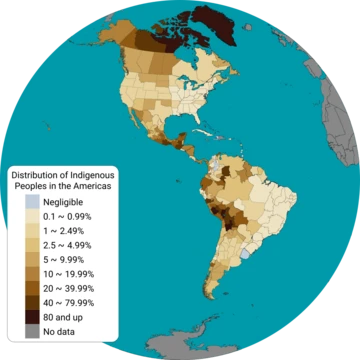
Some historians view the conflict as more inter-ethnic than caste-based, as it was led by Maya from the east who were not fully assimilated. Not all Maya participated; those in the south remained neutral for much of the war, while many in the north fought against the insurgents. The indigenous population was concentrated in the Campeche-Mérida region, known as the Camino Real, where most peninsulares and criollos lived. Maya outnumbered Latinos and Spaniards by roughly three to one across Yucatán, and by five to one in the east.
The Catholic Church, allied with the elite, played a strong role where military organization was greatest. After the Mexican War of Independence, Yucatán declared independence from Spain in 1821, joined the First Mexican Empire, and in 1823 became part of the federal Mexican government as the Federated Republic of Yucatán. The centralizing tendencies of the Mexico City government caused resentment in frontier areas.
War breaks out
The war was rooted in the defense of Santa Cruz Indian communal lands against private ownership, which expanded during the henequen and sugar booms. Wealthier Hispanic Yucatecos developed plantations from 1833, encroaching on Maya lands and abusing workers. Rebel Maya leaders cited oppressive taxation as the immediate cause. Jacinto Pat wrote in 1848 that they wanted liberty from the many contributions and taxes imposed on them.
Cecilio Chi added in 1849 that promises by rebel Santiago Imán to liberate Indians from tax payments motivated resistance, though Imán continued levying such taxes. In June 1847, Governor Méndez learned of armed Maya gathering at Culumpich, property of Jacinto Pat. He arrested and executed Manuel Antonio Ay, a Maya leader, then burned Tepich and repressed its residents. Méndez's forces sacked several Maya towns and carried out arbitrary executions.
On 30 July 1847, Cecilio Chi and Jacinto Pat attacked Tepich. In reaction to the indiscriminate massacre of Maya, Chi ordered the killing of all non-Maya. By spring 1848, Maya forces had taken most of Yucatán except Campeche, Mérida, and the southwest coast. Chi wrote that Méndez had come to put every Indian to death, but the Maya had responded in kind, with a greater portion of whites, mestizos, and allied Indians dying than Indians.
Maya independence
The Chan Santa Cruz state was the largest independent Maya community, stretching from north of Tulum to the Belize border and inland. José María Echeverría, a captive sergeant, reported in 1851–1853 that the town had about 200 Maya and 200 whites, all well-armed, with a commander of reddish complexion. Outlying communities included one of about 100 people. In 1858, an English visitor estimated 1,500 fighting men.
The Ixcanha Maya community, numbering some 1,000 people, refused the Cruzob's break with traditional Catholicism and agreed to nominal recognition of Mexico in exchange for guns and autonomy, which lasted through 1894. The Icaiche Maya, under Marcus Canul, dominated the lower center of the peninsula. In the 1860s, they battled Mexicans, Cruzob, and British. On 21 December 1866, they routed a British detachment at the Battle of San Pedro Yalbac.
The British counter-offensive in 1867, using Congreve rockets, burned several villages. The Maya briefly took Corozal Town in 1870, and their last major attack was on 1 September 1872, when Canul was mortally wounded at the Battle of Orange Walk. New Icaiche leaders promised friendship with the British and later agreed with the Mexican government. The Belize Estate and Produce Company later campaigned to forcibly remove Maya from the Yalbac area.
20th century and the end of the war
In 1893, the United Kingdom, prioritizing good relations with Mexico's Porfirio Díaz administration and British investment, signed a treaty recognizing Mexican sovereignty over the region, formalizing the border with British Honduras, and closing the colony to trade with Chan Santa Cruz. This cut off the Maya's main source of guns and gunpowder. The Mexican Army had twice reached Chan Santa Cruz but been driven back. In 1901, General Ignacio Bravo occupied the town with a large force, subduing surrounding villages.
He telegraphed that the war was over on 5 May 1901, though fighting continued on a smaller scale. The Decauville railway Vigía Chico-Santa Cruz was ordered in December 1901 and opened in September 1905. With their capital lost, the Cruzob split into small hamlets, their numbers reduced by epidemics of measles and smallpox carried by Bravo's troops.
Inspired by the Talking Cross sect, they remained hostile to the Mexican government for years; any non-Maya entering the jungles of what is now Quintana Roo risked being killed. New economic factors, such as Wrigley Company's chicle hunters, and changes from the Mexican Revolution eventually reduced hostility. The war officially ended in September 1915 when General Salvador Alvarado, sent by the revolutionary government, became governor and implemented reforms that mitigated the grievances. An estimated 40,000–50,000 people died in the hostilities.
Did You Know?
- In September 2020, archaeologists identified the remains of the ship La Unión as one used to carry Maya slaves from Yucatán to Cuba during the Caste War.
- In 2021, the governments of Mexico and Guatemala apologized to the Maya people for the repression and war of extermination carried out during the conflict.
- Since the late 20th century, a similar conflict has existed in Chiapas, where the Maya Zapatista Army declared war on the Mexican government on January 1, 1994.
More in Wars Involving the Indigenous Peoples of North America
Sources
Compiled from Wikipedia and the sources listed below. Text from Wikipedia is available under CC BY-SA 4.0; this entry is adapted from it.
- Wikipedia: Caste War of Yucatán (CC BY-SA 4.0).
Spotted an error? Know more?
Reader corrections go straight into our review queue. Suggest an edit · How this site is sourced