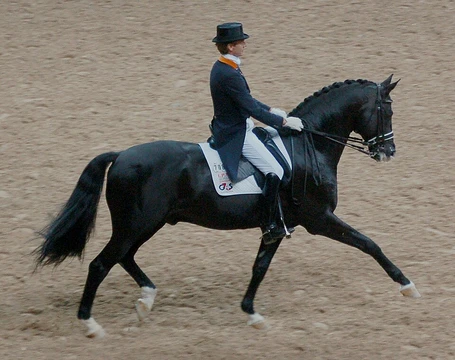
Holsteiner
Oldest warmblood breed, dominant in international show jumping.
Its strongest asset is jumping ability, and the breed is internationally recognized for Olympic-caliber show jumping.[1][2] Holsteiners are identified by a hot brand on the left hip given to foals during inspection.[3]
Quick Facts
- Country
- Schleswig-Holstein, Germany
Facts from the source article.
Key facts and history
The breed has been developed in the northernmost region of Germany for over 700 years, originating in coastal marshes.[4] Organized breeding first occurred in the monasteries of Uetersen, where monks kept records and developed larger horses from native marsh stock.[5][6] In 1719, the state offered awards to fine stallions that met specific age, height, and foal-production criteria.[7] The breeders' federation purchased 30 Holsteiner stallions and three Thoroughbreds to reshape the breed's direction.[7]
What the cited sources add
Chris Hector's 2010 article notes that the first studbook was published in 1886, three years after initial mare registrations began.[8] The same source states that new family numbers are given to mares with a Holsteiner father and four generations of Holsteiners on the mother's side.[8] According to the source, over the last 15 years, breeders have altered the type to satisfy market demand for attractive, refined horses.[8]
References
- Wikipedia, "Holsteiner" (CC BY-SA 4.0), which cites: "Breeding Concept", German Holsteiner Verband (original not read by us) en.wikipedia.org
- Wikipedia, "Holsteiner" (CC BY-SA 4.0), which cites: "Ramzes X", Stallions of the Century; Chris Hector, "A Journey through Holstein – Part Three: Coming to the end – some history, something of the future", Horse Magazine, 12 September 2010; Hector, "Werner Schockemöhle", Great Breeders, January 2000 (we also read that source) en.wikipedia.org
- Wikipedia, "Holsteiner" (CC BY-SA 4.0), which cites: Holsteiner Verband, "Verband Proposal", American Holsteiner Horse Association, May 2016; "Statutes of the Verband der Züchter des Holsteiner Pferdes e. V.", American Holsteiner Horse Association (original not read by us) en.wikipedia.org
- Wikipedia, "Holsteiner" (CC BY-SA 4.0), which cites: "The Holsteiner Horse: Over 700 Years of Performance", American Holsteiner Horse Association, Inc.; Chris Hector, "A journey through Holstein – Part One: Tradition", Horse Magazine, 12 September 2010; "About Us", Holsteiner Horse Association Australia Ltd (original not read by us) en.wikipedia.org
- Wikipedia, "Holsteiner" (CC BY-SA 4.0), which cites: "The Holsteiner Horse: Over 700 Years of Performance", American Holsteiner Horse Association, Inc. (original not read by us) en.wikipedia.org
- Wikipedia, "Holsteiner" (CC BY-SA 4.0), which cites: "The Holsteiner Horse: Over 700 Years of Performance", American Holsteiner Horse Association, Inc.; "Holstein", Equiworld (original not read by us) en.wikipedia.org
- Chris Hector, "A Journey through Holstein – Part Three: Coming to the end – some history, something of the future", Horse Magazine, 12 September 2010. facts only, no text reused. horsemagazine.com
- Chris Hector, "A journey through Holstein – Part Two: Something old, something new…", Horse Magazine, 12 September 2010. facts only, no text reused. horsemagazine.com
Each numbered sentence above was checked against the source it cites before publication. Sentences citing Wikipedia adapt text from the English Wikipedia article Holsteiner (contributors), used under CC BY-SA 4.0; this entry is available under the same licence. Other sources were used for facts only; no text or images are copied from them.
More in Warmbloods
Spotted an error? Know more?
Reader corrections go straight into our review queue. Suggest an edit · How this site is sourced