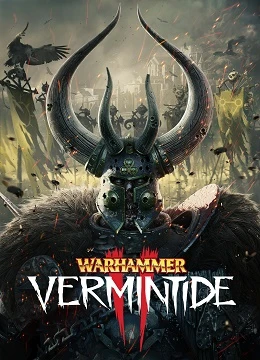
The Iron Bull
Iron does not flinch, and neither does the one who wears it.
The Iron Bull is a heavy defensive gear piece found in Warhammer Vermintide 2, representing the kind of brutal, no-nonsense protection that heroes of the Empire and the Wild Hunt rely on when the world tilts toward annihilation. Its name evokes the unyielding charge of a war-beast rendered in cold, riveted iron — a metaphor made literal in the thick, layered plating that wraps the bearer's torso and shoulders. In co-op play, the Iron Bull serves as a cornerstone for tank-oriented builds, rewarding players who prefer to absorb punishment and keep the party's momentum alive while allies finish off the horde. It sits comfortably alongside other defensive relics and gear, and its presence on a loadout signals a deliberate choice: let them hit me, because I will not go down.
Quick Facts
- Type
- Defensive Gear; Relic
- Category
- Armor & Damage Mitigation
- Affiliation
- Empire; General (no single hero exclusive)
- Primary effect
- Increases armor and reduces incoming damage
- Game
- Warhammer Vermintide 2
Lore & Background
In the forges of the Empire — and in the deeper, older smithies of the mountain holds where dwarven craft still outlasts empires — there is a tradition of making armor that speaks its purpose in its very name. The Iron Bull belongs to that lineage. Its broad pauldrons are cast in a single pour of pig iron, hammered flat and riveted to a core of layered leather and mail. The chest plate is thick enough to stop a halberd's point dead, and the shoulder guards flare outward like the horns of a charging beast, designed to deflect blows sideways rather than absorb them straight on. It is not elegant. It is not light. It is the kind of protection a man puts on when he knows the thing waiting for him on the other side of the gate will not stop coming. Vermintide's heroes have each carried their own version of this philosophy. Kaergyn's dwarven resilience, Batrinn's shield-wall discipline, even the brute force of a Redman in full plate — all of them embody the spirit the Iron Bull represents. In the grim narrative of the game, where the world is slowly being consumed by chaos and the dead rise in endless waves, a piece of gear like this is not a luxury. It is a statement: I will still be standing when the last Ghoul falls. The item's design language draws on the broader Warhammer aesthetic of functional brutality. There are no filigree engravings, no gilded trim. Just iron, rivets, and the faint smell of forge-oil. It is the armor of a world that has been at war for so long that elegance became a casualty long ago.
Reader's Guide
The Iron Bull functions as a defensive anchor in your loadout. Its primary mechanical contribution is a flat increase to your armor pool and a percentage-based reduction to incoming damage, making you significantly harder to kill during the longer, more chaotic encounters in later chapters and in the endgame. In co-op play, the Iron Bull shines most when you are playing a hero who already has a defensive or tank-oriented kit — think Kaergyn's damage-soak abilities, Batrinn's shield mechanics, or Isha's defensive stances. Pairing the Iron Bull with other armor-boosting relics and gear creates a compounding mitigation effect that lets you hold the front line while your ranged or burst-damage allies (Selena, Redman, Skaver) pick off priority targets without being interrupted. Practical tips: the Iron Bull is most effective in chapters with sustained melee pressure (Skaven hordes, Undead waves) rather than in fights dominated by single high-damage hits from bosses, where damage-reduction percentages matter less than raw health pools. It also synergizes well with any gear that grants armor regeneration or damage-reflection, turning your durability into a secondary offensive tool. If your build is already glass-cannon, the Iron Bull is the single highest-impact swap to make it survivable.
Did You Know?
- The Iron Bull's visual design deliberately echoes the functional, riveted armor style seen throughout the Warhammer universe, where practicality and intimidation are the same thing.
- In Vermintide 2's co-op structure, defensive gear like the Iron Bull becomes especially critical in higher-difficulty modes where enemy damage scales aggressively and one missed dodge can end a run.
- The 'bull' motif in Warhammer lore often symbolizes stubborn, unyielding resistance — a thematic thread that runs from the Empire's military heraldry to the dwarven philosophy of holding the line at all costs.
- Players who pair the Iron Bull with other armor-mitigation items can effectively reduce the damage they take from a single hit by a substantial margin, turning what would be a lethal blow into a survivable one.
More in Skills, Relics & Gear
Elsewhere in Warhammer Vermintide
Spotted an error? Know more?
Reader corrections go straight into our review queue. Suggest an edit · How this site is sourced