The Disneyland Story
An episode from Disney's long-running anthology series.
Last updated
The Disneyland Story is an episode of the Walt Disney anthology television series, which has aired under various titles since 1954. It is notable as one of the many original programs produced for the series, which was created to help finance the development of the Disneyland amusement park.
History
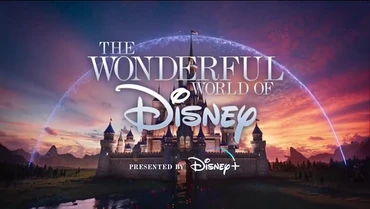
The anthology series originated from Walt Disney's need for funding for Disneyland. After CBS and NBC rejected the proposal, Disney's brother Roy approached the three major networks, and American Broadcasting-Paramount Theatres accepted the deal for programming on ABC. The show first aired on ABC in 1954 and contained teasers for the park, with episodes representing one of four lands: Adventureland, Tomorrowland, Fantasyland, and Frontierland. The opening titles, used until the move to NBC in 1961, showed the entrance to Disneyland and the four lands, identifying the main feature of that evening's program.
Frontierland episodes featured Davy Crockett and other Old West pioneers, while Adventureland focused on films like 20,000 Leagues Under the Sea. Fantasyland included cartoons, animated films, or behind-the-scenes documentaries, such as the making of Lady and the Tramp or the multiplane camera used for Bambi. True-Life Adventure documentaries also appeared in Fantasyland segments.
Theme music
From 1954 to 1961, the series used the song 'When You Wish Upon a Star' as its theme, taken directly from the Pinocchio soundtrack. After the title changed to 'Walt Disney Presents' in 1958, the theme played only over the ending credits. From 1961 to 1968, an original song titled 'The Wonderful World of Color', written by Richard M. Sherman and Robert B. Sherman, was used to emphasize color. From 1968 to 1979, orchestral medleys of various Disney songs served as theme music.
A disco-styled theme, with melody by John Debney and lyrics by John Klawitter, was used from 1979 to 1980. The series reverted to an earlier orchestral medley from 1980 to 1981 while keeping the 1979 credits motif. From 1981 to 1983, a short disco arrangement of 'When You Wish Upon a Star', arranged by Frank Gari, accompanied computer graphics. From 1986 to 1988, a synthesized pop rock arrangement of the same song with clapping was used, returning for later seasons.
In 1988, an orchestral medley of 'A Dream Is a Wish Your Heart Makes' and 'When You Wish Upon a Star' was used, but the 1986 theme returned in 1989. From 1991 to 1997, an orchestral medley of 'When You Wish Upon a Star' and 'Part of Your World', composed by David Newman, was used. From 1997 to 2000, an orchestral medley of 'When You Wish Upon a Star' and 'A Whole New World', composed by Bruce Broughton, was used, along with Louis Armstrong's 'What a Wonderful World'.
International broadcasts
In Argentina, the series aired as 'El mundo de Disney' on the OTA network Telefe starting in 1990, hosted by Leonardo Greco. The program initially aired at 8:00 pm nightly from the second half of 1990 until December 1992, then moved to weekday afternoons at 5:00 pm in 1993, and to Sunday afternoons in 1994. Greco stated the program was possible because a distributor acquired the material and allowed it to be shown without a strict format. In 2004, Telefe revived the concept as 'Planeta Disney', hosted by chef Maru Botana on Sunday evenings starting November 21, 2004.
On July 9, 2005, Botana was replaced by Carolina Ibarra and Dani Martins, who also hosted the South American edition of Zapping Zone on Disney Channel. Canal 13 also aired Disney material on Sunday afternoons beginning in 1994, but only movies starring human actors, not cartoons. This experiment lasted until early 1996. By 2007, Telefe held exclusive rights to Disney movies and programs, airing them on Sunday evenings at 7:00 pm without a host.
Home media
Several home media releases have included episodes of the anthology series. Releases include 'On Vacation with Mickey Mouse and Friends', 'Kids Is Kids', 'The Adventures of Chip 'N' Dale', 'At Home with Donald Duck', 'Disney's Halloween Treat', 'A Disney Christmas Gift', 'Winnie the Pooh and Friends', and 'Bambi Platinum Edition'. Excerpts appear in 'Tricks of Our Trade', 'Alice in Wonderland Masterpiece Edition', 'Alice in Wonderland Special Un-Anniversary Edition', and 'Alice in Wonderland 60th Anniversary Edition', each containing 'One Hour in Wonderland', 'Operation Wonderland Featurette', 'The Fred Waring Show' (first half), and introductions from 1954 and 1964.
'Peter Pan Special Edition' and 'Peter Pan Platinum Edition' include 'The Peter Pan Story Featurette'. 'Dumbo 60th Anniversary Edition' and 'Dumbo Big Top Edition' include a Walt Disney introduction. 'Snow White and the Seven Dwarfs Platinum Edition' includes two excerpts from 'Tricks of Our Trade' and an excerpt from 'The Silly Symphony Story'. 'Pete's Dragon Gold Collection/High Flying Edition' includes an excerpt from 'The Plausible Impossible'.
'The Aristocats Special Edition' includes 'The Great Cat Family'. Other releases include 'Disneyland, USA', 'The Disneyland Story', 'Disneyland After Dark', 'Disneyland 10th Anniversary', 'Behind the Scenes at the Walt Disney Studios', 'The Story of the Animated Drawing', 'The Plausible Impossible', 'Tricks of Our Trade', 'Tomorrow Land', 'Man in Space', 'Man and the Moon', 'Mars and Beyond', and 'Our Friend the Atom'.
Did You Know?
- The Magical World of Toons was a daily prime time programming block that launched with Toon Disney on April 18, 1998.
- In 2012, Disney Junior launched a variant called The Magical World of Disney Junior, premiering its first original movie Lucky Duck on June 20, 2014.
- Prior to the Disney Channel's launch, anthology series films and specials were licensed to pay-TV networks such as HBO, which retained the kaleidoscopic-pattern titles.
More in Walt Disney Anthology Television Series Episodes
Sources
Compiled from Wikipedia and the sources listed below. Text from Wikipedia is available under CC BY-SA 4.0; this entry is adapted from it.
- Wikipedia: Disney anthology television series (CC BY-SA 4.0).
Spotted an error? Know more?
Reader corrections go straight into our review queue. Suggest an edit · How this site is sourced