Cross for Length of Military Service
Italian military seniority medal for lengthy honorable service.
The Cross for Length of Military Service is a military medal originally created by the Kingdom of Italy and later retained by the Italian Republic. Established in 1900, it recognizes lengthy honorable service in the Italian armed forces. The award underwent reforms in 1953, 1966, 1972, and 2010.
Quick Facts
- Presenter
- Kingdom of Italy (1900–1946); Italian Republic (1946–1953)
- Eligibility
- Military personnel
- Awarded for
- 16, 25, or 40 years of service
- Established
- 8 November 1900
Facts from the source article.
Kingdom of Italy
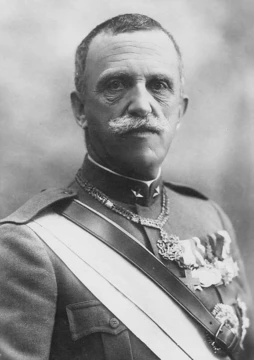
King Victor Emmanuel III established the Cross for Length of Military Service by royal decree on 8 November 1900. It was intended for all ranks of the Regio Esercito and Regia Marina as a reward for long and meritorious service, replacing the earlier Piedmontese-style chevrons used during the era of King Umberto I. The medal standardized the decoration on a larger scale in line with evolving Italian military uniforms. Initially divided into three classes, a fourth class was added by royal decree on 15 June 1912.
The four classes were: a silver cross for enlisted personnel with 16 years of service; a silver cross surmounted by the royal crown for enlisted personnel with 25 years (added in 1912); a gold cross for officers with 25 years; and a gold cross with the royal crown for officers with 40 years. The medal is a Maltese cross in gold or silver, bearing the crowned monogram of Vittorio Emanuele III on the obverse and the years of service in Roman numerals on the reverse.
The crowned crosses are topped by the royal crown of Italy. The ribbon is green silk with a white stripe; a gold or silver crown on the ribbon distinguishes the classes. The original decree did not permit wearing the ribbon alone, but a 1906 decree allowed it.
Italian Republic
After the monarchy fell and the Italian Republic was established on 2 June 1946, the kingdom's legislation for the Cross for Length of Military Service remained in force. The republic defined its own version in 1953. A 1966 reform set the award for officers, non-commissioned officers, and enlisted personnel of the Italian Army, Navy, and Air Force, with classes: a silver cross for 16 years of service; a silver cross with star for enlisted personnel with 25 years; a gold cross for officers and non-commissioned officers with 25 years; and a gold cross with star for officers and non-commissioned officers with 40 years.
The 1953 legislation changed the medal's appearance: the Maltese cross remained in gold or silver, but the crowns above the cross were eliminated, and the royal monogram was replaced by the abbreviation "RI" on the obverse. The reverse continued to show the years of service in Roman numerals. The ribbon stayed green with a white stripe, but the crown was replaced by a 6 mm star in gold or silver as required. In 1972, a gold turreted crown was introduced for the ribbon of the Gold Cross for officers and non-commissioned officers with 25 years of service.
Legislative Decree Number 66 of 2010 repealed all prior legislation and absorbed the award into Articles 857 and 858 of the Regulation without substantial changes, continuing the authorization to wear ribbons without the medals unless expressly required.
More in Victor Emmanuel III
Spotted an error? Know more?
Reader corrections go straight into our review queue. Suggest an edit · How this site is sourced