Frequently Asked Questions
The most-asked questions about vasculitis.
What exactly is vasculitis?
Vasculitis is the inflammation and swelling of blood vessel walls, which can compromise blood flow and damage the organs those vessels supply. It may involve large, medium, or small vessels and can appear as a standalone condition or secondary to an infection, medication, or another disease.
What causes the immune system to attack blood vessels?
In most cases the trigger is an autoimmune misfire, where the body's own antibodies or immune cells target the vessel wall. Infections, certain drugs, and underlying connective-tissue diseases can also provoke the response, though for many patients the precise initiating event is never identified.
What are the main categories of vasculitis?
They are grouped by the size of vessel affected: large-vessel (giant cell arteritis, Takayasu arteritis), medium-vessel (polyarteritis nodosa, Kawasaki disease), and small-vessel (ANCA-associated types such as granulomatosis with polyangiitis and microscopic polyangiitis, IgA vasculitis, cryoglobulinemic vasculitis).
What symptoms should make someone suspect vasculitis?
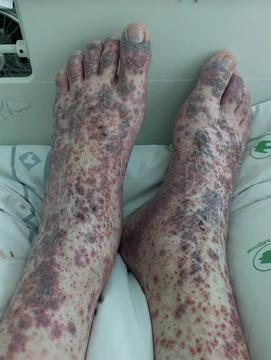
Constitutional clues like unexplained fever, fatigue, weight loss, and joint aches are common, while skin findings such as palpable purpura or livedo reticularis are classic visible signs. Because any organ with a blood supply can be involved, symptoms range from nerve pain to kidney or lung dysfunction depending on the type.
How do doctors confirm a diagnosis?
There is no single universal test; physicians typically combine inflammatory markers (ESR, CRP), specific autoantibodies (ANCA, ANA, cryoglobulins), imaging, and—when safe—a tissue biopsy showing characteristic vessel-wall inflammation. The pattern of organ involvement helps narrow the subtype.
What does treatment look like in practice?
Acute flares are usually controlled with high-dose corticosteroids, often paired with a steroid-sparing immunosuppressant such as cyclophosphamide, rituximab, or azathioprine for longer-term remission. The exact regimen is tailored to the vasculitis subtype, organ involvement, and severity.
What is ANCA-associated vasculitis and why is it so frequently discussed?
It is a family of small-vessel diseases (granulomatosis with polyangiitis, microscopic polyangiitis, eosinophilic granulomatosis with polyangiitis) linked to antineutrophil cytoplasmic antibodies that commonly strike the kidneys and lungs. It accounts for a large share of vasculitis cases seen in rheumatology and nephrology clinics, which is why it dominates patient forums.
Is vasculitis curable or a lifelong condition?
Many patients achieve deep remission and can eventually taper off medications, but the condition is generally managed as a chronic one with a risk of relapse. Ongoing monitoring of inflammatory markers and organ function is standard to catch flare-ups early.
Who is most likely to develop vasculitis?
It can occur at any age, but specific subtypes cluster demographically: giant cell arteritis and Takayasu arteritis skew toward older or younger adults respectively, Kawasaki disease is a pediatric condition, and ANCA-associated forms peak in middle to older adulthood. No single sex or ethnicity is universally more at risk across all types.
Where should a newcomer start learning more?
A rheumatologist or nephrologist experienced in vasculitis is the go-to specialist for personalized guidance. For broader reading, the Vasculitis Foundation and the American College of Rheumatology's patient-facing pages offer vetted overviews, and hospital-based multidisciplinary clinics can coordinate care when multiple organs are involved.