Frequently Asked Questions
The most-asked questions about us cities.
What exactly counts as a 'US city'?
A US city is a municipality that has been incorporated under the laws of its particular state, granting it a local government, a charter, and the authority to levy taxes and provide services. The legal definition and powers vary significantly from state to state, so a 'city' in Texas operates very differently from one in New York.
How many incorporated cities exist in the United States?
There are roughly 19,500 incorporated municipalities across the fifty states, though the exact count shifts as new towns are chartered and others dissolve. A large share of those are very small, with populations under 2,500.
Which city is the largest by population?
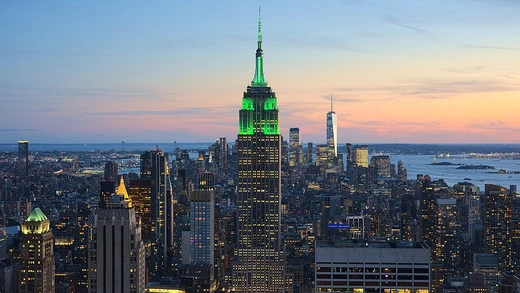
New York City holds that title, with a population exceeding eight million within its five boroughs. The New York metropolitan area, spanning parts of three states, pushes past nineteen million and is the largest metro in the country.
What is the oldest continuously inhabited city in the US?
St. Augustine, Florida, founded by the Spanish in 1565, is generally cited as the oldest European-established city still in continuous use. Santa Fe, New Mexico, founded in 1610, is the oldest state capital.
Where should a newcomer start exploring US cities?
A practical entry point is to pick one major metro—such as Chicago, Los Angeles, or Atlanta—and study its founding story, layout, and cultural identity before comparing it to peers. Regional guides (Northeast, South, Midwest, West) help group cities by shared history and climate.
Who are a few figures most associated with shaping American urban life?
Jane Jacobs, whose 1961 book redefined how planners think about neighborhoods, is perhaps the most influential urban thinker of the twentieth century. Earlier, figures like Frederick Law Olmsted designed foundational public parks, while mayors like Fiorello LaGuardia and Richard Daley left lasting institutional marks on their cities.
What is one of the most transformative moments in US urban history?
The Great Migration of the early-to-mid twentieth century, in which roughly six million African Americans moved from the rural South to industrial cities in the North and West, reshaped the demographics, culture, and politics of dozens of cities almost overnight. Its effects on housing, music, and civil-rights organizing are still visible today.
How does US city governance differ from cities in most other countries?
Because the US has no single national framework for local government, each state writes its own rules for how cities are chartered, how mayors and councils are elected, and what powers they hold. This means two cities of identical size in neighboring states can have entirely different structures.
Which US cities are growing the fastest right now?
Many Sun Belt metros—Phoenix, Austin, Raleigh, and Tampa among them—have posted some of the highest population gains over the past decade, driven by remote-work flexibility and lower costs than coastal hubs. Growth rates fluctuate year to year, so the exact ranking shifts.
Is it true that every US city has a mayor?
No; some municipalities use a council-manager system in which an elected council hires a professional manager to run day-to-day operations, with no separately elected mayor. The specific form of government is set by state statute and the city's own charter.