
Golden Dome (missile defense system)
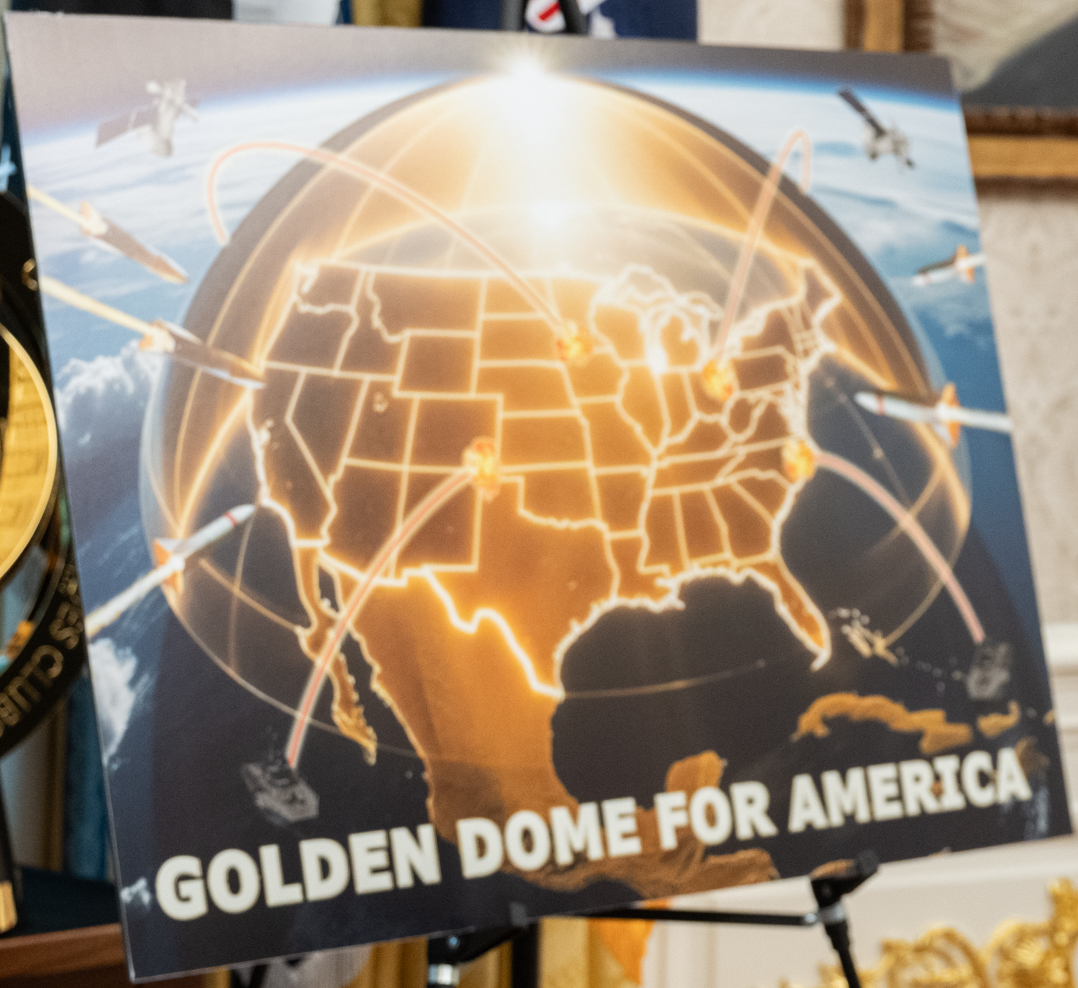
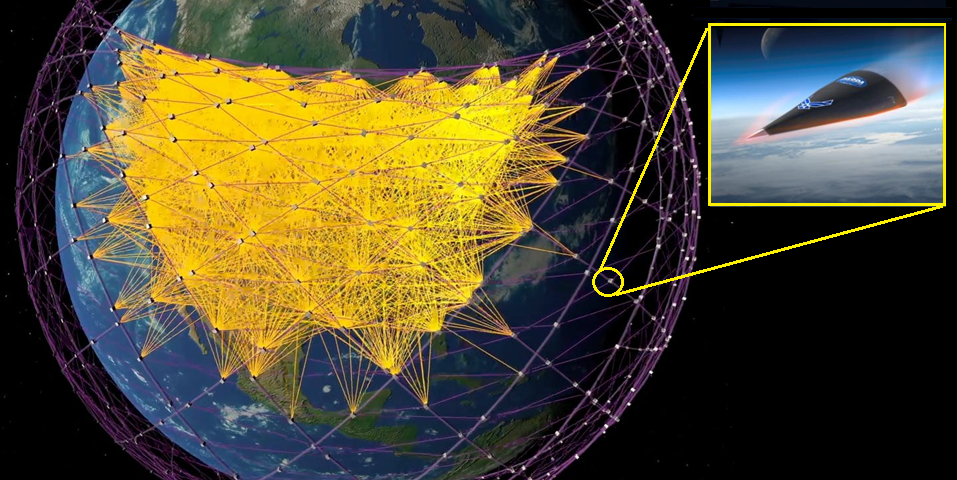
A planned U.S. space-based missile shield extending from Earth to orbit.

The White House · Public domain
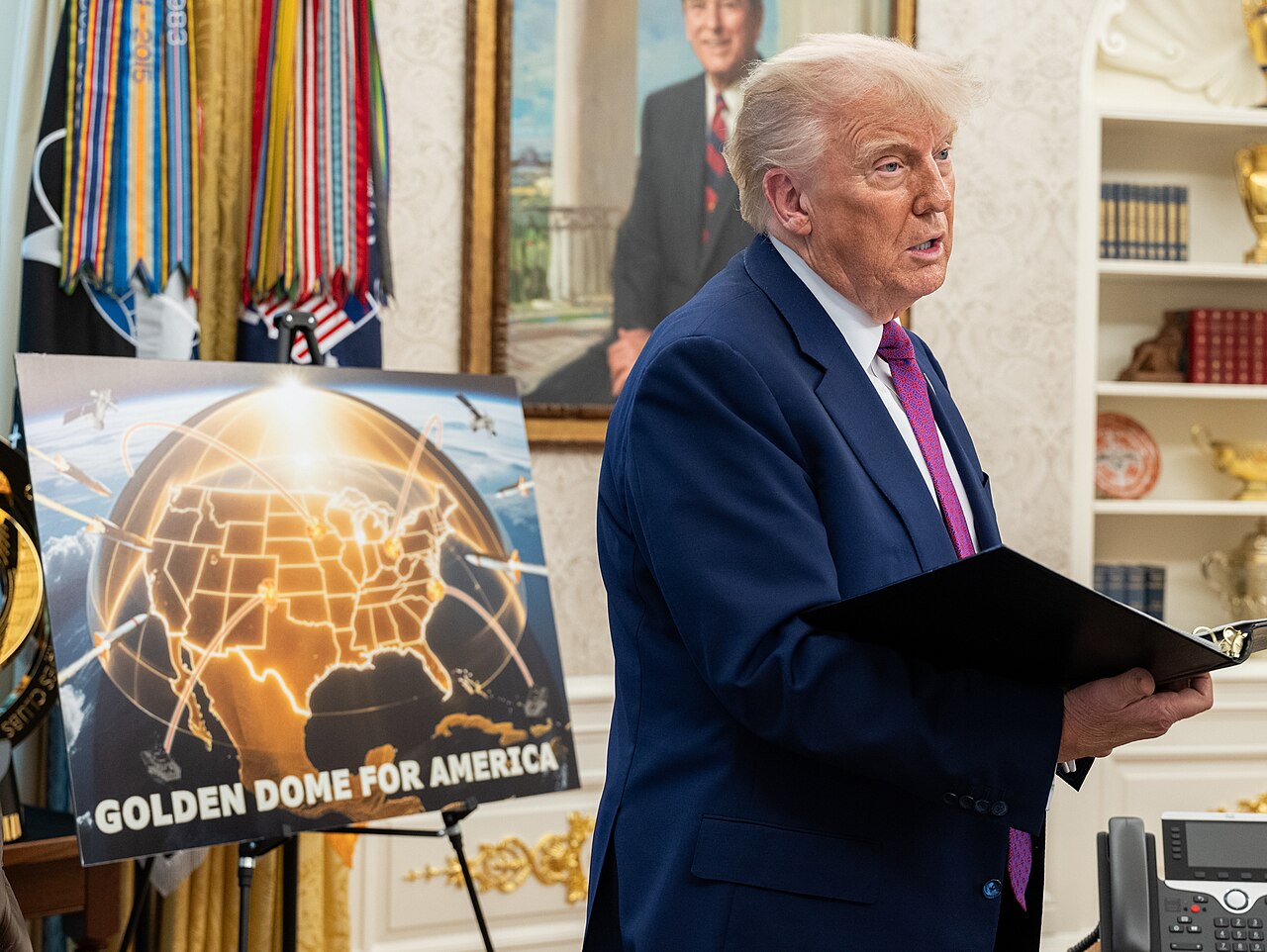
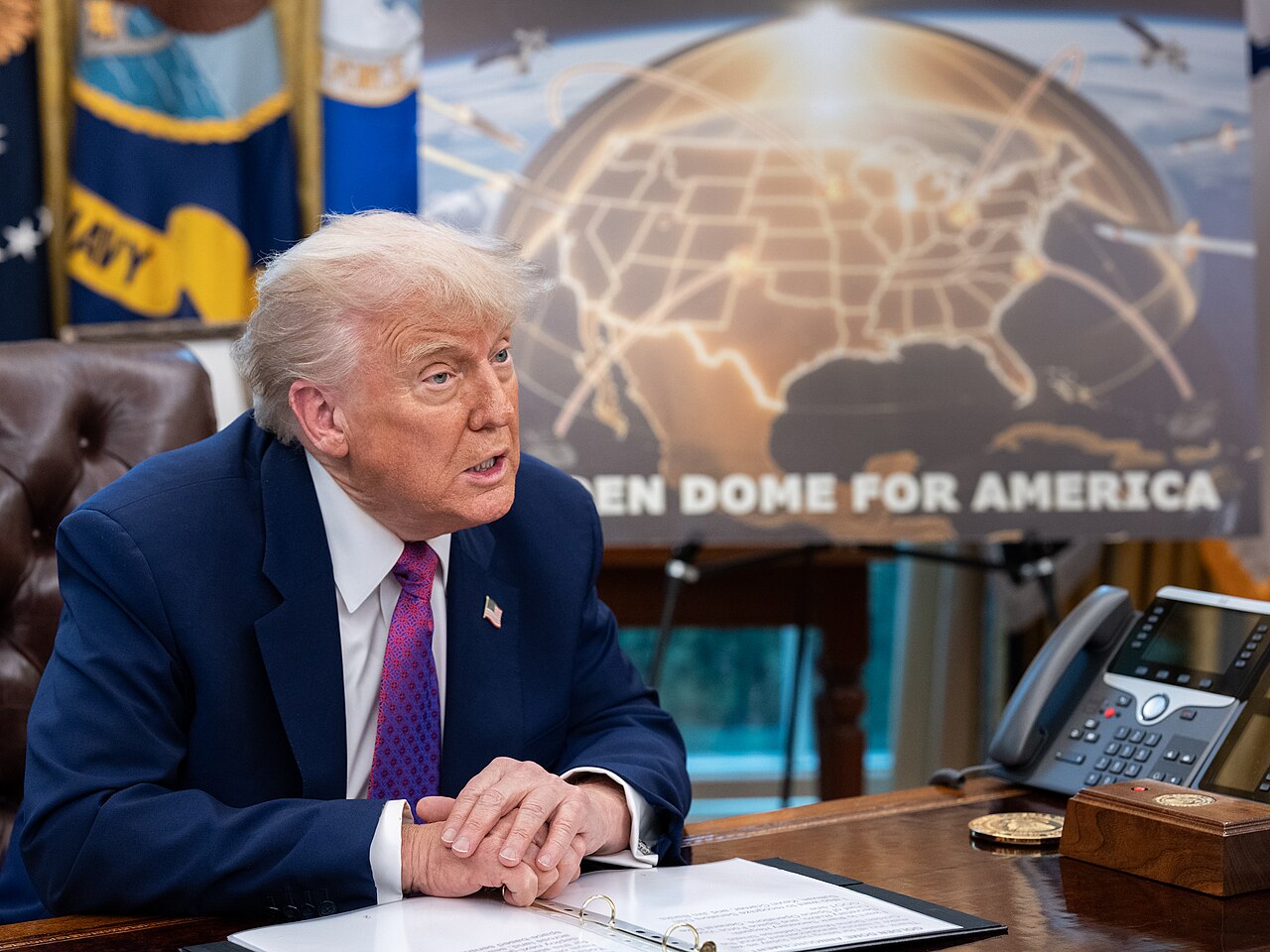
The Golden Dome is a planned U.S. missile defense system designed to detect and destroy ballistic, hypersonic, and cruise missiles either before launch or during flight. It would use thousands of satellites carrying sensors and interceptors, making them the first American space-based weapons. The name is a nod to Israel’s Iron Dome, but the Golden Dome is meant to cover the entire Earth, a much larger ambition. The project draws on earlier efforts like Prompt Global Strike, the Proliferated Warfighter Space Architecture, and the Strategic Defense Initiative (SDI). On January 27, 2025, President Donald Trump signed an executive order for the secretary of defense to submit a plan for what was first called the “Iron Dome for America,” later renamed Golden Dome. The concept resembles SDI, which President Ronald Reagan proposed in 1983, also envisioning a space-based global shield. The system would rely on automated command and control from space-based data centers, linked by an AI-enabled cross-domain network. Interceptors would orbit just outside the atmosphere, but only a small number would be in the right position to engage any given threat at the right moment—a flaw critics say makes it less efficient than regional systems like Israel’s Iron Dome. In 2019, Trump said the satellites would also carry offensive weapons. Cost estimates vary widely: $175 billion from the White House, $1.2 trillion from the Congressional Budget Office, and $3.6 trillion from the American Enterprise Institute, depending on the design. The wide range stems largely from the number of space-based missiles and the cost of replacing satellites whose low orbits decay quickly due to atmospheric drag. The One Big Beautiful Bill Act in 2025 directed $24.4 billion in federal funding to the Golden Dome, with another $13 billion for fiscal year 2026, totaling 2.2% of the federal discretionary budget that year. The Strategic Defense Initiative, announced by Reagan in 1983, was shaped by strategic analyses like the 1976 Team B report—which argued U.S. intelligence had underestimated Soviet threats—and ideas from the Citizens' Advisory Council on National Space Policy. SDI proposed a space-based missile defense constellation meant to make nuclear weapons “impotent and obsolete.” The program faced immediate challenges from Congress, including senators Sam Nunn and Joe Biden, who raised concerns about violating the Anti-Ballistic Missile Treaty, questionable technical feasibility, rising launch costs, a poor cost-exchange ratio, and destabilizing effects on arms control. By the 1990s, SDI was restructured into the Ballistic Missile Defense Organization, shifting from space-based platforms to more proven ground- and sea-based systems. U.S. missile defense policy continued evolving: the 1999 National Missile Defense Act required a system to defend against limited ballistic missile attacks. Following another Team B report’s recommendation, President George W. Bush withdrew the U.S. from the ABM Treaty in 2001. The Obama administration’s 2010 Review shifted focus from a homeland-centered shield to flexible regional defenses, limiting the space component to sensing and tracking. The Trump administration’s 2019 Review expanded the scope from rogue states like North Korea to include advanced hypersonic threats from “competitors” such as Russia and China. In contrast, the Biden administration’s 2022 Review, while prioritizing Ground-based Midcourse Defense, stated it is “neither intended nor capable of defeating” peer-level threats from Russia or China, noting “the interrelationship between strategic offensive arms and strategic defensive systems.” While terrestrial defenses advanced, the vision of a full space-based shield remained a goal for its proponents. The modern groundwork for the Golden Dome was laid in 2017 by Michael D. Griffin, a former SDI deputy of technology and prominent Team B leader, who formed the Space Development Agency during the first Trump administration. Griffin long advocated for reusable launch vehicles to make mass launching of weapons into space economically feasible. The original SDI’s attempts at this, like the DC-X, were short-lived, failing after a series of test flights, but Griffin later encouraged and promoted funding for commercial reusable launch vehicles, which have since proven successful. The Heritage Foundation’s Project 2025 advocated for a Golden Dome-like effort, arguing that SpaceX’s Starlink development proves the feasibility of a space-based “overlayer” of thousands of networked satellites and interceptors, broadly similar to the 1980s Brilliant Pebbles concept. During his 2024 presidential campaign, Trump repeatedly mentioned the missile shield concept, often to mixed reception. On May 20, 2025, President Donald Trump announced plans for a new space-based missile defense system called the “Golden Dome,” intended to shield the United States from long-range and hypersonic missiles. The name alludes to Israel’s Iron Dome, but the system is planned to be orders of magnitude broader in scope. Technical details and deployment plans were not released. Trump said the project would be completed within three years and cost about $175 billion, a feasibility, timeline, and price estimate that were quickly and widely disputed.
Quick Facts
- Produced
- 2029– (White House estimate); 2035– (CSIS estimate)
- Origin
- United States
- Vehicle range
- Global
- Launch platform
- Satellites, ground-based
- Unit cost
- $1.2 trillion (CBO estimate); $175 billion (White House estimate)
Facts from the source article.
Lore & Background
The Golden Dome extends former programs such as Prompt Global Strike, the Proliferated Warfighter Space Architecture, and the Strategic Defense Initiative (SDI). The initial name alluded to Israel's short-range Iron Dome system, but the Golden Dome would encompass the entire Earth, more like the SDI proposed by President Ronald Reagan in 1983. The modern groundwork was laid in 2017 by Michael D. Griffin, former SDI Deputy of Technology and prominent Team B leader, who formed the Space Development Agency during the first Trump administration.
Reader's Guide
The Golden Dome represents a vast increase in U.S. missile-defense goals, from limited protection against 'rogue states' to a system intended to defeat larger strikes from peer-level countries. Cost estimates range widely from $175 billion to $3.6 trillion, depending on architectural details such as the number of space-based missiles and satellite replacement costs due to low-orbit decay. Critics argue the concept is less efficient than traditional regional missile defenses because only a small fraction of interceptors would be available at the right time and place for any given threat. The program has faced scrutiny over conflicts of interest involving Elon Musk, whose Department of Government Efficiency slashed resources of the Director, Operational Test and Evaluation office after it determined oversight applied to the Golden Dome. In May 2025, 42 members of Congress asked the DoD Inspector General to review Musk's involvement, citing deviations from standard acquisition processes and a dome subscription model that could give Musk undue influence. General Michael A. Guetlein was nominated to run the program in June 2025 and assumed the position on July 21, 2025. As of December 2025, no contract awards had been publicly announced, though the Wall Street Journal reported SpaceX was 'set to receive' a $2 billion contract for a 600-satellite constellation for missile targeting.
Gallery

Frequently Asked Questions
Who announced Golden Dome and when?
President Donald Trump publicly introduced the Golden Dome concept on May 20, 2025, describing it as a planet-wide protective barrier. The White House's own budget line for the program sits at roughly $175 billion, though that figure is widely considered a floor rather than a ceiling.
How does Golden Dome differ from Israel's Iron Dome?
The name is a deliberate homage to Iron Dome, but the scope is almost unrecognizable. Iron Dome is a short-range, ground-based interceptor network protecting one nation's territory, while Golden Dome envisions a global, space-based sensor-and-kill constellation covering the entire planet.
What earlier programs does Golden Dome build on?
The design repurposes groundwork from prior U.S. space and rapid-strike efforts, most notably Prompt Global Strike and the Proliferated Warfighter Space Architecture. Rather than a from-scratch build, Golden Dome layers a defensive interceptor mission on top of those existing orbital and launch frameworks.
More in Unmanned Aerial Vehicles
Spotted an error? Know more?
Reader corrections go straight into our review queue. Suggest an edit · How this site is sourced