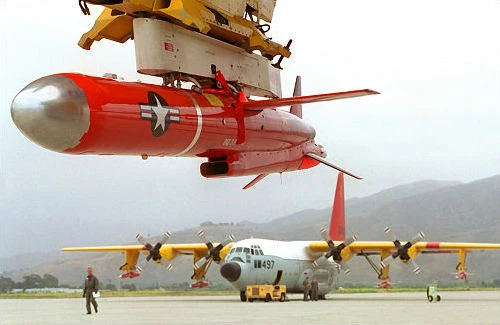
Northrop Grumman X-47A Pegasus
Company-funded UCAV demonstrator for carrier-based unmanned operations.
Last updated
The Northrop Grumman X-47A Pegasus is an unmanned combat aerial vehicle built to demonstrate key technologies. It originated within DARPA’s J-UCAS project and later fed into the U.S. Navy’s UCAS-D initiative, which aims to field a carrier-capable drone. Unlike the competing Boeing X-45, Northrop Grumman funded the Pegasus’s early development itself.
The U.S. Navy did not commit to practical unmanned combat air vehicle efforts until mid-2000, when it awarded $2 million contracts to both Boeing and Northrop Grumman for a 15-month concept-exploration phase. Design challenges for a naval UCAV included resisting saltwater corrosion, handling on deck for launch and recovery, integrating with command-and-control systems, and operating in the high electromagnetic interference environment of a carrier. The Navy also wanted its UCAVs to perform reconnaissance, penetrating defended airspace to locate targets for strike aircraft.
In early 2001, the Navy gave Northrop Grumman a contract for a naval UCAV demonstrator designated X-47A Pegasus. Burt Rutan’s Scaled Composites built the proof-of-concept vehicle at the Mojave Spaceport.
The Pegasus resembles a simple black arrowhead, lacking a vertical tail. Its leading edge sweeps back 55 degrees, and its trailing edge sweeps 35 degrees. It has retractable tricycle landing gear—a single wheel on the nose and dual wheels on the main gear—and six control surfaces: two elevons and four “inlaids,” which are small flaps mounted on the top and bottom of the wing ahead of the wingtips.
A single Pratt & Whitney Canada JT15D-5C high-bypass turbofan engine powers the X-47A, producing 3,190 pounds of thrust. This engine also powers operational aircraft like the Aermacchi S-211 trainer. The engine sits on the demonstrator’s back, with its inlet atop the fuselage behind the nose. The inlet duct uses a serpentine diffuser to hide the engine fan from radar, but to keep costs low, the exhaust is a simple cylindrical tailpipe with no special measures to reduce radar or infrared signature.
The airframe is built from composite materials, with construction subcontracted to Scaled Composites, which had the expertise and tooling to do the work inexpensively. The airframe consists of four main assemblies, split down the middle—two on top and two on bottom.
Background
The X-47A Pegasus was built under contract by Burt Rutan's Scaled Composites at the Mojave Spaceport. The demonstrator looks like a simple black arrowhead with no vertical tailplane, featuring a leading edge sweep of 55 degrees and a trailing edge sweep of 35 degrees. It has retractable tricycle landing gear, with a one-wheel nose gear and dual-wheel main gear, and six control surfaces including two elevons and four 'inlaids'—small flap structures mounted on the top and bottom of the wing forward of the wingtips.
The X-47A is powered by a single Pratt & Whitney Canada JT15D-5C small high-bypass turbofan engine with 3,190 lbf thrust, mounted on the demonstrator's back with the inlet on top behind the nose. The inlet duct has a serpentine diffuser to prevent radar reflections off the engine fan, but to keep costs low, the engine exhaust is a simple cylindrical tailpipe with no provisions for reducing radar or infrared signature. The airframe is built of composite materials, consisting of four main assemblies split down the middle with two on top and two on bottom.
The X-47A was rolled out on 30 July 2001 and performed its first flight on 23 February 2003 at the Naval Air Warfare Center at China Lake, California. The flight test program did not involve weapons delivery, but Pegasus has two weapons bays, one on each side of the engine, that may each be loaded with a single 500-pound dummy bomb to simulate operational flight loads. The demonstrator was also used to evaluate technologies for carrier deck landings, though it did not have a tailhook.
More in Unmanned Aerial Vehicles by Country
Sources
Compiled from Wikipedia and the sources listed below. Text from Wikipedia is available under CC BY-SA 4.0; this entry is adapted from it.
- Wikipedia: Northrop Grumman X-47A Pegasus (CC BY-SA 4.0).
Spotted an error? Know more?
Reader corrections go straight into our review queue. Suggest an edit · How this site is sourced