Lockheed Martin Cormorant
Submarine-launched tailsitter UAV cancelled after DARPA budget cuts.
Last updated
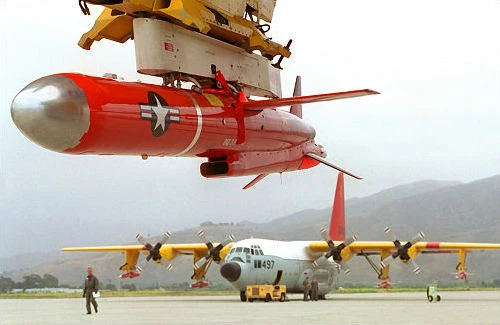
The Lockheed Martin Cormorant was a tailsitter unmanned aerial vehicle (UAV) developed at Lockheed Martin's Skunk Works research facility. It was named after a species of diving bird in reference to its intended role as a submarine-launched UAV, designed to be stored in and launched from the missile tubes of submarines.
Quick Facts
- Developer
- Lockheed Martin Skunk Works
- Funding agency
- DARPA
- Launch depth
- 150 ft (46 m)
- Construction materials
- Titanium, plastic foam
Facts from the source article.
Background
The Cormorant was conceived by researchers at Skunk Works who envisioned a drone that could be stored in the large missile tubes of U.S. Navy submarines, which are 44 ft long and 7 ft in diameter. While stored in the tube, the aircraft's wings were folded around its body. After floating to the surface, the wings would unfold and rockets would assist the aircraft in lifting off from the water's surface.
To survive the pressures at a launch depth of 150 ft (46 m), the Cormorant was constructed from titanium to prevent corrosion, and empty spaces were filled with plastic foam to resist crushing. The interior was pressurized with inert gas, and all doors, inlets, and covers used inflatable seals to keep the aircraft watertight.
DARPA provided funding for tests of models and some onboard systems, which were completed by September 2006. After the tests, DARPA was to decide whether to fund a flying prototype. Although the tests achieved their goals and capabilities, DARPA cancelled the contract due to budget cuts in FY08. To avoid revealing the submarine's position, the submarine was to slip away while the Cormorant floated to the surface; after the mission, the submarine would transmit rendezvous coordinates, and a robotic retrieval vehicle would fetch the drone after it landed on the water.
More in Unmanned Aerial Vehicles by Country
Sources
Compiled from Wikipedia and the sources listed below. Text from Wikipedia is available under CC BY-SA 4.0; this entry is adapted from it.
- Wikipedia: Lockheed Martin Cormorant (CC BY-SA 4.0).
Spotted an error? Know more?
Reader corrections go straight into our review queue. Suggest an edit · How this site is sourced