CANZUK
Proposed alliance of four Commonwealth realms for deeper integration.
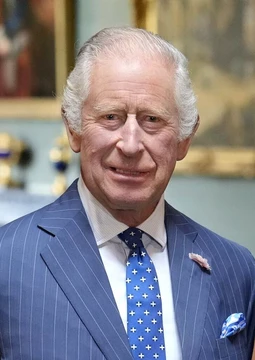
CANZUK is a proposed alliance of Canada, Australia, New Zealand and the United Kingdom, envisioned as an international organisation or confederation similar in scope to the former European Economic Community. The concept encompasses increased trade, foreign policy co-operation, military co-operation and mobility of citizens between the four states, tied together by similar economic systems, social values, political and legal systems, a shared head of state in King Charles III, and a majority English-speaking population. It is lobbied by the advocacy group CANZUK International and supported by think tanks such as the Adam Smith Institute, the Henry Jackson Society, and the Bruges Group, as well as politicians from the four countries.
Quick Facts
- Term coined
- 1967
- Coined by
- William David McIntyre
- Popularised by
- James Skinner (2015)
Facts from the source article.
Did You Know?
- Critics such as Nick Cohen described the CANZUK project as a 'Eurosceptic fantasy' that the 'Anglosphere' wants Brexit.
- Former Australian Labor prime minister Kevin Rudd called the idea 'bollocks', stating that the combined population of the three non-UK countries does not compare to Britain's adjacent European market of 450 million.
History
The term CANZUK was first coined by William David McIntyre in his 1967 book Colonies into Commonwealth in the context of a 'CANZUK Union'. The idea of increased migration, trade and foreign policy cooperation between the CANZUK countries was created and popularized in 2015 by James Skinner, CEO and Founder of CANZUK International, formerly the Commonwealth Freedom of Movement Organisation. Following the 2016 United Kingdom European Union membership referendum and the decision for Britain to leave the European Union, writers such as Andrew Lilico and James C. Bennett, along with historian Andrew Roberts, advocated that the four states merge into a new entity. Roberts suggested such a bloc could become a third pillar of the West alongside the United States and the European Union, and due to its territorial scale, geographic scope and advanced economy, it would qualify as a 'great power' and potentially a 'global power' or emerging superpower. Some advocates favour a federal or confederal union, while others, like Lilico, describe the objective as a 'geopolitical partnership' akin to the European Economic Community. The version favoured by Lilico, CANZUK International, and the Conservative Party of Canada involves a free-movement zone, a multilateral free trade agreement, and a security partnership. The general concept of deepening trade ties has advocates including former Australian Prime Minister Scott Morrison, former Canadian Prime Minister Justin Trudeau, former British Prime Minister Theresa May, and former New Zealand Prime Minister Jacinda Ardern. The four countries maintain close cultural, diplomatic and military ties, with the Australian and New Zealand national flags containing the Union Flag in their canton, and the Union Flag serving as a ceremonial flag in Canada.
Dependencies and overseas territories
Canada has no external territories but maintains three internal territories north of latitude 60° north and west of Hudson Bay, including all islands north of the Canadian mainland. Unlike the provinces, these territories have no inherent sovereignty and only powers delegated by the federal government. Australia comprises ten territories in addition to its six states, distinguished for federal administrative purposes between internal and external territories. Two internal territories—the Australian Capital Territory and the Northern Territory—function almost as states with self-government through legislative assemblies, though federal legislation can override their laws. The Jervis Bay Territory, the third internal territory, has services provided by the ACT rather than its own autonomy. Seven external territories exist, three with small permanent populations, two with tiny and transient populations, and two uninhabited; all are directly administered by federal departments. Norfolk Island was partially self-governing until 2015. The Cook Islands and Niue became New Zealand's first colonies in 1901 and later protectorates, becoming self-governing in 1965 and 1974 respectively. Tokelau came under New Zealand control in 1925 and remains a non-self-governing territory.
Supporting views
Several organisations promote closer associations between the CANZUK nations. CANZUK International aims to establish freedom of movement akin to that before the European Communities Act 1972 or mirroring the Trans-Tasman Travel Arrangement. Other voluntary groupings, such as 'CANZUK Uniting', advocate the specific idea of transnational union. During the Conservative Party of Canada's 2017 leadership election, several members of parliament voiced support for the initiative. The eventual winner, Andrew Scheer, stated support for a CANZUK free trade deal in March 2017, citing similar legal systems, democratic systems, and legislation. Other candidates, including Erin O'Toole and Michael Chong, adopted CANZUK free trade and free movement in their platforms. O'Toole described the initiative as 'a no brainer' in a video with CANZUK International, noting Canada already offers free trade and mobility with the United States. He again supported CANZUK during his successful 2020 leadership campaign. In August 2018, the Conservative Party of Canada adopted CANZUK as official party policy at their convention by 215 votes to 7, and the party serves as the Official Opposition in the Parliament of Canada. After his victory in the August 2020 leadership election, O'Toole made CANZUK a priority in his platform.
Public opinion
The concept of CANZUK is generally regarded as highly polarised between the political left and right. It has been praised by British nationalists as an alternative to the European Union, but critiqued by those on the left, who unfavourably compare it to the EU or criticise it as racist for combining the United Kingdom with three of its five former 'white dominions' while excluding other Anglophone countries such as India, South Africa, Singapore and Nigeria. Public opinion polling by YouGov in 2015 found 58 per cent of British people supported freedom of movement and work between the UK and Australia, Canada and New Zealand, with 19 per cent opposed and 23 per cent undecided; support was found in all four UK countries. British people valued free mobility with these countries more than with the European Union, at 46 per cent to 35 per cent. Opinion polls commissioned by the Royal Commonwealth Society in 2016 found 70 per cent of Australians supportive, 75 per cent of Canadians supportive, and 82 per cent of New Zealanders supportive, with all respective provinces, states and territories registering majority support. Further polling in January 2017 of 2,000 people found support for free movement of people and goods with certain limitations on tax-funded payments: 72 per cent in Australia, 77 per cent in Canada, 81 per cent in New Zealand, and 64 per cent in the United Kingdom, though counting undecideds as support makes these results somewhat questionable.
More in United Kingdom and the Commonwealth of Nations
Spotted an error? Know more?
Reader corrections go straight into our review queue. Suggest an edit · How this site is sourced