Frequently Asked Questions
The most-asked questions about ukrainian oblasts.
What exactly is a Ukrainian oblast?
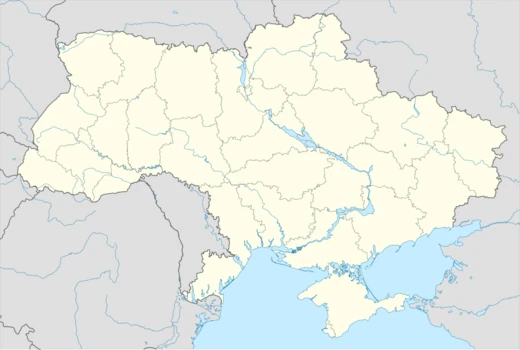
An oblast is Ukraine's primary first-level administrative division, functioning much like a province or state. Each one has its own regional capital, a locally elected council (rada), and a state administration appointed by the central government in Kyiv.
How many oblasts does Ukraine have?
Ukraine is divided into 24 oblasts, plus the autonomous republic of Crimea and the city of Kyiv, which holds a special administrative status outside any oblast.
Where should a newcomer start learning about the oblasts?
A good entry point is mapping each oblast to its capital city, since the capital often reflects the region's economic and cultural identity. From there, exploring the oblast's historical role—whether agricultural, industrial, or frontier—gives context for why its character developed the way it did.
What is the difference between an oblast and a raion?
An oblast is the top-tier subdivision of the country, while a raion is a smaller district nested inside an oblast. The 2020 administrative reform consolidated hundreds of raions into far fewer, larger units to streamline local governance.
Which oblast is the largest and which is the smallest by area?
Vinnytsia Oblast in the central-south is among the largest at roughly 76,800 square kilometres, while Kyiv Oblast, which surrounds the capital city, is one of the smallest at about 28,000 square kilometres.
Who are the key figures associated with an oblast's governance?
The most visible figure is the head of the oblast state administration, appointed by the President, who oversees day-to-day executive functions. The chair of the oblast rada (regional council) leads the legislative side, and together they shape local policy on budgeting, infrastructure, and education.
How were the oblast boundaries originally established?
The oblast system was introduced across the Soviet Union in the 1920s–1930s, and Ukraine's 24 oblasts were carved out during that period with further adjustments in the 1950s and 1961. Most boundaries have remained stable since the mid-20th century, though the 2020 reform reshaped the internal raion structure without redrawing oblast lines.
What are some notable record-holders or standout regions among the oblasts?
Odesa Oblast is widely recognised for its Black Sea port infrastructure and wine tradition, while Donetsk and Luhansk oblasts in the east are known for their heavy coal-and-steel industrial heritage. Ivano-Frankivsk Oblast in the west stands out for its mountainous Carpathian terrain and dense forest cover.
How do oblasts interact with the central government in Kyiv?
Oblasts implement national legislation and manage regional services such as roads, schools, and healthcare, but major fiscal and security decisions flow from the centre. The Verkhovna Rada (national parliament) can override oblast-level regulations, and the President retains the power to dismiss oblast administrators.
What impact did the 2014 and 2022 conflicts have on the oblast system?
Parts of Donetsk, Luhansk, Zaporizhzhia, and Kherson oblasts came under armed occupation, disrupting local governance and displacing large populations. The Ukrainian government continues to administer those territories from Kyiv and maintains their legal status as integral parts of Ukraine, while the western and central oblasts have largely continued normal administrative functions.