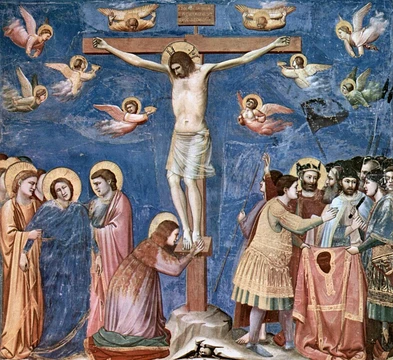
Roodmas
Feast of the Cross commemorating Saint Helena's finding.
Roodmas, from the Old English words for 'rod' or 'cross' and 'Mass', is a name for the Feast of the Cross. It commemorates the finding of the True Cross by Saint Helena in Jerusalem in 326. The term has been applied to both the May 3 and September 14 observances of this feast.
Quick Facts
- Etymology
- Old English rood 'rod', 'cross' and mas 'Mass'
- Date of finding
- September 14, 326
- Finder
- Saint Helena
- Location of finding
- Jerusalem
- Gallican feast date
- May 3
- Recovery date by heraclius
- May 3, 629
Facts from the source article.
Did You Know?
- In Scotland, Roodmas (or Féill Ròid) marks the start of the rutting season of the deer.
- It was held that if the night before Roodmas was wet, it would be followed by a month of dry weather.
- Market fairs were held in Scotland for Roodmas.
History
The feast of Roodmas originally celebrated the dedication of the Martyrium, and soon became tied to the discovery of the Cross. Saint Helena is said to have found the Cross on September 14, 326. Many legends grew around this event, and the story of the finding of the cross became widely popular in Christendom. The feast was added to the Western calendar in the seventh century, following Emperor Heraclius’s recovery of the cross from the Persians.
Around the same time, the Gallican Church began observing a Feast of the Cross on May 3. This later feast, called the Invention of the True Cross, marks the recovery of a portion of the Holy Cross by Emperor Heraclius on May 3, 629, after it had been taken by the Persians. According to Herbert Thurston, the portion kept in Jerusalem was lost to the Persians but later recovered and solemnly returned to Jerusalem on that date. This May 3 observance attracted particular attention among Celtic liturgists in the West.
Although it was ignored in the East, it spread through Celtic channels—first appearing in the Lectionary of Silos and the Bobbio Missal—and eventually gained general recognition under the mistaken name of the Invention of the Cross. The commemoration was especially popular in the historical Gallican Rite of the Catholic Church and was kept by the Western Church on May 3.
Later developments
After the Gallican and Latin rites merged, the two observances were kept separately: the Finding of the Holy Cross on May 3 and the Triumph of the Cross on September 14. Some Protestant denominations adopted this arrangement; the Church of England’s Book of Common Prayer sets Roodmas on May 3. In Devonshire, the feast was marked on the first Monday after May 3 with a parish boundary procession. In 1960, Pope John XXIII merged the two Latin Church celebrations into the single September 14 feast as part of his General Roman Calendar revisions, which removed duplicate feasts.
The Church of England later made the same change when it adopted Common Worship in 2000. In the Philippines, the Santacruzan—a pageant reenacting the Finding of the True Cross—still takes place in May, stemming from the pre-1955 Filipino Catholic practice of Roodmas. Many churches and communities dedicated to the Holy Cross or a Santo Cristo continue to observe May 3 as their patronal feast day.
More in True Cross
Spotted an error? Know more?
Reader corrections go straight into our review queue. Suggest an edit · How this site is sourced