
Antimatter (band)
UK gothic rock project evolving from duo to solo act.

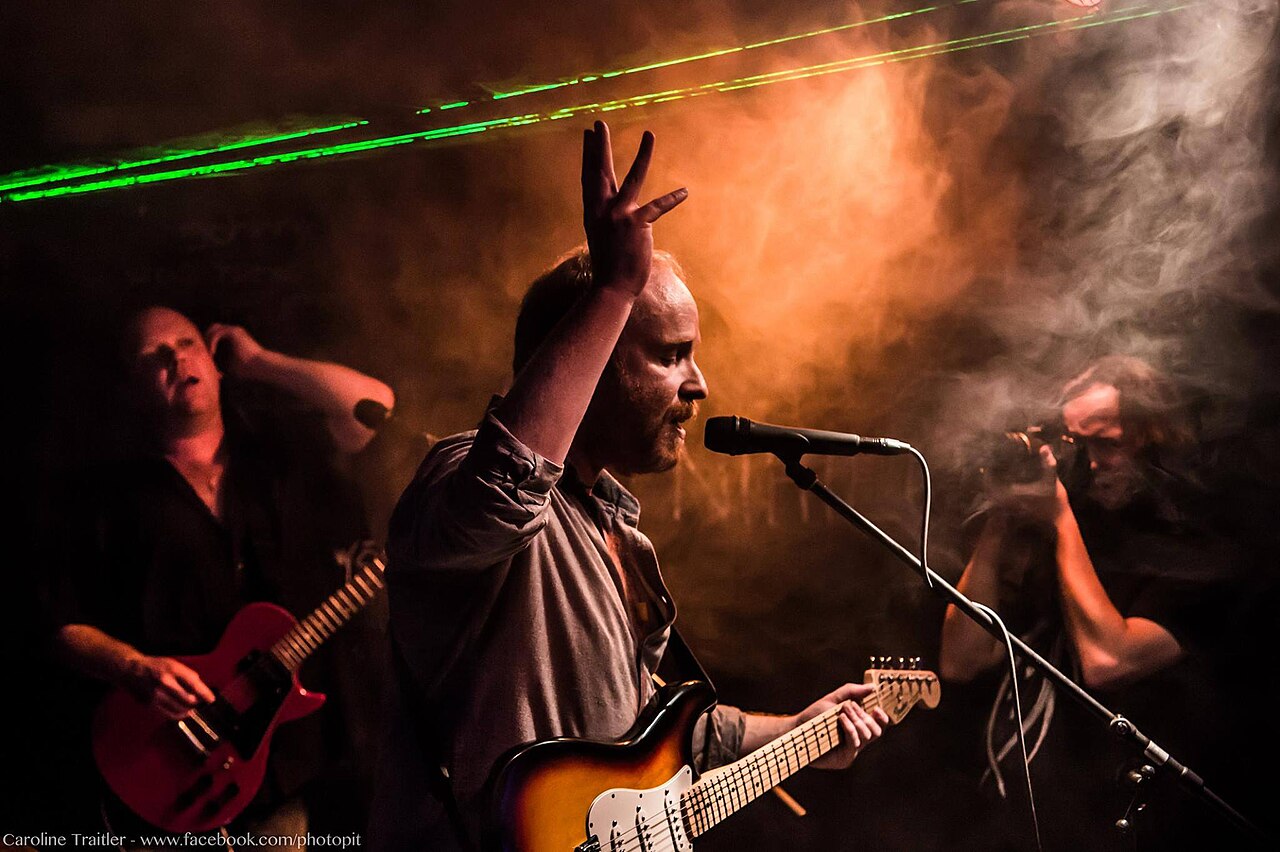
Ctraitler · CC BY-SA 4.0
Antimatter is a UK gothic rock band that began as a duo composed of Duncan Patterson (former bassist/songwriter of Anathema) and Mick Moss. The project was essentially an amalgamation of two solo projects working in tandem, with each member writing and arranging songs alone before compiling them in the studio. After three albums together, Patterson left in 2005, and Moss continued Antimatter as his solo project, releasing subsequent albums that expanded the band's sound.
Quick Facts
- Alias
- Angelica (1998)
- Origin
- Liverpool, England
- Genre
- Gothic rock · progressive rock · dark ambient · trip hop (early)
- Years Active
- 1998–present
- Label
- Prophecy Productions / The End / Music in Stone / Strangelight
- Current Members
- Mick Moss
- Past Members
- Duncan Patterson
Facts from the source article.
Lore & Background
In 1998, Duncan Patterson and Mick Moss independently created similar dark, melodic demos without hearing each other's work. Patterson, restless with Anathema, suggested they record together. After Patterson quit Anathema, they re-recorded Moss's tracks as a demo under the name 'Angelica', which was initially rejected by Peaceville Records. A cassette of the demo later reached a label run by a member of Cryptal Darkness, leading to a deal for their first album. Their debut, Saviour, was recorded in September 2000 at Academy Studios and featured mostly female vocals, with Moss singing on only two tracks. Their label failed to distribute enough copies, sparking a year-long dispute. In 2002, Moss declined an offer to join Anathema as bassist, and Danny Cavanagh briefly quit Anathema to join Antimatter before returning. Saviour was finally widely released in 2002 via Prophecy Productions and The End Records.
Reader's Guide
Antimatter's significance lies in its evolution from a collaborative duo to a solo vehicle for Mick Moss, who integrated diverse genres while maintaining a darkwave sensibility. The early albums, with their trip-hop vibe and female vocals, contrasted with later works where Moss handled all vocals and blended art rock, prog, metal, folk, shoegaze, British pop, and grunge. As described by journalist Dewey Gurall in 2016, this mix created something 'wholly original and emotionally moving'. The band's persistence through label disputes and lineup changes, including Patterson's departure to form Íon, demonstrates Moss's commitment to his artistic vision. Antimatter's discography, from the acoustic starkness of Planetary Confinement to the later albums like Black Market Enlightenment (2018), shows a consistent exploration of dark, melodic themes.
Did You Know?
- In 2002, Danny Cavanagh briefly quit Anathema with the intention of joining Antimatter, only to rejoin Anathema weeks later.
- Antimatter's version of Dead Can Dance's 'Black Sun' was included on the 2004 tribute album 'The Lotus Eaters - A Tribute To Dead Can Dance'.
The Convergence of Two Solos
In 1998, Duncan Patterson and Mick Moss arrived at nearly identical musical destinations without ever hearing each other's work. Patterson had just wrapped Anathema's Alternative 4, while Moss was deep into a set of demos. Both collections shared a dark, melodic, minimal aesthetic and a lyrical preoccupation with personal unease. Patterson, growing restless within Anathema, heard Moss's material and proposed they record together. He left Anathema that year and re-recorded three of Moss's tracks as a demo under the working name Angelica. Peaceville Records passed, deeming it too melodic and insufficiently heavy. Patterson then added a fourth composition, Holocaust, before an Australian band, Cryptal Darkness, connected him to a label willing to release the duo's debut. Their working method was distinctive: each member wrote and arranged his songs entirely alone, and the two only came together in the studio to assemble a finished album. This structure produced three records—Saviour, Lights Out, and Planetary Confinement—before Patterson departed in 2005 to form Íon.
Saviour and the Label War
The debut album Saviour was recorded in September 2000 at Academy Studios in Dewsbury, with Patterson contributing four tracks and Moss five. A pivotal creative decision came when Patterson suggested the project feature predominantly female vocals, performed by Michelle Richfield and Hayley Windsor, with Moss singing on only two songs. The album earned Album of the Year and Best Newcomer of the Year in Psycho! magazine in 2001. However, Icon Records, their label, manufactured only a small run of copies despite clear demand, and a twelve-month standoff ensued over the rights to the record. In early 2002, Moss declined an invitation to join Anathema as bassist, choosing to remain with Antimatter. Danny Cavanagh briefly quit Anathema to join the project before reversing course weeks later. Saviour finally received a proper European release through Prophecy Productions in July 2002, followed by a North American pressing from The End Records in September. Patterson then financed a five-date Western European tour in October, with Moss taking lead vocals and Cavanagh on bass.
A Sound in Constant Evolution
Dewey Gurall, writing for The Krakow Post in 2016, captured the band's sonic trajectory well. The early records carried a triphop sensibility with prominent female vocals, evoking Portishead and Zero 7. Over time, that electronic ambience and rhythmic foundation became more deeply woven into a tapestry of art rock, progressive rock, metal, folk, shoegaze, classic British pop, and even grunge, all while retaining a darkwave undercurrent. Moss handled lead vocals across the board, and what might read on paper as an impossibly crowded genre blend instead cohered into something Gurall called both wholly original and emotionally moving. This evolution was visible as early as Lights Out in 2003, where Moss shifted from guest female vocalists to singing most of his own material and half of Patterson's compositions. The album, recorded over a month at Sun Studios in Dublin, marked a clear departure from the debut's texture while maintaining the project's melodic and atmospheric core.
Moss's Solo Continuation
When Patterson left in 2005 to pursue Íon, Moss carried Antimatter forward as a solo extension of the timeline established across the first three discs. His fourth album, Leaving Eden, arrived in 2007, followed by a string of releases that showcased the project's growing independence. Live@An Club came out on Moss's own label, Music in Stone, signaling a move toward self-distribution. Subsequent albums—Alternative Matter, Fear of a Unique Identity, The Judas Table, Too Late, Welcome To The Machine, and Live Between The Earth & Clouds—demonstrated a musician unafraid to let the project's identity keep shifting. The most recent entry, Black Market Enlightenment, landed in 2018, nearly two decades after the debut. Throughout this solo era, Moss maintained the eclectic, genre-blending approach that defined the duo years, proving that the collaborative structure Patterson and Moss had pioneered could sustain a single artist's vision without losing its distinctive darkwave-tinged character.
Gallery
Frequently Asked Questions
Who is Antimatter (band)?
Antimatter is a UK gothic rock project that started as a pairing of Duncan Patterson (previously known for bass and songwriting in Anathema) and Mick Moss. After three albums as a duo, the name carried on as Moss's solo vehicle following Patterson's 2005 exit.
What are Antimatter's most notable albums?
The core trio from the duo era is Saviour (2001), Lights Out (2003), and Planetary Confinement (2005). Leaving Eden (2007) is the first record released under the Antimatter name as a purely solo Moss project.
How did Antimatter's songwriting process work?
Rather than jamming or co-writing in the room, Patterson and Moss each built their own catalog of fully arranged songs as separate solo efforts. The two independent bodies of material were then brought together and recorded as a single Antimatter album.
What happened after Duncan Patterson left the project?
Patterson stepped away in 2005, and Moss took full ownership of the Antimatter name, continuing to release new material as a one-man operation. His subsequent records broadened the palette beyond the melodic, duo-driven sound of the earlier records.
Why is Antimatter considered significant in UK gothic rock?
The project sits at a crossroads between Patterson's melodic sensibility honed in Anathema and Moss's darker, more atmospheric arrangements, giving the UK gothic scene a distinctive voice during the early-2000s. Its evolution from a true duo into a solo act also made it a useful case study in how small gothic-rock projects can reinvent themselves.
More in Trip hop groups 1-24
Spotted an error? Know more?
Reader corrections go straight into our review queue. Suggest an edit · How this site is sourced