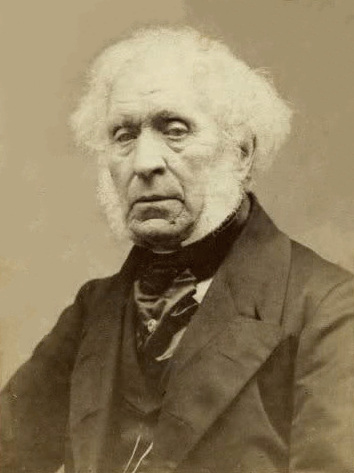
David Brewster
British scientist, inventor of the kaleidoscope and stereoscope.
Last updated

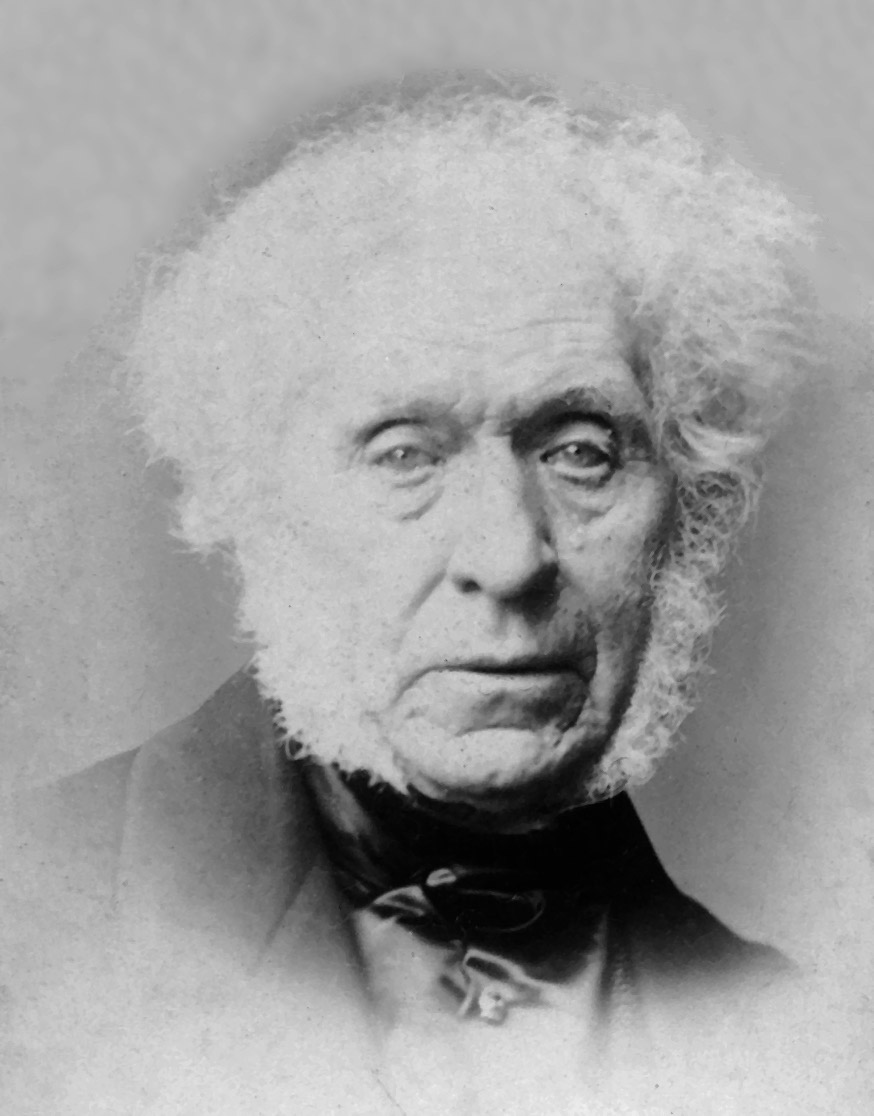
David Brewster · CC0
Sir David Brewster (11 December 1781 – 10 February 1868) was a British scientist, inventor, author, and academic administrator. He is principally remembered for his experimental work in physical optics, including the discovery of Brewster's angle, the study of polarization of light, and significant contributions to optical mineralogy through his observation of photoelasticity. He was also a pioneer in photography and invented the kaleidoscope and the lenticular stereoscope.
Lore & Background
David Brewster was born in Jedburgh, Roxburghshire, to Margaret Key and James Brewster, the rector of Jedburgh Grammar School. He was the third of six children.
At age 12 he matriculated at the University of Edinburgh, intending to become a clergyman, and received his MA in 1800. Though licensed as a minister, his interest in natural sciences, fostered by a close association with telescope-maker James Veitch of Inchbonny, led him away from the pulpit. In 1799, fellow student Henry Brougham persuaded him to study the diffraction of light, beginning his optical research.
Brewster's most important discoveries include the laws of light polarization by reflection and refraction, the discovery of polarizing structure induced by heat and pressure, biaxial crystals, and the production of double refraction by irregular heating. He invented the kaleidoscope around 1815, which became a massive commercial success though it yielded him no direct financial benefit due to patent infringement. He also improved the stereoscope, creating the lenticular stereoscope, the first portable 3D-viewing device, and invented two types of polarimeters, the polyzonal lens, and the lighthouse illuminator.
Brewster was a devout Presbyterian and marched arm-in-arm with his brother during the Disruption of 1843, which led to the formation of the Free Church of Scotland. He was a historian of science focused on Isaac Newton, publishing a detailed biography in 1831 after studying many of Newton's unpublished papers. He served as Principal of the University of St Andrews (1837–1859) and later of the University of Edinburgh (1859–1868), and edited the 18-volume Edinburgh Encyclopædia.
Pioneering the Science of Light
David Brewster's experimental work in physical optics cemented his reputation as one of the most original investigators of the nineteenth century. His inquiries spanned five major areas: the quantitative laws governing polarization by reflection and refraction; the polarising effects induced by heat and mechanical pressure; the identification and study of biaxial crystals with their double-refraction phenomena; the behavior of metallic reflection; and the absorption of light. Among his most consequential findings was the relationship between a material's refractive index and its polarizing angle, now universally known as Brewster's angle.
He also demonstrated that irregular heating could produce double refraction in materials, and he discovered photoelasticity by studying how crystals behaved under compression, effectively founding the field of optical mineralogy. William Whewell, recognizing the breadth of this achievement, called him the "father of modern experimental optics" and compared him to Johannes Kepler. His work earned him the Copley Medal in 1815, a prize from the French Institute in 1816, and foreign memberships in the Royal Swedish Academy of Sciences and the American Academy of Arts and Sciences.
Inventions That Captivated the Public
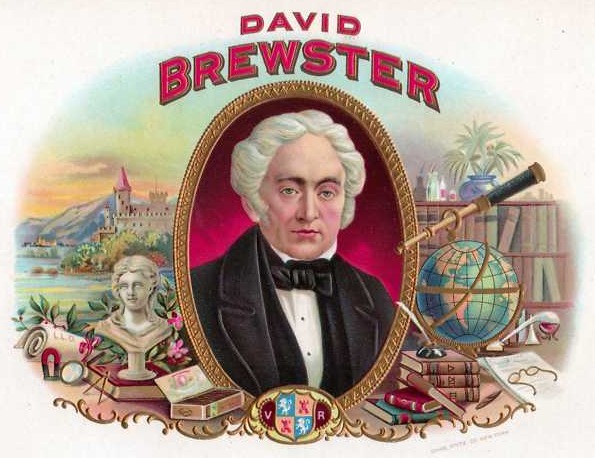
Beyond the laboratory, Brewster's inventive mind produced devices that reached far beyond academic circles. Around 1815 he devised the kaleidoscope, a simple yet mesmerizing toy that generated enormous demand across Britain, France, and the United States. He appointed Philip Carpenter as its sole manufacturer in 1817 and secured a British patent, yet a prototype had already been shown to London opticians and copied before the patent was granted. The result was a commercial phenomenon—two hundred thousand units sold in London and Paris within three months—while Brewster himself saw no direct financial reward.
His portrait even appeared on cigar boxes as a testament to the device's popularity. In 1849 he introduced the lenticular stereoscope, the first portable three-dimensional viewing instrument, though the underlying principle had been demonstrated earlier by Charles Wheatstone in 1838 using a mirror-based apparatus. Brewster's reluctance to credit Wheatstone with the invention became a lasting point of contention. He also developed the stereoscopic camera, two types of polarimeters, the polyzonal lens, and a lighthouse illuminator, each extending the practical reach of optical science into everyday life.
Shaping Scottish Higher Education
Brewster's influence on Scottish academia was profound and sustained. From 1837 to 1859 he served as Principal of the University of St Andrews, and from 1859 until his death in 1868 he held the same position at the University of Edinburgh, making him the public face of higher education in Scotland for over three decades.
His scholarly output extended well beyond optics: he edited the eighteen-volume Edinburgh Encyclopædia, a monumental reference work, and he was among the founders of the British Science Association, which he led as president in 1849. His interest in the history of science led him to publish a detailed biography of Isaac Newton in 1831 and to become the first scholar to examine many of the unpublished documents in Newton's Nachlass, the archive of papers left after the great mathematician's death. These efforts positioned Brewster not merely as a working scientist but as a curator and communicator of the broader scientific heritage, bridging the gap between specialized research and public understanding.
Faith, Family, and a Life in Jedburgh
David Brewster was born on 11 December 1781 in the Canongate of Jedburgh, Roxburghshire, the third of six children—two daughters and four sons—of Margaret Key and James Brewster, the well-regarded rector of Jedburgh Grammar School. His brothers James, George, and Patrick all went on to ministerial careers in various Scottish parishes. At twelve, Brewster matriculated at the University of Edinburgh with the intention of entering the clergy. He completed his MA in 1800, was licensed as a minister of the Church of Scotland, and preached in Edinburgh on several occasions, though his growing passion for natural science steadily drew him away from the pulpit.
His devout Presbyterian convictions, however, never fully faded. During the Disruption of 1843, which produced the Free Church of Scotland, Brewster marched arm-in-arm with his brother James in the processions that marked the schism. He was ultimately buried in the grounds of Melrose Abbey, in his native Roxburghshire, a quiet resting place for a man whose restless intellect had reshaped the study of light.
Reader's Guide
Sir David Brewster's significance lies in his foundational contributions to physical optics, particularly the discovery of Brewster's angle and the creation of optical mineralogy through photoelasticity. His inventions, especially the kaleidoscope and the lenticular stereoscope, brought scientific principles to popular culture and practical use. The kaleidoscope became a worldwide sensation, while the stereoscope advanced 3D viewing. Brewster also improved lighthouse illumination through his dioptric apparatus, pressing for its adoption years before Fresnel.
As an academic administrator, he shaped higher education in Scotland as Principal of two universities. His historical work on Isaac Newton helped preserve and interpret Newton's legacy. Brewster was a founder and later president of the British Science Association, and his editorial work on encyclopedias and journals disseminated scientific knowledge widely. Despite disputes over priority—such as with the stereoscope, where he credited Mr. Elliot rather than Sir Charles Wheatstone—Brewster's independent discoveries and inventions mark him as a key figure in 19th-century science.
More in Toy inventors
Sources
Compiled from Wikipedia and the sources listed below. Text from Wikipedia is available under CC BY-SA 4.0; this entry is adapted from it.
- Wikipedia: David Brewster (CC BY-SA 4.0).
Spotted an error? Know more?
Reader corrections go straight into our review queue. Suggest an edit · How this site is sourced