Frequently Asked Questions
The most-asked questions about touring cars.
What exactly is a touring car?
A touring car is a racing vehicle built from a mass-produced road car, modified with performance upgrades while retaining the general shape and identity of the original model. This production-based philosophy is what distinguishes the category from open-wheel or prototype racing.
What are the biggest touring car series around the world?
The most prominent include the British Touring Car Championship (BTCC), Australia's Supercars Championship (formerly V8 Supercars), Germany's DTM, and the World Touring Car Cup (WTCR). Each operates under its own regulations and calendar but all share the core touring car concept.
What makes touring car racing different from Formula 1 or other top-level motorsport?
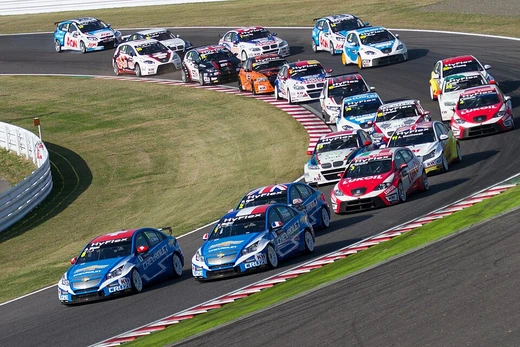
Touring car races are known for extremely close, wheel-to-wheel competition because performance-equalization rules keep all cars within a tight time window, so driver skill and strategy matter more than raw horsepower gaps. Races frequently feature chaotic overtaking battles, multi-car incidents, and last-lap finishes that keep spectators on edge.
Who are some of the most iconic touring car drivers?
Names like Colin McRae, Matt Neal, Jamie Whincup, and Dirk Müller have become household figures across different eras and series. More recently, drivers such as Josh Kerr and Chaz Mostert have captured global attention with their dominance in their respective championships.
Where should a complete beginner start watching touring cars?
The BTCC is often recommended for new fans because of its long broadcast history, dramatic multi-race formats, and accessible commentary in English. V8 Supercars is another great entry point, especially for those drawn to long-distance endurance events and the Australian racing culture.
What does 'close racing' mean in the touring car context?
It refers to the fact that regulatory cost caps and performance equalization rules keep all competitors within a tight time window, so races are decided by small margins rather than one car being clearly faster. This produces the tight packs, bumping, and constant position swaps that define the spectacle.
Can you name a few legendary touring car rivalries or moments?
The long-running duel between Matt Neal and Andy Priaulx in the BTCC produced some of the sport's most memorable battles. In V8 Supercars, Jamie Whincup's dramatic 2018 Bathurst 1000 comeback is often cited as one of the greatest endurance races ever run.
How are touring cars actually built and regulated?
Manufacturers or their partners take a production model and fit it with a roll cage, racing suspension, a powerful engine, and aerodynamic additions, all within a strict rulebook that limits cost and performance spread. Governing bodies such as the FIA or national motorsport federations set these technical and budget regulations each season.
Why do touring car races often end in chaos or multi-car incidents?
Because the cars are nearly identical in pace and race in dense packs, minor contact or a single mistake can trigger a chain reaction of collisions. The combination of tight circuit layouts, aggressive overtaking, and close wheel-to-wheel contact makes incidents a recurring part of the format.
Is touring car racing still growing or has it peaked?
The category continues to evolve, with new series emerging in Asia and the Middle East while established championships invest in hybrid powertrains and digital fan engagement. Interest remains strong globally, particularly in the UK, Australia, and Germany, suggesting the format still has significant momentum.