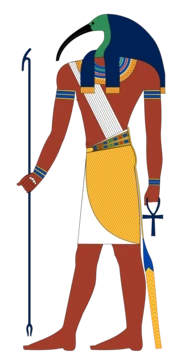
360-day calendar
A 360-day calendar used in finance, ancient cultures, and prophecy.
The 360-day calendar is a method of measuring durations used in financial markets, computer models, ancient literature, and prophetic literary genres. It derives from averaging the solar year of 365.2425 days and the lunar year of 354.3829 days, yielding 359.8127 days, which rounds to 360. A 360-day year consists of 12 months of 30 days each, requiring certain days to be skipped when converting from the standard Gregorian calendar.
Quick Facts
- Solar year length
- 365.2425 days
- Lunar year length
- 354.3829 days
- Average year length
- 359.8127 days
- Rounded year length
- 360 days
- Months per year
- 12
- Days per month
- 30
Facts from the source article.
Ancient Calendars
Many early civilizations used a 360-day year. Plutarch wrote that Rome’s first calendar had 360 days with months of different lengths, but Macrobius and Censorinus described an earlier Roman calendar of 304 days across ten months. The Rig Veda mentions a 360-day year divided into twelve months. In the Maya Long Count, the tun, a year-like unit, was 360 days. Ancient Egyptians also followed a 360-day calendar, and a myth explains how five extra days were later added.
Financial use
In financial contexts, a duration is calculated as an integral number of days between a start date and an end date, with the difference in years, months, and days usually computed separately. Several methods exist, differing in how they handle months that are not 30 days long. Under one method, if either date falls on the 31st of the month, that date is changed to the 30th; if date B falls on the last day of February, the actual date B is used; all months are considered to last 30 days, so a full year has 360 days, though another source says February has its actual number of days. Another method states that if both dates fall on the last day of February, date B is changed to the 30th; if date A falls on the 31st or the last day of February, date A is changed to the 30th; if after that date A is the 30th and date B falls on the 31st, date B is changed to the 30th; all months are considered 30 days, so a full year has 360 days. A further method specifies that if date A falls on the 31st, it is changed to the 30th; if after that date A is the 30th and date B falls on the 31st, date B is changed to the 30th; all months are considered 30 days except February, which has its actual length, but any full year always counts for 360 days. Another approach changes date A to the 30th if it falls on the 31st or the last day of February; if after that date A is the 30th and date B falls on the 31st, date B is changed to the 30th; all months are considered 30 days, so a full year has 360 days. Yet another method changes date A to the 30th if it falls on the 31st; if date B falls on the 31st, it is changed to the 1st of the following month; if date B falls on the last day of February, the actual date B is used; all months are considered 30 days, so a full year has 360 days.
More in Thoth
Spotted an error? Know more?
Reader corrections go straight into our review queue. Suggest an edit · How this site is sourced