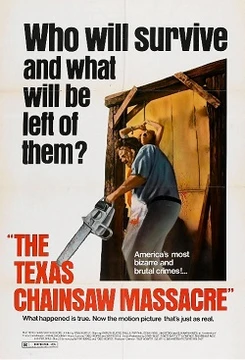
Texas Chainsaw Massacre: The TV Series (1993)
Thirteen episodes. One family. A chainsaw that never stops screaming.
The Texas Chainsaw Massacre (1993) is a thirteen-episode syndicated television series that transplanted the iconic 1974 film's rural-horror mythology into a serialized format. Set in the same sun-baked, backwater Texas landscape, the series follows the Sawyer family—led by the masked, chainsaw-wielding Leatherface—as they stalk and terrorize a small community of outsiders who have wandered too close to their decaying farmhouse domain.
The series occupies a curious niche in the franchise: produced during the early-1990s wave of horror television, it was designed to keep the Leatherface brand in weekly rotation for a syndicated audience. While it never achieved the cultural footprint of the theatrical films, it remains a cult artifact for fans who appreciate its commitment to the original's slow-burn dread and its unflinching portrayal of a family that has calcified into something monstrous.
Quick Facts
- Format
- Syndicated television series
- Year
- 1993
- Episodes
- 13
- Based on
- The Texas Chainsaw Massacre (1974)
- Setting
- Rural Texas, isolated farmhouse and surrounding backwater town
- Central antagonist
- Leatherface; The Sawyer family
- Franchise position
- Standalone series; does not directly continue 1974 or 1986 plotlines
Lore & Background
In the shared mythology of the franchise, the Sawyer family represents a lineage of rural degeneracy that has outgrown the social contract. Their farmhouse, perpetually draped in cured hides and the stench of open meat, is less a home than a shrine to appetite. Leatherface—tall, silent, bound to a mask that has become more identity than disguise—is the family's enforcer, the one who carries the blade when words fail. The 1993 series leans into this domestic-horror angle, treating the family's cannibalism not as a single night's spree but as a sustained, almost ritualistic way of life that the surrounding town has learned to tolerate at a distance.
The series' lore extends the 1974 film's themes of complicity and small-town silence. Neighbors who hear the screaming at night do not call the sheriff; they close their shutters. The outsiders who arrive each week are not random victims but symbols of the outside world's intrusion into a closed, decaying ecosystem. The Sawyer family does not merely kill; they consume, incorporate, and erase, as if each victim is a thread pulled from the fabric of the community that once pretended not to see them.
As a serialized format, the 1993 show allows the mythology to breathe in ways a feature film cannot. Leatherface's mask is repaired, re-stitched, and re-worn across episodes. The chainsaw is sharpened, its teeth set anew. The farmhouse accumulates another layer of grime. This slow accretion of horror—episode by episode—gives the family a sense of deep, geological time that the theatrical entries, bound to a two-hour arc, can only imply.
Reader's Guide
The 1993 syndicated series reimagined the Sawyer family's rural Texas domain as a recurring threat to a small community. Across its thirteen episodes, Leatherface and his kin stalk a group of outsiders who stumble into their territory, each installment escalating the family's violence while the community slowly unravels.
Timeline placement: The series operates in the same general mythos as the 1974 original—rural Texas, a decaying farmhouse, a family of cannibals led by Leatherface—but it does not directly continue the 1974 or 1986 storylines. It functions as a standalone "what-if" take, closer in spirit to the original's tone than to the sequels.
Key beats: Outsiders arrive in a backwater town; the Sawyer family operates from their isolated property; Leatherface's mask and chainsaw are central; the community's complicity and fear mirror the original film's themes.
Relation to other entries: It shares DNA with the 1974 film (rural setting, family unit, Leatherface) but diverges from the 1986 and 1990 sequels in tone. It predates the 2003 reboot and the 2015/2023 modern entries, making it a bridge-era artifact.
Timeline contradictions: The series never explicitly places its events relative to the 1974 or 1986 films, leaving its position in the shared world deliberately ambiguous.
Did You Know?
- During the early 1990s, the franchise was in a transitional period between the 1986 sequel and the 1990 direct-to-video entry; the TV series helped keep the Leatherface brand in weekly public rotation during that gap.
- Fans often describe the series as a 'forgotten' or 'lost' entry because it received limited promotion, was not widely available on home video for years, and is frequently omitted from modern franchise retrospectives.
More in Films & Timeline
Elsewhere in The Texas Chainsaw Massacre
Spotted an error? Know more?
Reader corrections go straight into our review queue. Suggest an edit · How this site is sourced