Gunnar Hansen
A Danish carpenter walked onto a Texas set and became the face of modern horror.
Gunnar Hansen was a Danish carpenter and woodworker who, during the pre-production of Tobe Hooper's low-budget horror film in 1973, walked into a role he could never have anticipated. With no acting résumé, no film training, and only rudimentary English, Hansen's towering frame and quiet, almost vacant intensity made him an almost accidental but perfect fit for the silent, mask-wearing figure that would define a genre. He was not an actor seeking a part; he was a tradesman who happened to be the right height and the right kind of still when Hooper needed someone who could fill a frame without saying a word.
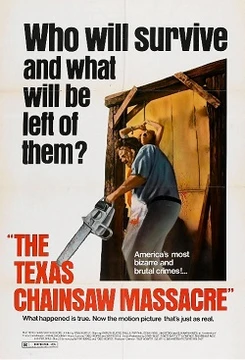
His performance in the 1974 original remains one of the most iconic in horror cinema. Hansen's Leatherface was not a cackling villain but something more unsettling—a figure of confused, almost pitiable menace whose violence felt accidental, born of a broken family dynamic and a man who simply did not understand the world around him. That ambiguity, delivered by someone essentially performing for the first time in his life, gave the character a rawness that rehearsed, scripted performances often lack. Audiences in 1974 and in every year since have remembered not a script but a presence, and that presence was Gunnar Hansen.
Quick Facts
- Nationality
- Danish
- Role
- Actor — Leatherface
- First appears
- The Texas Chainsaw Massacre (1974)
- Pre-film occupation
- Carpenter; woodworker
- Cast by
- Tobe Hooper
- Status
- Deceased (2015)
Lore & Background
Before he was a name on a horror poster, Gunnar Hansen was a man who worked with his hands in Denmark, shaping wood and building structures. He was in his mid-twenties when Tobe Hooper, searching for a physical type to anchor a film he was assembling on a shoestring in the Texas Hill Country, found him. The casting was reportedly less a formal audition than a meeting between a director with a vision and a tall, quiet young man who could stand still and look wrong in a way that felt organic rather than performed. Hansen's limited English was not a liability on set; it became part of the character's alienation, his inability to articulate what he was feeling or doing.
The film's production conditions were grueling by any standard. Shot in the sweltering heat of rural Texas with a crew that doubled as laborers, the schedule was compressed and the budget was vanishingly small. Hansen spent long hours in the mask, in the dust, in the flies, performing a role that required more physical endurance than dialogue. What he brought to those conditions was a kind of blank, animal patience that made Leatherface feel less like a monster and more like a man who had been broken by his surroundings and simply could not stop moving. That sense of trapped, confused violence became the emotional core of the franchise.
After the film's release and its immediate, almost shocking reception, Hansen found himself typecast in the public imagination. He went on to work in other productions, but the mask—both the literal one and the metaphorical one—stuck. For fans, Gunnar Hansen and Leatherface became inseparable, a pairing that endures because the performance felt so found rather than made. He passed away in 2015, but the image of that tall, silent figure shuffling through the Texas dust remains one of horror cinema's most enduring silhouettes.
Reader's Guide
Tobe Hooper needed a body, not an actor. The 1974 Texas Chainsaw Massacre was being assembled in the Texas Hill Country on a budget so thin the crew ate what they could scrounge and slept in the same rooms they shot in. When Hooper was searching for someone to inhabit the Leatherface role, he bypassed the usual casting pipelines and found Gunnar Hansen—a Danish carpenter in his mid-twenties with no screen credits and barely functional English. The decision was practical and, in hindsight, genius: Hansen's physicality was the performance. He did not interpret Leatherface; he was a six-plus-foot frame wearing a mask and holding a tool, and that was enough.
The production was a gauntlet. Long days in the Texas heat, a mask that was uncomfortable and limiting, a chain-saw that was loud, heavy, and dangerous in close quarters. Hansen had to hit marks, hold still for long takes, and convey menace without a single line of dialogue. What went right was the constraint itself: the lack of a polished actor meant the performance had no safety net, no rehearsed tic to fall back on. The result felt feral, unpolished, real in a way that a trained performer might have over-controlled.
What stuck in audiences' memories was not a scene but a texture—the sound of boots in dirt, the creak of the mask, the way Hansen's shoulders hunched under the weight of the thing in his hands. Decades later, fans still describe Leatherface not as a character but as a presence, and that is a credit to a carpenter who walked onto a set in 1973 and never fully left it.
Did You Know?
- Gunnar Hansen was a carpenter and woodworker in Denmark before being cast in the 1974 film, with no prior acting experience to his name.
- His limited command of English at the time of filming was not a hindrance on set; it reinforced Leatherface's alien, non-verbal quality in the performance.
- Hansen's physical presence—his height, his stillness, his willingness to simply stand in the mask for long takes—became the defining visual language of the franchise's most iconic character.
More in Behind the Scenes
Elsewhere in The Texas Chainsaw Massacre
Spotted an error? Know more?
Reader corrections go straight into our review queue. Suggest an edit · How this site is sourced