
King (SNK)
French Muay Thai fighter who hid her gender to compete.

King debuted in 1992 as a character in SNK’s *Art of Fighting* series. A French bartender working in South Town, she initially fights Ryo Sakazaki and Robert Garcia while they search for Yuri Sakazaki, later switching sides to help them. In *Art of Fighting 2*, her motivation shifts to earning prize money for an operation to heal her brother Jan’s legs. King is best known as the captain of the Women Fighters Team in *The King of Fighters* series, a role she has held since the team’s introduction in *The King of Fighters ’94*. She maintains close ties with teammates Yuri and Mai Shiranui, and also frequently joins the Art of Fighting Team. Beyond her home series, King has appeared in SNK’s crossovers with Capcom and in adaptations of both *Art of Fighting* and *The King of Fighters*.
SNK created King with the idea of hiding a female fighter among the male roster of *Art of Fighting*. Her design was modeled after actress Grace Jones, but the final look came across as masculine. For *Art of Fighting 2*, a more feminine design with skimpy clothing was considered but ultimately rejected. Over time, her appearance shifted from a manly woman to a more feminine figure, especially in *The King of Fighters*, where her inclusion reflected SNK’s push to feature more female characters. Early critical response was mixed due to her ambiguous gender presentation, but she later earned praise for her development as a recurring character and her distinctive Muay Thai moves.
King stands at a height of 5 feet 8 inches, with measurements of 86-57-86 cm (34-22-34 in). She was voiced by Harumi Ikoma. Her fighting style is Muay Thai kickboxing, featuring powerful special moves like her projectile attack. In *The King of Fighters ’94*, the England Team (later renamed Women Fighters) originally consisted of King, Billy Kane, and Big Bear. Yuri Sakazaki replaced Billy Kane, and Mai Shiranui took Big Bear’s place, forming the team that became a staple. Battle designer Toyohisa Tanabe conceived the team after learning Yuri would become a fighter in *Art of Fighting 2*. Though teams were originally named after countries, planners noted that King, a French character, did not fit the England Team label. Her projectile move was nearly cut from *KOF* due to concerns about originality, but her designer insisted on keeping it, and it was well received.
Artist Shinkiro’s illustrations for the Women Fighters team depict King in her *Art of Fighting 2* design rather than her *KOF* look. For *The King of Fighters ’98*, sketches adjusted her appearance to match earlier games. Shinkiro noted details like her jacket having only one pocket and her shoe heels not being too high. In *The King of Fighters XIII*, King was modeled after her *Art of Fighting* incarnation, wearing a tuxedo more in line with that series. A new move, the “Airborne Venom Strike,” was added—a projectile fired from a high position that is hard to avoid by jumping and leaves little room for error. Her “Surprise Rose” move was based on *The King of Fighters 2002: Unlimited Match* and became more central to her design. Her Neomax, a stronger version of the Venom Strike, was designed to match the level of the Kyokugen technique “Haoh Shokou Ken” used by *Art of Fighting* protagonists, so its visuals received special attention. For *The King of Fighters XIV*, battle director Yuji Watanabe considered giving King new special moves, but the idea was dropped in favor of keeping her original moveset.
Quick Facts
- First Game
- Art of Fighting (1992)
- Series
- Art of Fighting and The King of Fighters
- Origin
- France
- Fighting Style
- Muay Thai kickboxing
Facts from the source article.
Lore & Background
King debuted in Art of Fighting (1992) as a bouncer hired by Mr. Big, opposing protagonists Ryo Sakazaki and Robert Garcia. After defeat, she helps them find Yuri Sakazaki. In Art of Fighting 2, she enters a tournament to win prize money for her ill brother Jan's operation; Ryo and Robert ultimately fund it. King is absent from Art of Fighting 3. She also appears in the Japanese animated television film Art of Fighting, though not as an antagonist—she is not present in that film.
In The King of Fighters series, King first appears in The King of Fighters '94 as part of the Women Fighters Team alongside Yuri Sakazaki and Mai Shiranui. She often switches to the Art of Fighting Team. Across the series, King and Ryo are attracted to each other, leading to gags where teammates try to bring them closer. The King of Fighters '98 Ultimate Match gave King an alternate persona based on her Art of Fighting incarnations. She also appears in spin-offs such as The King of Fighters: Kyo, Neowave, and the mobile game The King of Fighters All Star, as well as crossover games Capcom vs. SNK: Millennium Fight 2000 and Capcom vs. SNK 2, and the love simulator Days of Memories.
Reader's Guide
King's significance lies in her role as SNK's first female fighter in Art of Fighting, created under the idea of disguising a female among male fighters. Inspired by Grace Jones, her design evolved from a manly appearance to a more feminine one in later products, notably in The King of Fighters series, where her inclusion reflected SNK's increased focus on female characters. Critical response was initially ambiguous due to her hidden gender, but she was praised for development across The King of Fighters, becoming a recurring character with an appealing Muay Thai moveset. Her special moves include Venom Strike, Surprise Rose, and Airborne Venom Strike. King's legacy is tied to her role as leader of the Women Fighters Team and her appearances in crossovers, cementing her as a staple of SNK's fighting game universe.
Did You Know?
- King was modeled after actress Grace Jones, famous for her role as May Day in the James Bond film A View to a Kill (1985).
- Her initial design in Art of Fighting was meant to hide her gender, with manly clothes but feminine earrings.
- King is French but was originally placed on the Women Fighters Team in The King of Fighters '94.
- Her special move Surprise Rose was nearly cut from The King of Fighters series but was kept after her designer 'whipped' it.
Origins & the Birth of a Crossover
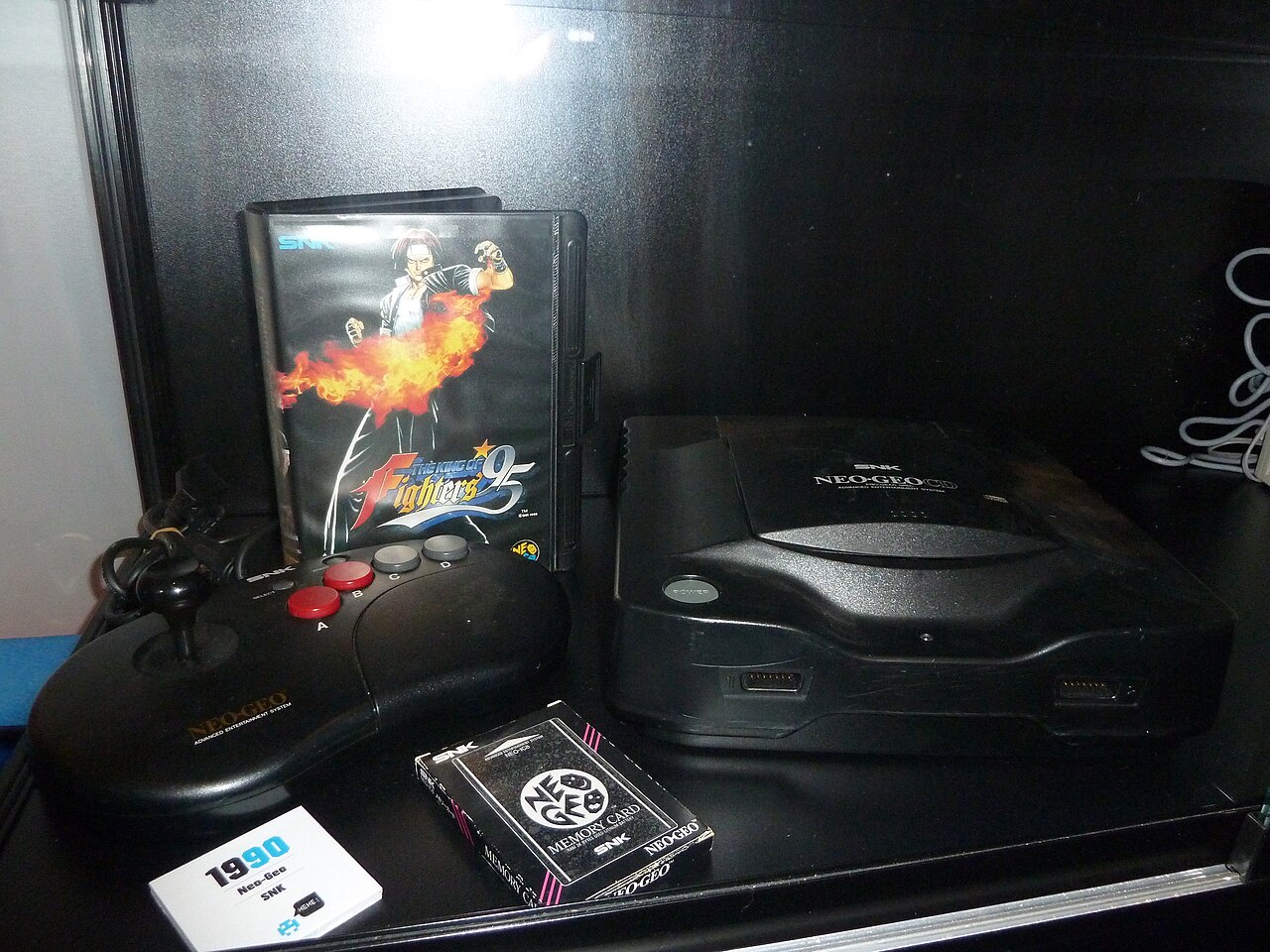
The King of Fighters '94 launched on August 25, 1994, on SNK's Neo Geo MVS arcade hardware, and it set the table for everything that followed. The game wove together fighters from Fatal Fury and Art of Fighting while also adapting characters from non-fighting SNK properties such as Ikari Warriors and Psycho Soldier into a versus-fighting context. Masanori Kuwasashi designed original characters exclusively for the series, and among them Kyo Kusanagi rose as a defining protagonist — the heir of a clan destined to confront the Yamata no Orochi demon. The title's commercial success convinced SNK to commit to a yearly release cadence, with each entry simply numbered by its release year. KOF '95 kicked off the "Orochi Saga" narrative and introduced free team-building, allowing players to assemble any three-character squad from the roster. '96 deepened that story with character-specific endings, and '97 closed the arc. Together, these early entries established the series' core identity: a tournament framing device that united SNK's disparate fighting-game properties under a single, cohesive roof.
Story Arcs & the Shifting Protagonist
After the Orochi Saga wrapped in '97, the series oscillated between narrative-driven and storyless entries. KOF '98 and later 2002 dropped the plot entirely, marketing themselves as "Dream Match" gatherings where players could select nearly every character from prior titles, including those considered canonically dead. The NESTS Chronicles, spanning '99 through 2001, introduced K' — a fighter who wields fire much like Kyo after experiments conducted by the NESTS terrorist organization — and added the "Striker" system, in which a designated teammate could briefly assist in combat. The "Tales of Ash" arc, beginning in 2003, shifted focus to Ash Crimson, a trickster obsessed with obtaining the Three Sacred Treasures, and later to Shun'ei, a young fighter whose powers open the world to other dimensions. 2003 also let players swap characters mid-fight while trimming team size to three. KOF XIV (2016) established yet another new story arc in full 3D, and XV (2022) continued the franchise's ongoing narrative evolution.
Hardware, Bankruptcy & the Roman Numeral Era
The early KOF titles were anchored to the Neo Geo MVS arcade board, but SNK's financial collapse fundamentally reshaped production. KOF 2000 was the last entry produced before the company's bankruptcy, and both 2001 and 2002 were developed with assistance from the Korean studio Eolith. When SNK regained control with 2003 — the final game released on Neo Geo hardware — it also marked the end of the annual numbering convention. By 2004 the franchise had shifted to Roman numerals, and the first entry under that scheme, KOF XI, arrived in 2005 on the Atomiswave arcade board. KOF XII (2009) debuted on Taito Type X2 hardware, showcasing high-resolution hand-drawn 2D sprites against detailed 2D backgrounds, and that platform carried forward through the latest entry, XV (2022). KOF XIV (2016) represented a visual leap, adopting full 3D graphics and launching on PlayStation 4. The hardware migration mirrored SNK's own institutional reinvention in the years following its near-death experience.
Spin-offs, Crossovers & Enduring Popularity
Beyond the mainline, KOF spawned spin-offs such as the R duology for Neo Geo Pocket and Maximum Impact for PlayStation 2, alongside console ports of the arcade titles. Remakes kept the series in the public eye: KOF '94 Re-Bout (2004, PS2) added hi-res graphics, online play, and a playable Rugal Bernstein, while KOF '98 Ultimate Match (2008) expanded the roster and refreshed visuals. The franchise's cultural reach extended well past SNK's own catalog. Capcom and SNK produced dedicated crossover titles, and individual KOF characters became guest stars in other publishers' games — Mai Shiranui appeared in Dead or Alive and Street Fighter 6, Geese Howard in Tekken 7, Kula Diamond in Dead or Alive 6, and Terry Bogard in Fighting EX Layer, Super Smash Bros. Ultimate, and Street Fighter 6. Critics have generally praised the series, frequently singling out its team-based combat structure and balanced gameplay as standout design choices that set it apart in the fighting-game landscape.
Gallery



Frequently Asked Questions
Who is King (SNK)?
King is a French Muay Thai fighter who debuted in Art of Fighting in 1992 and went on to become a recurring main character in The King of Fighters series. Standing at 174 cm, she is best recognized as the captain of the Women Fighters Team.
Why did King disguise her gender?
In her original Art of Fighting introduction, King presented herself as a male competitor so she would be taken seriously in the fighting scene. The ruse was eventually dropped, and she competed openly as a woman in later appearances.
What fighting style does King use?
King's combat is built around French Muay Thai, emphasizing devastating midsection and head kicks along with clinch work. Her moveset in the games centers on powerful low and high kicking combinations.
What role does King play in The King of Fighters storylines?
King serves as the leader and anchor of the Women Fighters Team, regularly teaming up with fighters like Mai Shiranui and Nana. She is one of the most consistently present characters across the KOF franchise's narrative entries.
How did King move from Art of Fighting into KOF?
King was originally created for SNK's Art of Fighting in 1992, and her popularity as a crossover character carried her into The King of Fighters as a mainstay. She has appeared in nearly every major KOF entry since, cementing her status as a long-running franchise icon.
More in The King of Fighters characters 1-17
Spotted an error? Know more?
Reader corrections go straight into our review queue. Suggest an edit · How this site is sourced