Warp and weft
The two basic components in weaving textile fabrics.
Last updated
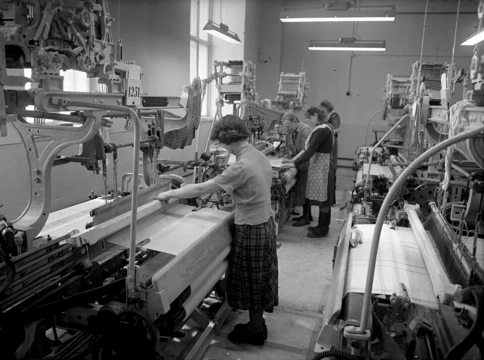
In cloth production, thread and yarn are turned into textiles through the two essential weaving elements known as warp and weft.[1] On a loom, the vertical warp yarns remain fixed under tension, while the horizontal weft is inserted across them.[1] A single warp thread is termed a warp end, and a single weft thread that goes across the warp is referred to as a pick.[1]
Key facts and history
The warp is the set of yarns stretched on a loom before the weft is introduced during weaving.[2] In the 18th century, the Industrial Revolution industrialized textile production with the picking stick and the flying shuttle, invented by John Kay in 1733.[3] In 1785, Edmund Cartwright received a patent for the mechanized power loom, which achieved a rate of sixty picks per minute.[3] Fabrics that are warp-faced have warp threads arranged densely, and because the design appears in the warp, all colors must be chosen and set during the initial weaving stage.[4]
Backstrap weaving, which relies on the weaver's own body weight to regulate loom tension, was practiced by many South American cultures, such as the ancient Incas and Aymaras.[4]
What the cited sources add
The Dictionary.com entry states that "warp and woof" has been used figuratively since the second half of the 1500s to mean the underlying structure or foundation of something.[5] The phrase appears in modern usage such as "the warp and woof of British foreign policy" and "the warp and woof of the community fabric".[5] A 2018 Los Angeles Times article used the phrase "narrative warp and woof" in discussing women's absence as storytellers in movies.[5]
References
- Wikipedia, "Warp and weft" (CC BY-SA 4.0), which cites: "Weft", The George Washington University Museum and The Textile Museum; Burnham (1980), pp. 170, 179 (original not read by us) en.wikipedia.org
- Wikipedia, "Warp and weft" (CC BY-SA 4.0), which cites: "Warp The George Washington University Museum and The Textile Museum The George Washington University", museum.gwu.edu (original not read by us) en.wikipedia.org
- Wikipedia, "Warp and weft" (CC BY-SA 4.0), which cites: Aspin, "The Cotton Industry", Shire Library, 1981, p. 20 (we also read that source) en.wikipedia.org
- Wikipedia, "Warp and weft" (CC BY-SA 4.0), which cites: Nilda Callanaupa Alvarez, Weaving in the Peruvian Highlands. (original not read by us) en.wikipedia.org
- "warp and woof", Dictionary.com. facts only, no text reused. dictionary.com
Each numbered sentence above was checked against the source it cites before publication. Sentences citing Wikipedia adapt text from the English Wikipedia article Warp and weft (contributors), used under CC BY-SA 4.0; this entry is available under the same licence. Other sources were used for facts only; no text or images are copied from them.
More in Textile Production
Sources
Compiled from Wikipedia and the sources listed below. Text from Wikipedia is available under CC BY-SA 4.0; this entry is adapted from it.
- Wikipedia: Warp and weft (CC BY-SA 4.0).
Spotted an error? Know more?
Reader corrections go straight into our review queue. Suggest an edit · How this site is sourced